Choosing the Right Concrete Floor Finish
As a landscaping specialist who has integrated countless garages into cohesive outdoor living designs, I’ve seen how a transformative floor finish can elevate a utility space into a high-end showroom. When it comes to protecting your slab, the debate usually centers on two main contenders: the DIY epoxy kit and the professional-grade polyaspartic or multi-coat epoxy system. Here is the thing: while both improve aesthetics, their chemical compositions and long-term durability profiles are worlds apart.
A garage floor paint job is often mistaken for a true epoxy coating. In reality, standard paint is a topical film that sits on the surface, whereas a high-quality epoxy kit or professional coating creates a chemical bond with the concrete. This guide breaks down the methods to help you choose the right durable flooring for your specific needs.
The DIY Epoxy Kit Approach
For many homeowners, the journey begins at the local hardware store with a water-based epoxy kit. These kits are designed for accessibility, providing a user-friendly entry point into floor renovation. The good news is that these products have improved significantly, often including decorative flakes and a non-skid additive to hide minor concrete imperfections.
Pros of DIY Kits
- Affordability: Generally the lowest entry price for a finished look.
- Ease of Application: Formulated with a longer 'pot life,' meaning the product stays liquid longer, giving you more time to roll it out.
- Low Volatile Organic Compounds (VOCs): Most are water-based, meaning they lack the harsh chemical smell of industrial solvents.
Cons of DIY Kits
- Thin Dry Film Thickness (DFT): These coatings are often only 2-3 mils thick once cured, making them susceptible to hot-tire pickup.
- Preparation Limitations: Most kits suggest a simple acid etch, which what most people miss, is often insufficient for slabs with previous sealers or heavy oil saturation.
Professional-Grade Coatings (Polyaspartic & High-Solids Epoxy)
When you step up to professional systems, you aren't just paying for labor; you are paying for industrial-strength chemistry. These systems typically utilize 100% solids epoxy or polyaspartic resins. Now, the important part: these materials require mechanical diamond grinding of the concrete to ensure a physical 'profile' for the resin to grip onto.
Pros of Professional Systems
- Extreme Durability: With a thickness ranging from 10 to 30 mils, these floors resist impact, chemicals, and abrasion.
- Rapid Cure Times: Polyaspartic coatings can often be applied and cured in a single day, allowing you to park your car back in the garage within 24 hours.
- UV Stability: Unlike DIY epoxy, which can yellow under sunlight, many professional topcoats are UV-stable.
Cons of Professional Systems
- High Cost: The specialized equipment and high-quality resins come at a premium price.
- Skill Ceiling: These products have a very short 'pot life' (sometimes as little as 15 minutes), making them nearly impossible for a novice to apply correctly.
Cost Comparison Breakdown
Understanding the financial investment is crucial for your decision-making process. Worth mentioning is that the 'cheap' option often ends up being more expensive if it peels and requires total removal within three years.
- DIY Water-Based Kit: $0.50 to $1.50 per square foot (Materials only).
- DIY High-Solids Kit: $2.00 to $3.50 per square foot (Higher quality resins, often ordered online).
- Professional Installation: $5.00 to $9.00 per square foot (Includes mechanical prep, moisture vapor barrier, and multi-coat system).
Step-by-Step Epoxy Kit Tutorial
If you decide to take the DIY route, success is 90% preparation. This is where it gets interesting: most failures occur because the concrete wasn't thirsty enough to drink in the epoxy.
Step 1: The Moisture Test
Tape a 2x2 foot piece of plastic sheeting to your garage floor, sealing all edges. Wait 24 hours. If there is condensation under the plastic, your slab is breathing too much moisture for a standard epoxy kit.
Step 2: Degreasing and Etching
Scrub the floor with a heavy-duty degreaser. Follow with a phosphoric acid etch to open the pores of the concrete. The surface should feel like 120-grit sandpaper when you are finished.
Step 3: Mixing the Resin
Epoxy is a two-part chemical reaction. Use a power mixer and stir for the exact time specified by the manufacturer. Something to keep in mind: failing to scrape the sides of the bucket during mixing will result in 'soft spots' that never fully cure.
Step 4: Application and Flaking
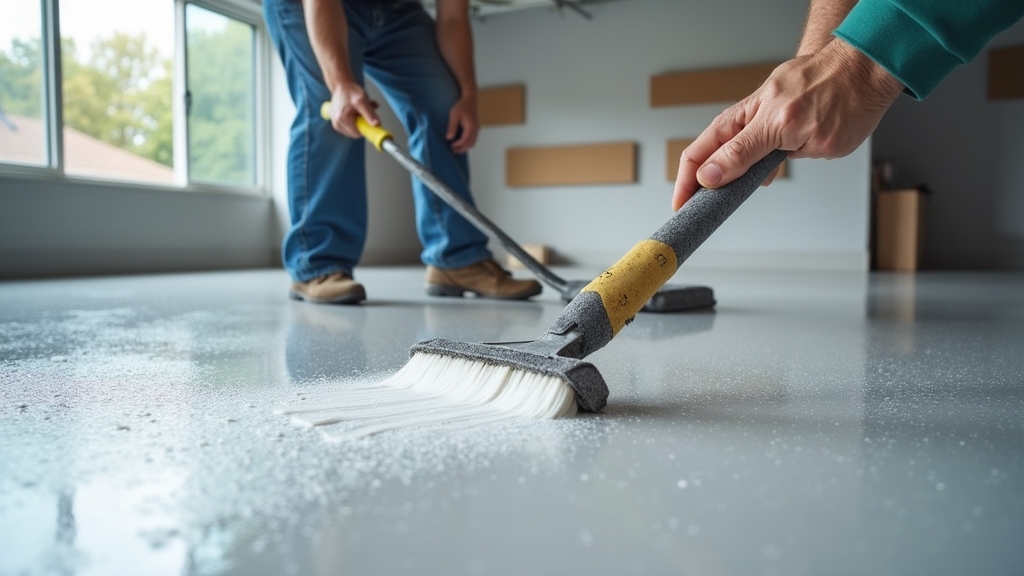
Cut in the edges with a brush and use a 3/8-inch nap roller for the main floor. If using decorative flakes, toss them high into the air to ensure an even distribution across the wet resin.
Best Use Cases for Each Method
On the other hand, if you aren't sure which to choose, consider your garage's primary function. For a light-duty storage space or a home gym, a DIY kit is usually sufficient. However, if you are a car enthusiast, do heavy mechanical work, or live in a climate with extreme temperature swings, a professional polyaspartic coating is the only way to ensure the floor doesn't delaminate.
Final Recommendation
If you have the budget, always opt for a professional install with mechanical diamond grinding. The longevity of a 100% solids system far outweighs the savings of a DIY kit. However, if you are on a budget and the floor is in excellent condition, a high-solids DIY kit (avoiding the cheapest big-box options) can provide a beautiful finish that lasts 5-7 years with proper care.