The Reality of Garage Organization
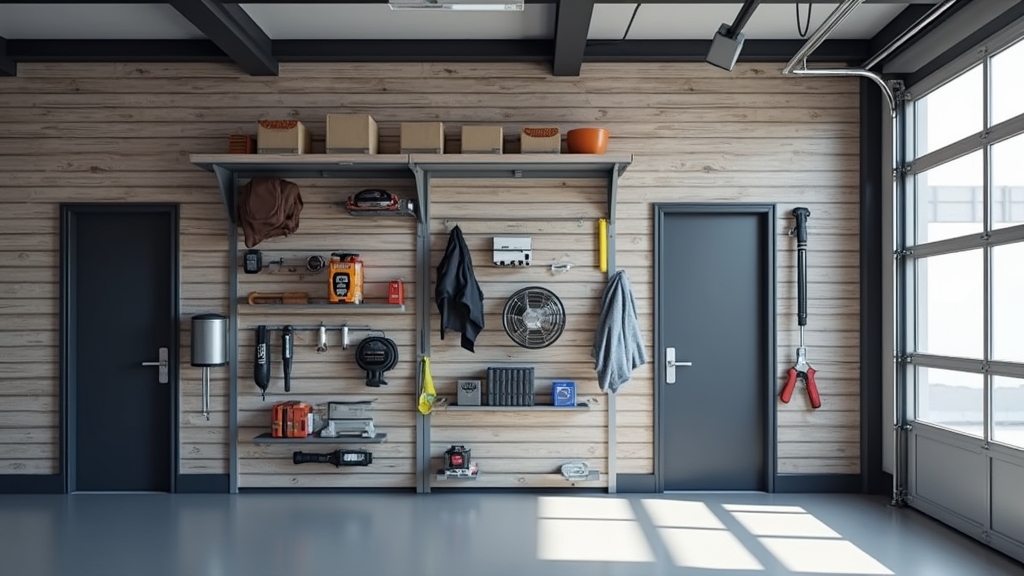
In most homes, the garage is the last frontier of organization. Over the years, I have managed dozens of properties where the garage transitioned from a functional workspace to a cluttered storage unit in a matter of months. From experience, the primary reason for this decline isn't a lack of effort from the residents, but rather a lack of a scalable, durable system. While traditional shelving and pegboards have their place, the modern modular garage storage standard has shifted toward the slatwall system. What I have found is that a well-installed slatwall offers a level of flexibility that other systems simply cannot match.
Why Slatwalls are a Professional Standard
The real issue usually is not the amount of stuff people have, but the inability to adjust storage as needs change. A common situation is a homeowner installing a fixed shelf for a lawnmower, only to buy a larger one a year later. Slatwall panels solve this by providing a continuous horizontal groove that accommodates various heavy duty hooks and bins. In my experience, the key thing to remember is that you aren't just buying a wall covering; you are building a structural foundation for your tools and equipment.
Comparing Slatwall Material Options
When selecting a system, the material of the slatwall panels determines the longevity of the installation. Over the years, I have learned that what works best in a climate-controlled basement might fail miserably in a humid or uninsulated garage. There are three primary materials to consider: PVC (Cellular Foam), Metal (Aluminum or Steel), and MDF (Medium Density Fiberboard).
PVC Slatwall Panels
PVC is perhaps the most common choice for residential garage organization. From a property management perspective, it is often the most practical. It is lightweight, which makes the installation process significantly easier for a single person. One thing many people overlook is that PVC is inherently waterproof. In garages where moisture seeps through concrete walls or where the floor is frequently hosed down, PVC will not rot or mold. However, the trade-off is in its weight capacity. While it handles standard garden tools with ease, it may bow under the weight of heavy ladders or power equipment if not installed perfectly across the studs.
Metal Slatwall Systems
For high-traffic environments or heavy-duty mechanical storage, metal—specifically aluminum—is the gold standard. What I have found is that metal panels offer the highest weight-to-thickness ratio. They do not warp, and they are fire-resistant, which can be a code consideration in certain jurisdictions. From experience, metal systems are also the most aesthetically consistent over time; they don't scratch as easily as plastic and they don't fade. The primary drawback is the cost and the difficulty of cutting panels to fit around outlets or corners, which usually requires specialized blades.
MDF and Wood-Based Slatwalls
MDF is frequently used in retail environments, but it is a choice I rarely recommend for a garage. In my experience, the real issue with MDF is its vulnerability to humidity. Even if the panels are laminated, any moisture that reaches the core will cause the material to swell and eventually crumble. For a dry, interior-finished garage, it can be a cost-effective solution, but for long-term durability, it typically ranks lowest on my list of recommendations for homeowners.
Installation Approaches: Direct-to-Stud vs. Furring Strips
How you attach your wall organization system is just as important as the material itself. Over the years, I have seen many DIY installations fail because the installer didn't account for the weight of the accessories and the items they hold.
Direct-to-Stud Installation
This is the most common method and involves driving screws through the slatwall grooves directly into the wooden wall studs. The key thing to remember here is precision. If you miss the center of the stud, you lose almost all load-bearing capacity. What works best is using a high-quality stud finder and marking the center of every stud from floor to ceiling before the first panel goes up. This method provides a flush finish and maximizes the space in the garage.
Furring Strip Installation
A common situation in older garages is uneven masonry or cinder block walls. In these cases, you cannot mount panels directly. You must first install furring strips—vertical wooden or metal sleepers—to create a flat, screw-able surface. From experience, this is actually a blessing in disguise because it creates a small air gap behind the panels, which prevents moisture from the masonry from transferring to the storage system. It also allows for easier routing of electrical wires if you decide to add lighting to your modular garage storage system later.
The Importance of Heavy Duty Hooks and Accessories
The panels are only half of the equation. The real utility of a slatwall comes from the hardware. One thing many people overlook is the 'locking' mechanism of the hooks. Some hooks simply sit in the groove, while others have a small screw or clip that locks them in place. In my experience, the non-locking variety often pulls out of the wall when you try to lift a tool off, which is frustrating and can damage the panel. Always look for heavy duty hooks that utilize the full depth of the slatwall groove to distribute weight evenly across the panel's surface.
Cost Comparison and Long-Term Value
When comparing systems, it is essential to look at the total cost per square foot, including the accessories. While PVC panels might have a lower entry price, the cost of specialized corners and trim can add up. Metal systems often include these components or have more integrated solutions. Over the years, I have learned that spending 20% more on a high-density PVC or metal system saves money in the long run because you won't be replacing cracked panels five years down the road. For rental properties, I almost always suggest PVC because it is easier to clean and replace individual sections if a tenant damages them.
Final Recommendation Based on Your Situation
Choosing the right wall organization system depends heavily on your specific environment and what you intend to store. What I have found is that for the average homeowner who wants to store bikes, rakes, and basic power tools, a high-quality PVC system offers the best balance of durability and ease of installation. However, if you are a hobbyist with heavy automotive tools or if you live in an area with extreme temperature fluctuations, the investment in a metal system is usually justified. The key thing to remember is to measure twice, account for your stud locations, and always plan for 20% more storage space than you think you currently need.