Overview of Your Garage Insulation Project
If you spend any amount of time in your garage during the winter, you know how quickly it becomes an ice box. Most standard metal garage doors have the thermal resistance of a soda can. Over the last 15 years, I have learned that you don't need to replace the entire door to see a massive difference. By the end of this project, you will have a thermal garage door that keeps heat in during the winter and out during the summer, leading to noticeable energy savings.
The goal here is a 'quick fix' that provides professional results. We are looking to increase the R-value of your door, which measures how well a material resists heat flow. Here is the thing: even a modest increase in R-value can stop your furnace from running overtime if your garage is attached to the house.
Tools and Materials Needed
Before you head to the home center, you need to decide which material fits your budget and door type. Most homeowners choose a garage insulation kit because they are pre-measured and easy to handle. Here is what you will need:
- Garage Insulation Kit: These usually come in two flavors: Expanded Polystyrene (EPS) foam panels or reflective foil rolls.
- Utility Knife: Use a fresh blade for clean cuts through foam.
- Straight Edge or Level: To ensure your cuts are square.
- Measuring Tape: Accuracy is vital for a tight thermal seal.
- Cleaning Supplies: Denatured alcohol or a mild degreaser and a microfiber cloth.
- Double-Sided High-Bond Tape: Usually included in kits, but extra is always helpful.
Preparation Steps
Preparation is where most people miss the mark. You cannot stick insulation to a dirty surface and expect it to stay through a season of temperature swings. Start by wiping down every interior panel of your garage door with a degreaser. Dust and oil from the tracks often settle on the panels, which will ruin the adhesive bond.
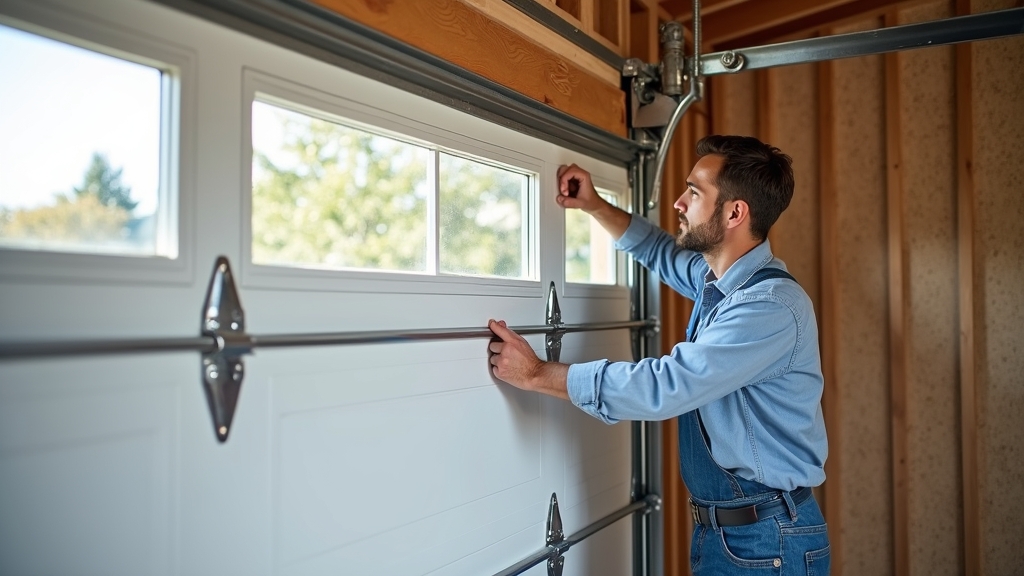
Now, the important part: check your garage door springs. Adding insulation adds weight. While foam is light, it can still affect the balance of an older door. Open and close the door manually before you start. If it feels heavy or doesn't stay halfway open on its own, your springs might need a professional adjustment after the insulation is installed.
Detailed Step-by-Step Instructions
1. Measure Each Panel Individually
Do not assume every panel on your door is the exact same size. Often, the top and bottom panels have slightly different dimensions due to the door's construction. Measure the height and width of the recessed area of each panel. Worth mentioning: measure twice and cut once. A gap of even half an inch creates a thermal bridge where cold air can bypass your hard work.
2. Cut the Insulation Material
If you are using EPS foam panels, use a straight edge and a sharp utility knife. Don't try to saw through the foam; instead, score it deeply and snap it. If you are using reflective foil, a heavy-duty pair of scissors usually works best. Something to keep in mind is that you want a 'friction fit.' This means the panel should be just a fraction of an inch larger than the space so it stays snug against the metal.
3. Apply the Adhesive or Mounting Clips
Most kits use either double-sided tape or plastic clips that tuck into the door's frame. If using tape, apply it in a 'large X' pattern across the panel, with additional strips along the edges. This is where it gets interesting: the metal of the garage door expands and contracts with the weather. Using a high-quality, high-bond tape ensures the insulation doesn't pop off when the sun hits the door in July.
4. Install the Panels
Tuck the edges of the insulation under the horizontal rails of the garage door panels. If you are using foam, you may need to flex the panel slightly to get it to pop into place. Ensure there are no air pockets between the insulation and the metal door. The closer the contact, the better the thermal performance.
5. Seal the Perimeter
Insulating the panels is only half the battle. What most people miss is the air leakage around the edges. Check your bottom seal (the rubber gasket) and the side weatherstripping. If you can see daylight around the edges of your door when it is closed, you are losing energy. Replace worn-out vinyl stop molding to complete the winterization process.
Tips for Best Results
The good news is that this project is forgiving, but a few pro tips will make it look like a factory job. First, if you use reflective foil, make sure the 'shiny' side faces the interior of the garage in cold climates to reflect heat back into the room. On the other hand, in hot climates like Arizona, some prefer the foil to face outward to bounce radiant heat away from the structure.
Another tip: mark your panels on the back before cutting. Label them 'Row 1, Panel A' and so on. This prevents confusion if you get interrupted mid-project. Also, keep your utility knife blades fresh. A dull blade will tear the foam, creating a messy edge that collects dust.
Troubleshooting Common Issues
One common issue is the insulation panels falling out after a few weeks. This almost always happens because the door wasn't cleaned properly with alcohol before applying the adhesive. If this happens, scrape off the old tape, clean the area thoroughly, and use a construction-grade spray adhesive instead.
Another problem is the garage door opener straining. If the motor sounds like it is working harder, or if the door reverses when trying to close, you have added too much weight or changed the door's balance. You may need to increase the 'down-force' or 'up-force' settings on your opener, or call a pro to add a half-turn of tension to your torsion springs.