The Sustainable Workshop: Why Pegboards Matter
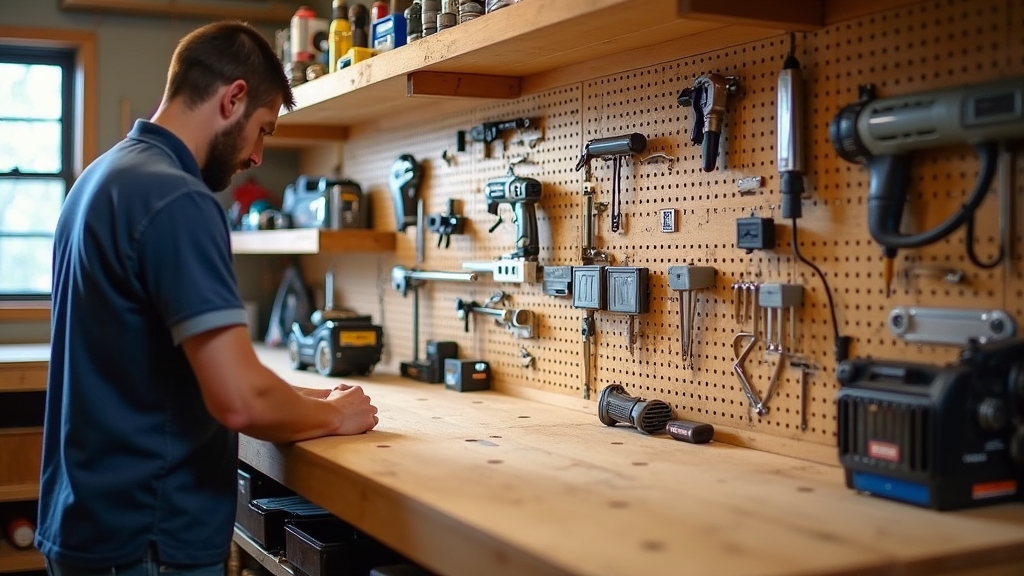
In most homes, the garage becomes a graveyard for misplaced tools and half-finished projects. As a sustainable living advocate, I view organization not just as an aesthetic choice, but as a method of conservation. When you can see your tools, you maintain them better, lose them less frequently, and avoid the waste of buying duplicates. A well-executed pegboard installation transforms chaotic piles into an efficient, vertical workshop organization system that stands the test of time.
Essential Tools and Materials
From experience, the quality of your mounting hardware is just as important as the board itself. To build a tool wall that won't sag or pull away from the wall, you will need:
- Pegboard Panels: Choose 1/4-inch tempered hardboard or powder-coated steel for maximum durability.
- Furring Strips: 1x2 pressure-treated wood strips to create the necessary gap behind the board.
- Fasteners: 2.5-inch wood screws for studs; toggle bolts for drywall-only sections.
- Level and Stud Finder: Non-negotiable for a professional finish.
- Power Drill and Bits: Including a countersink bit for flush screw heads.
- Pegboard Accessories: A variety pack of locking hooks, bins, and tool holders.
The Preparation Phase: Avoiding The 'Slap-Dash' Trap
The real issue usually isn't the pegboard itself, but the lack of planning before the first screw is driven. One thing many people overlook is the environmental conditions of the garage. If your garage isn't climate-controlled, standard hardboard can warp due to humidity. In these cases, what works best is opting for galvanized steel or plastic-composite boards.
Mapping Your Workflow
Before mounting anything, lay your tools out on the floor. Group them by frequency of use. Your most-used hand tool storage—hammers, screwdrivers, and pliers—should live in the 'strike zone' between your waist and shoulder height. Heavier power tools belong near the bottom or on dedicated heavy-duty brackets to prevent board fatigue.
Step-by-Step Pegboard Installation
- Locate and Mark Studs: Use a stud finder to locate the vertical supports behind your drywall. Mark these clearly; your furring strips must be anchored here to support the weight of a full tool collection.
- Install Furring Strips: You cannot mount a pegboard flush against a wall—the hooks need clearance to insert. Frame the perimeter of your space with furring strips, then add vertical strips every 16 inches. This creates a rigid skeleton that prevents the board from bowing.
- Level and Dry Fit: Hold the board up to the strips. Use your level to ensure it is perfectly horizontal. A common situation is finding that garage floors are sloped, so never use the floor as a reference point for 'level.'
- Secure the Board: Screw the pegboard into the furring strips at 12-inch intervals. From experience, I recommend using washers to prevent the screw heads from pulling through the board material over time.
- Seal the Edges: For a polished look and to prevent dust buildup behind the board, consider adding a simple mitered frame using scrap wood.
Sustainable Hand Tool Storage Strategies
Over the years, I have learned that a static tool wall is a failing tool wall. Your needs change as your skills grow. Avoid the mistake of drawing outlines (shadow boxing) around your tools immediately. Wait three months. Once your workflow has stabilized, then use a low-VOC paint pen to mark tool locations. This ensures that every tool has a home, reducing the time spent searching and increasing the time spent creating.
Common Mistakes and Lessons Learned
Ignoring Weight Distribution
One thing many people overlook is the sheer weight of a full wrench set or a collection of hammers. If you concentrate all heavy items in the center of a board between two studs, the board will eventually belly out. Distribute weight horizontally across multiple furring strips.
Choosing Cheap Hooks
The key thing to remember is that standard pegboard hooks are notorious for falling out every time you grab a tool. This leads to frustration and, eventually, abandonment of the system. What works best is using 'locking' hooks or securing standard hooks with a small zip tie or a dab of hot glue. It’s a small detail that saves hours of annoyance.
Neglecting the 'Air Gap'
I’ve seen many homeowners try to save time by using plastic spacers instead of a full furring strip frame. The real issue here is rigidity. Spacers provide a point of contact, but strips provide a line of support. For a long-term, sustainable workshop organization, the frame is always superior.
Troubleshooting Your Tool Wall
The Board is Sagging
This is usually caused by insufficient vertical support. If your board is bowing, you likely skipped the center furring strips. You don't necessarily need to take the whole thing down—you can often 'sister' a new strip behind the sagging area if you have access from the side, though a proper reinstall is the more sustainable fix.
Hooks Won't Stay In
If you used 1/8-inch hooks in a 1/4-inch pegboard, they will be loose and unstable. Always match your hook diameter to your board’s hole size. If the holes have become stripped or enlarged, move the hook to a fresh location and reinforce the old hole with a bit of wood filler and a redrill if necessary.