Understanding Garage Door Dent Repair
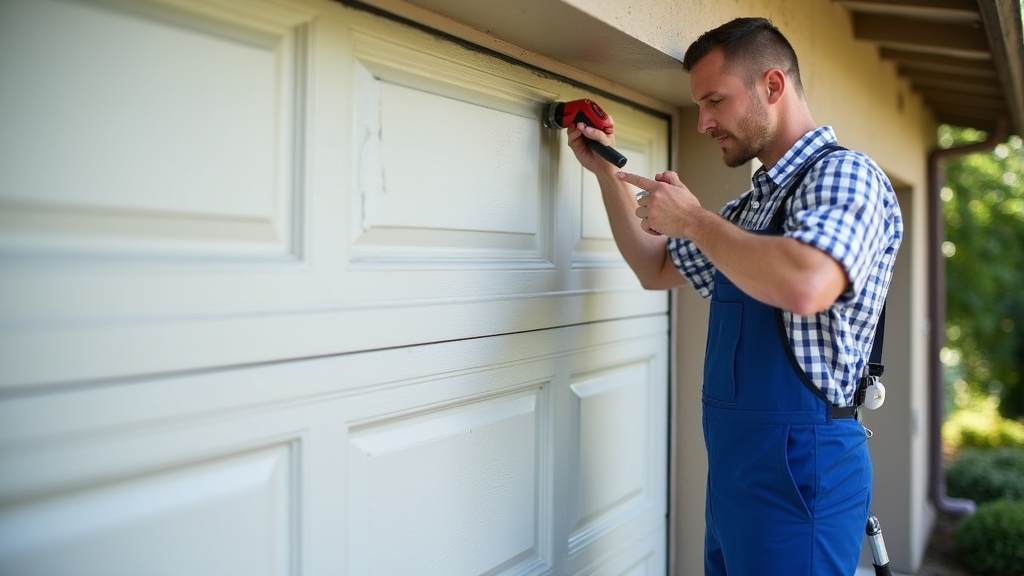
In my ten years of servicing residential garage doors, I have seen everything from basketball impacts to accidental bumper taps. A dented garage door panel is one of the most common cosmetic issues homeowners face. While it might seem like a simple eyesore, a dent can occasionally affect the structural integrity of the door or cause it to bind in the tracks if the deformation is severe enough. Before you jump into a repair, you must identify the material of your door—typically aluminum or steel—as the approach for each differs significantly.
Repairing a dent isn't just about appearances; it is about maintaining the value of your home. Take your time with this process. Rushing a metal repair can lead to 'oil-canning,' where the metal loses its memory and creates a loud popping sound every time the door moves. It is worth doing right the first time to avoid permanent creases.
Overview of Repair Options
When dealing with garage door panels, there are generally four paths you can take. The right choice depends on the depth of the dent, the material of the door, and whether the paint has been cracked.
The Suction Method
This is the least invasive method, often used for shallow, 'soft' dents where the metal hasn't been creased. Using a high-quality suction cup tool (similar to those used in auto body repair), you attempt to pull the metal back into its original shape. This works best on thin aluminum doors.
The Heat and Cold Method
This technique relies on the physical properties of thermal expansion and contraction. By heating the dented area with a hair dryer and then rapidly cooling it with compressed air (turned upside down for the liquid CO2 effect), the rapid change can sometimes pop the dent back out. This is a common DIY door fix for minor surface imperfections.
The Hammer and Wood Block Method
For steel doors that are accessible from the inside, a rubber mallet and a flat wood block can be used to manually reshape the panel. This requires a delicate touch. Small details matter here; if you hit the metal too hard, you will stretch it, making the damage worse.
Professional Panel Replacement
If the dent is located on a structural 'rib' or if the panel is double-walled and insulated, DIY methods rarely work. In these cases, replacing the entire panel is the standard professional recommendation. Trust your instincts on this one; if the dent has a sharp crease, it likely won't pop back out perfectly.
Detailed Pros and Cons
DIY Suction/Heat Methods
- Pros: Extremely low cost; no risk of damaging the paint if done correctly; can be completed in under 30 minutes.
- Cons: Only works on very minor, non-creased dents; ineffective on thick, insulated 'sandwich' doors.
Manual Hammering (Back-side Repair)
- Pros: More control over the shape; works well on single-layer steel doors.
- Cons: Requires access to the back of the panel (often blocked by insulation); high risk of over-stretching the metal or chipping the exterior paint.
Professional Replacement
- Pros: Restores the door to factory condition; ensures the door remains balanced and safe.
- Cons: High cost; matching paint colors on older doors can be difficult due to sun fading.
Realistic Cost Comparison
Understanding the financial implications is vital for deciding between a DIY fix and a professional service. Below is a breakdown of what you can expect to spend in the current market.
DIY Costs
If you already own basic tools like a hair dryer or a rubber mallet, your costs are negligible. Purchasing a specialized suction cup or cans of compressed air typically ranges from $15 to $50. This is the most budget-friendly way to address aluminum door repair.
Professional Repair Labor
If you hire a technician to attempt to hammer out a dent or realign a track, you are usually looking at a service call fee plus labor. On average, this costs between $150 and $300. Note that many professionals will not guarantee that a dent will be 100% invisible after a manual repair.
Panel Replacement Costs
Replacing a single panel is the most expensive route. A standard non-insulated steel panel may cost $250 to $400, while high-end insulated or carriage-style panels can range from $500 to $800. When you add labor (typically 2 hours) and shipping for a single heavy panel, the total can easily reach $600 to $1,200.
Best Use Cases for Each Method
Knowing which method to apply is a skill gained through experience. Here is my professional advice on when to use each:
- Use the Heat/Cold Method: When you have a large, shallow 'oil-can' dent in a thin aluminum door with no visible creases.
- Use the Hammer/Block Method: When you have a single-layer steel door and the dent is accessible from the inside. This is best for dents caused by soft impacts, like a soccer ball.
- Call a Professional: If the door is making strange noises, if the dent is on a hinge or a roller attachment point, or if you have a high-tension spring system that might be affected by the panel deformation.
Final Recommendation
If the dent is minor and purely cosmetic, start with the heat and cold method. It is safe, inexpensive, and won't make the problem worse. However, if the metal is creased—meaning there is a sharp line in the dent—it is structurally compromised. In my experience, once metal is creased, it can never be returned to its original flat state without professional body filler and repainting. If you have a high-value home or a newer door, investing in a professional panel replacement is usually the better long-term decision for curb appeal and resale value.