Introduction
Choosing the right bathroom flooring involves more than just picking a color you like. In this guide, you will learn how to identify truly slip-resistant floor tiles, understand technical safety ratings, and prepare your bathroom for the changing seasons. By the end, you will have the confidence to select a surface that looks beautiful and keeps your family safe.
Why Bathroom Safety Flooring Matters
The bathroom is arguably the most dangerous room in the house. Here is the thing: most accidents happen because we prioritize aesthetics over friction. When water meets a smooth surface, it creates a hydroplaning effect, much like a car on a wet road. This risk increases during certain times of the year when humidity levels fluctuate or when winter condensation builds up on cold surfaces.
Now, the important part to understand is that 'non-slip' is not a binary setting. It is a spectrum. A tile that feels fine when dry can become a skating rink with a single drop of soapy water. Choosing the right anti-slip bathroom flooring isn't just about preventing falls today; it’s about future-proofing your home as your needs change over time.
Understanding the Technical Ratings: COF and R-Values
When you browse a tile showroom, you will see technical specifications that look like a math test. This is where it gets interesting for the savvy homeowner. There are two main ways the industry measures slip resistance.
The DCOF Rating
The Dynamic Coefficient of Friction (DCOF) is the current standard. For a tile to be considered safe for level interior spaces that get wet, it generally needs a DCOF rating of 0.42 or higher. Anything lower is usually reserved for wall applications or dry areas. What most people miss is that this rating assumes the floor is wet with plain water, not necessarily soapy water, which is even more slippery.
The R-Rating Scale
You might also see an 'R-rating,' which stands for Ramp Test. This scale goes from R9 to R13. For a standard residential bathroom, R10 is typically the sweet spot. R9 is often too smooth for a shower floor, while R11 or higher can feel quite rough underfoot and can be harder to clean. On the other hand, R13 is usually reserved for industrial kitchens or pool decks.
Matte vs. Glossy Tiles: The Friction Battle
The debate between matte vs glossy tiles is the most common conversation I have with homeowners. Glossy tiles reflect light beautifully and make a small bathroom feel larger. However, they are often the worst choice for floor safety. A high-gloss finish is essentially a polished surface with no 'tooth' for your feet to grip.
Matte tiles have a flat finish that naturally offers more friction. Worth mentioning is the rise of 'Lappato' or semi-polished finishes. These provide a bit of the shine from a glossy tile but retain some of the slip resistance of a matte finish. Something to keep in mind, however, is that even a matte tile can be slippery if the material is naturally non-porous and smooth.
The Grout Secret: Why Tile Size Matters
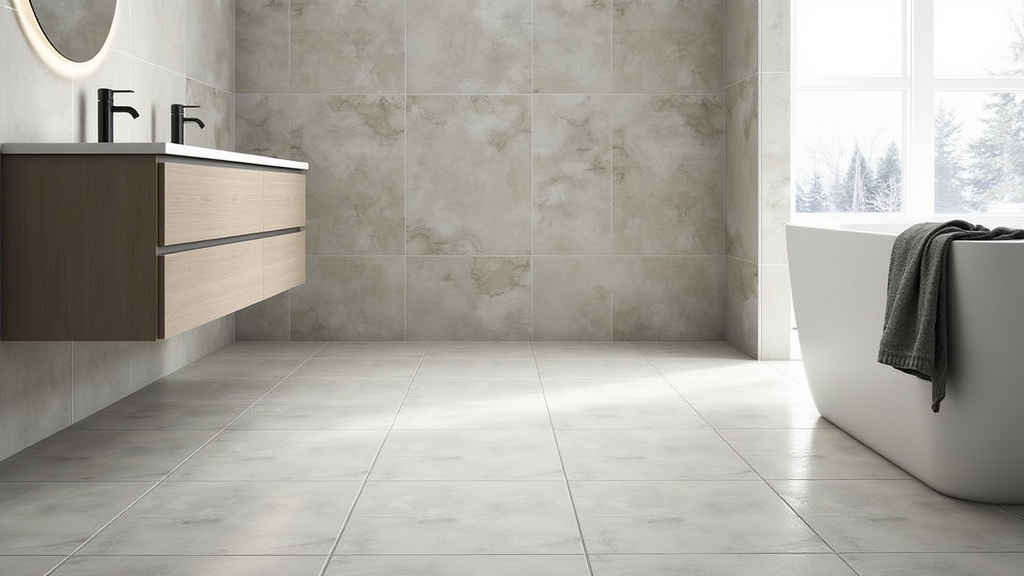
If you have your heart set on a smoother tile, there is a clever workaround: use smaller tiles. This is because smaller tiles require more grout lines. Grout is inherently textured and provides a significant amount of grip for your feet. Using a 2x2 inch mosaic on a shower floor is much safer than using a 12x12 inch tile of the same material. The good news is that modern grouts are much easier to clean than the versions from twenty years ago, so you don’t have to fear the extra maintenance.
Seasonal Guide: Managing Bathroom Safety All Year
Your bathroom's slip risk actually changes with the calendar. Here is how to manage your flooring throughout the year.
Spring: Dealing with Humidity
As the weather warms up, spring showers bring high outdoor humidity. This can prevent your bathroom from drying out properly after a shower. During this season, focus on ventilation. If your non-slip tile feels 'tacky' or sticky, it might be trapping moisture and dust. A deep clean in the spring helps maintain the integrity of the slip-resistant surface.
Summer: The Cooling Effect
In the summer, many people keep their homes cool with air conditioning. If you have a very cold bathroom floor and high humidity, you might experience 'sweating' on the tiles. This condensation is nearly invisible but very dangerous. Check your tiles for this fine mist before stepping out of the shower.
Autumn: Preparing for the Wet Season
Autumn is the time to check your bath mats and rugs. Ensure they have high-quality rubber backing that hasn't degraded over the summer heat. This is also the best time to apply a slip-resistant treatment to existing tiles if you aren't ready for a full renovation. These treatments create microscopic pores that increase grip when the tile is wet.
Winter: The Condensation Peak
Winter is the most critical time for anti-slip bathroom safety. The contrast between hot shower steam and cold tile surfaces creates maximum condensation. Furthermore, we tend to use more bath oils and heavy moisturizers in the winter, which can leave a slick residue on the floor. Pay extra attention to cleaning your tiles during these months to remove any oily buildup.
Common Mistakes to Avoid
- Buying by touch alone: Never test a tile's slipperiness with your hand. Your palm is much softer and has different grip characteristics than the sole of your foot. Always put the tile on the floor and step on it.
- Ignoring the 'Wet' vs 'Dry' samples: A tile might feel like sandpaper when dry, but some textures actually become more slippery when a thin film of water acts as a lubricant. Always pour a little water on a sample before deciding.
- Choosing oversized tiles for small slopes: If your bathroom floor is sloped toward a drain, large tiles will have to be 'envelope cut,' creating sharp edges and potentially uneven surfaces that can cause trips.
Practical Tips from the Field
In my experience, the best way to test a tile is the 'Wet Sock Test.' Take a sample tile home, put on a sock, dampen it slightly, and see how much your foot slides. It’s a low-tech but highly effective way to simulate real-world conditions.
Also, consider the color of your grout. While it doesn't affect slip resistance, dark grout in a high-traction (textured) floor is much more practical. Textured tiles tend to hold onto a bit more dirt, and dark grout hides the inevitable wear and tear much better than white or cream.
Final Thoughts
The perfect bathroom floor balances style with safety. By looking for a DCOF of 0.42+, choosing matte finishes or smaller formats, and staying mindful of seasonal moisture, you can create a space that is both a sanctuary and a safe zone. Remember, you can always change your wall tiles if you get bored of the color, but changing a slippery floor is a much bigger—and more expensive—task.