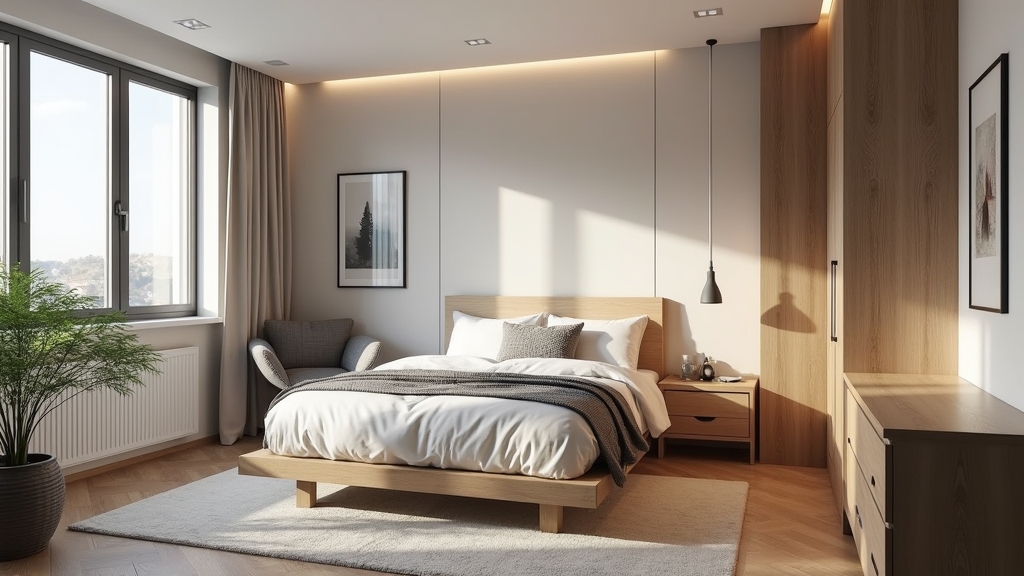
The Challenge of the Small Bedroom Layout
After managing dozens of rental properties, I have seen every possible bedroom floor plan. I have seen tenants try to squeeze king-sized beds into ten-by-ten rooms, and I have seen clever layouts that make a tiny space feel like a suite. Here is the thing: a small bedroom is not just a storage problem; it is a physics problem. How you arrange your furniture determines whether you wake up feeling refreshed or cramped.
When you face a small bedroom, you have two main paths. You can tackle the furniture arrangement yourself using trial and error, or you can hire a professional designer to map out a space-saving bedroom plan. Both methods have merit, but the right choice depends on your budget, your patience, and the specific quirks of your room.
The DIY Approach: Managing Your Own Space
Most people start with the DIY route. It involves measuring the walls, moving the bed three times, and hoping for the best. Modern technology has made this easier. You can now use free online floor plan tools to drag and drop virtual furniture before you lift a single heavy dresser.
Now, the important part of DIY is accuracy. I have seen many people buy a beautiful bed frame only to realize it blocks the closet door by two inches. This is where a simple measuring tape becomes your best friend. A DIY approach allows for total control and zero cost, but it requires an eye for scale that many people underestimate.
Practical DIY Strategies
- The Paper Method: Tape out the dimensions of your furniture on the floor using painter's tape. Walk around the "furniture" for a day to see if the traffic flow works.
- Vertical Thinking: Use wall-mounted shelves instead of floor-standing bookcases. This keeps the floor visible, which tricks the eye into thinking the room is larger.
- Multi-functional Pieces: Look for beds with built-in drawers. In a small space, every piece of furniture must earn its keep by performing at least two jobs.
The Professional Approach: Hiring Expertise
This is where it gets interesting. A professional interior designer or space planner does not just look at where the bed fits. They look at sightlines, light sources, and structural limitations. They might suggest solutions you would never consider, like custom-built cabinetry that wraps around a window or moving a door frame to gain three feet of usable wall space.
What most people miss is that professionals often have access to "apartment-sized" furniture lines that are not sold in big-box stores. These pieces are scaled specifically for tight urban living. While you pay a fee for their time, a pro can prevent you from making expensive mistakes, like buying a rug that is too small and makes the room look like a postage stamp.
Detailed Pros and Cons
DIY Furniture Arrangement
Pros:
- Zero cost for labor.
- Immediate results (you can move things today).
- Complete creative freedom.
Cons:
- High risk of "scale error" where furniture feels too bulky.
- Limited to off-the-shelf furniture options.
- Physically demanding to move heavy items during testing.
Professional Space Planning
Pros:
- Maximizes every square inch with precision.
- Access to custom storage solutions.
- Expertise in lighting and color theory to enhance space.
Cons:
- Upfront design fees can be high.
- Project timelines are longer due to consultations.
- Custom furniture can take weeks or months to arrive.
Cost Comparison: Time vs. Money
The good news is that there is a wide spectrum of costs. A DIY project usually costs exactly what you spend on the furniture itself, plus perhaps $20 for a quality tape measure. Your main investment is time—likely 10 to 20 hours of research, measuring, and shopping.
On the other hand, a professional designer might charge a flat fee ranging from $500 to $2,500 for a single room layout. If you opt for custom "built-ins," which I often recommend for permanent residences, costs can climb to $5,000 or more. However, in a property management context, a well-designed custom closet can increase the rental value of a unit significantly because it solves the tenant's biggest complaint: lack of storage.
Best Use Cases for Each Option
Something to keep in mind is the longevity of your stay. If you are renting a small apartment on a one-year lease, stick to the DIY route. Use lightweight, modular furniture that you can take with you when you leave. Focus on a space-saving bedroom layout that uses "floating" elements, like a wall-mounted desk that folds down when needed.
If you own your home and plan to stay for five years or more, hire a professional. Worth mentioning is that a professional can design a "permanent" bedroom floor plan that integrates with the architecture. For example, a professional might suggest a Murphy bed with integrated side wardrobes. This is a long-term fix that adds real value to the property, rather than a temporary band-aid like a cheap rolling cart.
The Property Manager's Secret Sauce
Over the years, I have noticed one mistake that ruins almost every small bedroom layout: the rug. People buy a tiny rug and put it next to the bed. This breaks up the floor and makes the room look tiny. Instead, buy a large rug that fits under the bed and extends out. It unifies the space.
Another tip? Use clear acrylic chairs or glass-topped nightstands. Because you can see through them, they don't "occupy" visual space. These are the kinds of small fixes that last and make a room feel breathable without a full renovation.
Final Recommendation
If you have a standard rectangular room and a limited budget, go DIY. Download a floor plan app, measure twice, and buy furniture with legs (to show more floor). However, if your room has odd angles, multiple doors, or serves as both an office and a bedroom, professional help is worth every penny. A professional can solve the puzzle of a difficult bedroom floor plan in ways a DIYer simply cannot see. Start by assessing your floor plan and being honest about your spatial reasoning skills.