The Challenge of the King Bed in a Small Room
In most homes, the bedroom is intended to be a sanctuary, but when you introduce a king-sized mattress into a limited footprint, that sanctuary can quickly feel cramped. A standard king bed measures 76 inches wide by 80 inches long. When you factor in the bed frame and the necessary walking clearance, you are looking at a footprint that dominates the average modern bedroom. What I have found is that many homeowners struggle not because the bed is too large, but because the room's layout hasn't been adjusted to accommodate the scale of the furniture.
The real issue usually isn't the mattress itself; it is the secondary furniture and the flow of movement within the space. Over the years, I have learned that a successful small bedroom floor plan requires a shift in perspective—from trying to fit everything in, to prioritizing the bed and finding creative ways to handle storage and movement.
Root Causes of a Poor Small Bedroom Layout
Neglecting Clearance Zones
One thing many people overlook is the 'clearance zone'—the amount of space needed to comfortably walk around the bed or open a closet door. In my experience, a minimum of 24 inches is required for a walkway, while 30 to 36 inches is ideal for a primary path. When a king bed is pushed into a small room, these zones are often the first thing sacrificed, leading to a room that feels claustrophobic.
Oversized Traditional Furniture Suites
A common situation is trying to use a king bed alongside a matching set of bulky nightstands and a large dresser. These suites are rarely designed for small spaces. The depth of a traditional dresser (usually 18 to 22 inches) combined with a king bed often leaves zero room for movement. The key thing to remember is that in a small room, your furniture must be proportional to the available floor space, not necessarily the size of the bed.
Architectural Constraints
From experience, the placement of windows, doors, and radiators often dictates the layout more than the furniture itself. A king bed might fit against one wall, but if it blocks a heat source or prevents a door from opening more than 45 degrees, it isn't a functional solution. Understanding the fixed elements of the room is the first step toward a permanent fix.
Immediate Steps to Improve Your Layout
Map the Floor Plan
What works best is to physically map out the dimensions on the floor using painter's tape. Before moving heavy furniture, tape out the 76x80 inch rectangle of the king bed. Then, mark out 24-inch borders around the sides. This visual guide will immediately show you where your 'dead zones' are and where furniture can actually fit.
Prioritize the Headboard Wall
In most small bedrooms, there is only one logical wall for a king bed—the longest wall without a door or window. If your room is narrow, you may have to place the bed against the far wall, centered. Centering the bed is usually preferred because it allows for access on both sides, which is a long-term necessity for shared bedrooms. What I have found is that pushing a king bed into a corner might save floor space, but it makes the room significantly less livable for the person sleeping against the wall.
Evaluate Door Swings
If your bedroom door or closet doors swing inward and hit the bed, you have a functional failure. An immediate fix is to assess if the door can be re-hung to swing outward, or replaced with a folding or sliding door. This reclaimed 'swing space' can be the difference between a room that feels broken and one that feels intentional.
Long-Term Strategies for Space-Saving Bedroom Ideas
Vertical Storage Integration
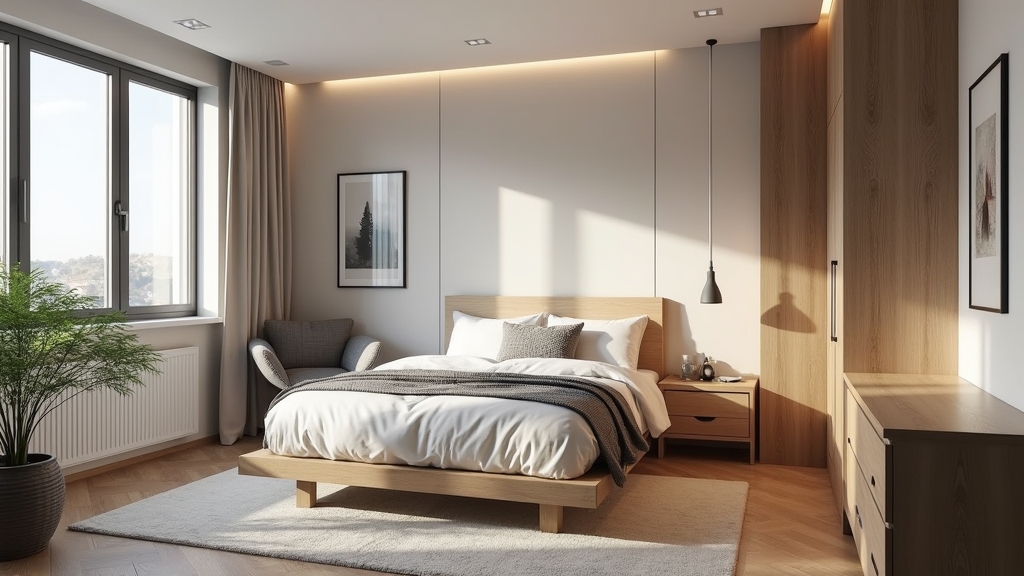
Since the king bed consumes the majority of the floor space, you must look upward. Instead of a wide dresser, consider tall, narrow shelving units or wardrobes that reach the ceiling. This utilizes the 'dead space' above the eye line. I have learned that floor-to-ceiling storage, especially when painted the same color as the walls, provides massive utility without making the room feel cluttered.
Built-in Bed Bridges
One of the most permanent and effective small bedroom floor plans involves a 'bed bridge.' This consists of cabinetry or shelving that flanks the headboard and connects over the top of the bed. This eliminates the need for separate nightstands and provides significant storage. This approach creates a 'nook' feeling that can make a large bed feel like it was custom-designed for the space rather than squeezed into it.
Wall-Mounted Lighting and Surfaces
To keep the floor clear, move as much as possible to the walls. Wall-mounted sconces replace bulky bedside lamps, and floating shelves can replace traditional nightstands. This keeps the visual line of the floor open, which tricks the eye into perceiving more space. In my experience, seeing more of the floor makes any room feel larger, even with a massive bed in the center.
Radiator and Window Management
If a radiator is preventing you from placing the bed on the ideal wall, consider a custom radiator cover that doubles as a window seat or a narrow shelf. For windows, use window treatments that are mounted inside the frame rather than heavy drapes that spill out into the room and eat up valuable inches of clearance.
When to Call a Professional
While many layout issues can be solved with furniture selection, some require professional intervention. You should consider calling a professional—such as a carpenter or a contractor—when you need to:
- Install custom built-in cabinetry to maximize storage in specific niches.
- Relocate electrical outlets or light switches that are blocked by the king bed.
- Change a standard door to a pocket door or barn door to save swing space.
- Modify or move heating elements to allow for better bed placement.
Conclusion
Fitting a king bed in a small room is a balancing act of scale and function. The key is to stop fighting the bed's size and instead adapt the rest of the room to support it. By focusing on vertical storage, maintaining clear walking paths, and removing unnecessary furniture, you can create a room that feels intentional and spacious. Remember, a bedroom's primary job is to provide a comfortable place to sleep, and with a well-planned layout, you don't have to sacrifice a large mattress for a functional room.