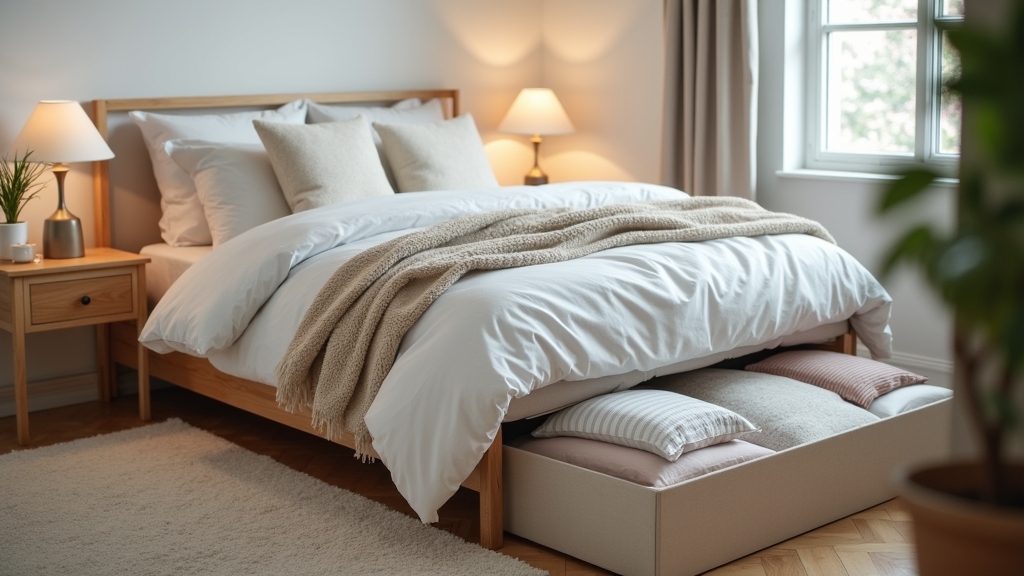
The Untapped Real Estate Under Your Mattress
After a decade of repairing floorboards and fixing cramped closets in urban apartments, I’ve realized most renters are sitting on 30 to 40 square feet of prime real estate without even knowing it. This guide will show you how to transform that dusty void under your bed into a high-functioning seasonal storage hub using underbed bins and clever small space hacks.
Why Underbed Storage is a Game Changer for Renters
Renters face a unique challenge: you can’t exactly knock down a wall to build a walk-in closet. Most apartment storage is vertical, leaving the horizontal space beneath the bed neglected. Here is the thing: a standard queen-size bed offers nearly 33 cubic feet of storage space if you have at least 7 inches of clearance. That is roughly the size of a large dresser. By utilizing hidden storage, you keep your living area decluttered, which is essential for mental clarity in small floor plans. What most people miss is that effective underbed storage isn't just about shoving boxes away; it’s about a rotating system that changes with the seasons.
Your Year-Round Seasonal Rotation Strategy
The secret to professional-grade storage is timing. Now, the important part: you should only store items under your bed that you don't need daily access to. Here is how to manage it throughout the year:
Spring: The Great Swap
As the weather warms, your heavy parkas and wool blankets need a home. This is where it gets interesting: wool is a magnet for moths and dust mites. When moving winter gear to underbed bins, always use vacuum-sealed bags first. These bags reduce the volume by up to 70%, allowing you to fit four times as much gear into a single bin. Worth mentioning, make sure your winter boots are cleaned and stuffed with cedar blocks before they go under for the next six months.
Summer: Managing Activity Gear
Summer is for beach towels, camping gear, and light linens. Since you might grab these more frequently than a winter coat, use low-profile rolling bins. These are easier on your back and won't scratch the rental's hardwood or laminate floors. The good news is that most standard 6-inch tall bins fit perfectly under even the lowest IKEA frames.
Fall and Winter: The Holiday Bulk
As the holidays approach, your underbed space becomes a staging area. Use one side of the bed for seasonal decor and the other for gift concealment. Something to keep in mind: if you’re storing electronics or delicate ornaments, avoid using cardboard boxes. Cardboard absorbs moisture from the floor and can harbor pests like silverfish, which are common in older rental buildings.
Choosing the Right Hardware: Bins and Risers
Not all underbed bins are created equal. In my experience, there are three types that actually work for the long haul:
- Clear Polypropylene Bins: The gold standard. You can see what’s inside without pulling it out. Look for versions with "latching" lids to keep dust out.
- Long-Form Gift Wrap Boxes: These are shallow and long, perfect for those weirdly low bed frames.
- Canvas Soft-Sided Bags: On the other hand, if your bed frame has central support legs (which most do), soft-sided bags are better because they can be squished around the obstacles that rigid plastic bins can't navigate.
Practical Tips from a Maintenance Pro
After pulling hundreds of bins out of dusty corners, I’ve learned a few tricks that the lifestyle blogs won't tell you. First, if your bed is too low, use heavy-duty rubberized bed risers. Unlike the cheap plastic ones that crack, rubberized risers distribute weight evenly and won't leave permanent indentations in the carpet—a major plus for getting your security deposit back.
Secondly, apply felt pads to the bottom of any bin that doesn't have wheels. This prevents those annoying scuff marks on luxury vinyl plank (LVP) or hardwood. Lastly, label the side of the bin facing outward. It sounds simple, but you'll thank me when you're looking for that one specific sweater in mid-October.
Common Mistakes to Avoid
What most people miss is the airflow factor. If you pack items too tightly against the floor in a humid basement apartment, you risk mold growth. Always leave at least an inch of breathing room between the top of the bin and the bed slats. Another classic mistake is ignoring the "dust ruffle" or bed skirt. Without one, your hidden storage is just a visible pile of plastic. A tailored bed skirt hides your bins and gives the room a polished look. Finally, never store food or unwashed gym clothes under the bed. You are inviting pests and odors into the place where you breathe for eight hours a night.