Mastering the Deep Drawer Dilemma
Deep kitchen drawers are a double-edged sword. While they offer massive storage capacity, they often become a 'black hole' where heavy pots, mismatched lids, and bulky gadgets go to disappear. Here is the thing: most homeowners treat deep drawers like traditional cabinets, stacking items horizontally. This leads to the inevitable clatter and frustration of digging for the right pan. By shifting to a vertical mindset and utilizing sustainable materials, you can transform these voids into the most efficient parts of your kitchen. Our goal today is to eliminate the 'dig' and implement a system that lasts a lifetime.
Essential Tools and Eco-Friendly Materials
Before you start buying plastic bins that will eventually end up in a landfill, consider these sustainable alternatives. Now, the important part: quality materials prevent the need for replacement every few years.
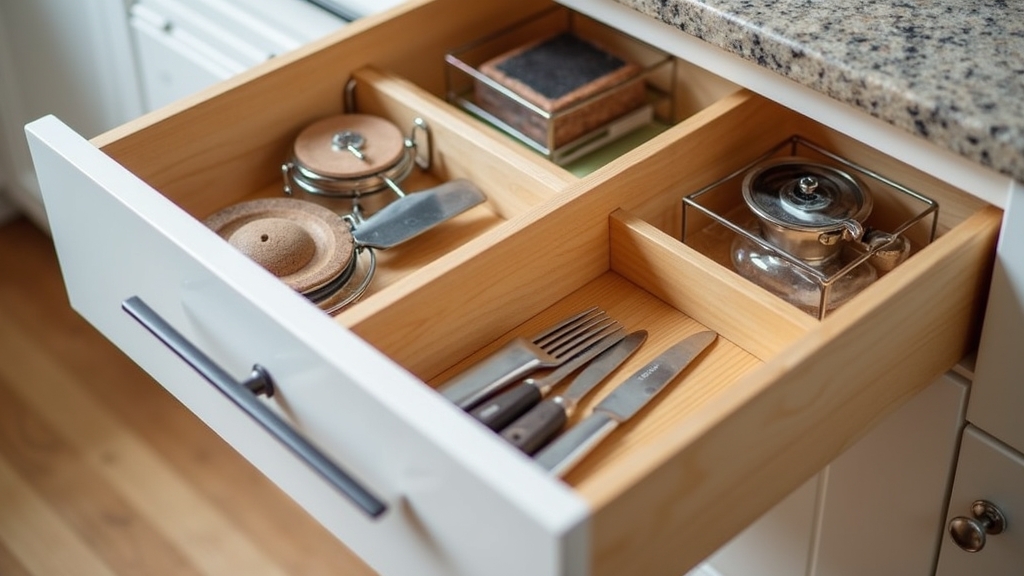
- Bamboo Deep Drawer Dividers: Opt for FSC-certified bamboo. It is renewable, sturdy, and naturally antimicrobial.
- Adjustable Peg Systems: These allow you to customize the layout as your cookware collection changes.
- Recycled Cork Liners: Unlike plastic liners, cork is compostable and provides excellent grip and sound dampening.
- Stainless Steel Pot Racks: For vertical pot and pan storage within the drawer.
- Measuring Tape: Precision is non-negotiable here. Measure twice, buy once.
Preparation: The Clean Slate Method
You cannot organize what you don’t use. This is where it gets interesting: most people find that 20% of their kitchen gear takes up 80% of their drawer space. Start by emptying every single item onto your counter.
- The Audit: Categorize items into 'Daily Use,' 'Occasional,' and 'Donate.' If you haven't used that specialty pasta maker in two years, it’s taking up valuable real estate.
- Deep Clean: Use a simple mixture of white vinegar, water, and a drop of castile soap to wipe down the interior. Avoid harsh chemicals that can linger in food prep areas.
- Dry Thoroughly: Ensure the drawer is completely dry before laying down your cork or fabric liners to prevent moisture trapped under the surface.
Step-by-Step Instructions for Deep Drawer Optimization
1. Install Vertical Dividers for Pot and Pan Storage
Stop stacking your pans. What most people miss is that stacking leads to scratches on non-stick surfaces and unnecessary heavy lifting. Instead, use deep drawer dividers to create vertical 'slots.' Slide your pans in like folders in a filing cabinet. This allows you to grab the bottom-most skillet without moving three others.
2. Dedicated Lid Management
Lids are the primary cause of drawer chaos. The good news is that you can easily corral them. Use a narrow insert at the front or side of the drawer specifically for lids. If your drawer is deep enough, a tiered lid rack works wonders. Position it so the handles are easily accessible from the top.
3. The Pegboard Strategy for Dishware
If you are storing plates or bowls in deep drawers (a common trend in modern eco-homes), use a pegboard insert. By placing wooden pegs around your stacks of dishes, you prevent them from sliding when the drawer is opened and closed. This keeps your ceramic and glass sets safe from chipping.
4. Zoning for Bulky Items
For heavy mixers, food processors, or stone baking sheets, something to keep in mind is weight distribution. Place the heaviest items toward the back of the drawer (closest to the glides) to maintain the structural integrity of the drawer hardware over time. Use cross-dividers to create a 'parking spot' for each appliance.
Tips for Best Results and Longevity
Organizing is not a one-time event; it's a habit. Worth mentioning is the 'one-in, one-out' rule. If you buy a new cast iron skillet, the old, warped one must go. Additionally, avoid overstuffing. A drawer should only be 80% full to allow for easy access and airflow, which prevents musty odors in wooden cabinetry.
On the other hand, if you find your dividers shifting, a small piece of eco-friendly mounting putty at the contact points can stabilize the entire system without damaging the wood finish.
Troubleshooting Common Deep Drawer Issues
If your drawer becomes difficult to open, check the weight capacity of your slides. Most standard slides handle 75-100 lbs, but cast iron collections can easily exceed this. If the drawer sticks, you may need to upgrade to heavy-duty soft-close glides.
Another common issue is 'divider creep.' If your bamboo dividers are sliding, it's usually because the tension isn't set correctly or the drawer liner is too slick. Switching to a high-friction cork liner usually solves this immediately.