Choosing the Right Path for Outdoor Privacy
Stepping into your backyard should feel like entering a personal sanctuary, but it is hard to relax when you feel exposed to the neighbors or the street. Whether you are looking for patio privacy ideas or a more substantial backyard privacy lattice, the first hurdle isn't the design—it is deciding who will actually build it. Here is the thing: a privacy screen is often the first 'big' outdoor project homeowners tackle, yet the gap between a successful DIY build and a professional installation is wider than most realize.
Now, the important part to understand is that a privacy screen serves two masters: aesthetics and structural integrity. Unlike a piece of indoor furniture, an outdoor screen must withstand wind loads, moisture, and ground shift. This guide explores the nuances of building a DIY privacy screen versus hiring a contractor, helping you navigate the costs, risks, and rewards of each approach.
The DIY Approach: Creative Control on a Budget
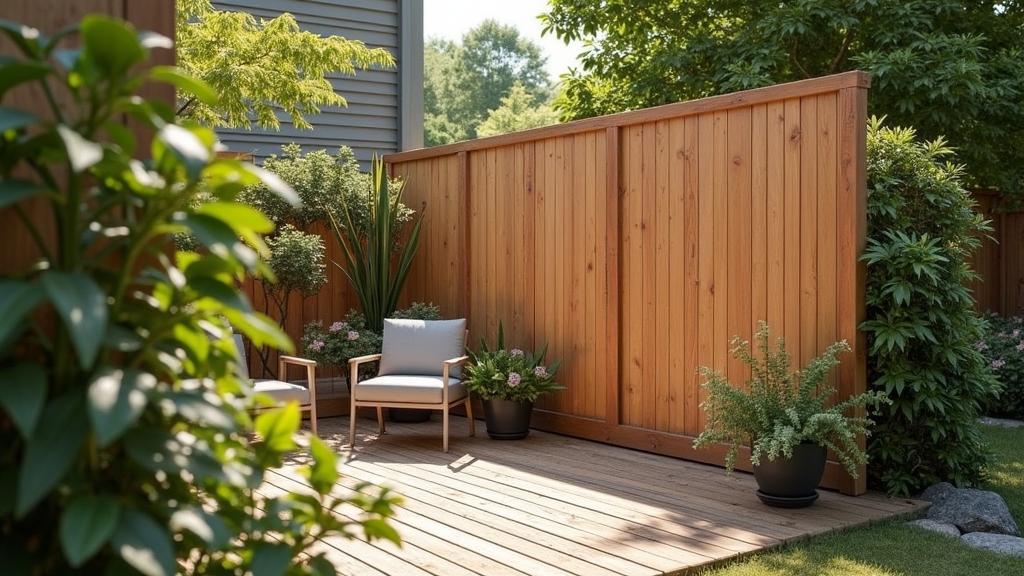
For many, the appeal of an outdoor screen DIY project is the ability to customize every detail without paying for labor. This is where it gets interesting: you aren't limited to the standard designs found in big-box stores. You can play with horizontal slats, reclaimed wood, or even integrated planters.
Pros of DIY Privacy Screens
- Cost Savings: You are essentially trading your weekends for cash. By eliminating labor costs, which typically account for 50% to 60% of a professional quote, you can often afford higher-quality materials like cedar or redwood.
- Customization: If your patio has an awkward corner or a specific height requirement to block a second-story window, you can tailor the dimensions exactly to your needs.
- Personal Satisfaction: There is a unique pride in sitting behind a screen you built with your own hands.
Cons of DIY Privacy Screens
- Time Commitment: What looks like a one-day project in a video often turns into a three-weekend ordeal once you factor in site prep, staining, and hardware runs.
- Structural Risks: What most people miss is wind load. A solid wood screen acts like a sail. If your posts aren't deep enough or your anchors are weak, a storm can turn your screen into a liability.
- Tool Requirements: To get professional results, you need more than a hammer. You will likely need a miter saw, a level, a power drill, and potentially an auger for post holes.
The Professional Installation: Speed and Security
Hiring a pro to install fence alternatives or a custom lattice is about more than just convenience. It is about insurance. On the other hand, it requires a significant upfront investment and a willingness to work within someone else's schedule.
Pros of Professional Work
- Engineering Expertise: Professionals know the frost line in your area and the local building codes regarding height restrictions. They ensure the structure won't lean or rot in three years.
- Efficiency: A crew can often finish in a day what would take a DIYer a month of spare time.
- Material Sourcing: Contractors often have access to better grades of lumber or specialized composite materials that aren't always available to the general public.
Cons of Professional Work
- High Cost: Between labor, overhead, and insurance, the price tag can be three to four times higher than the cost of raw materials.
- Limited Flexibility: Many contractors prefer to stick to standard designs they know work well, which might limit your ability to get a 'one-of-a-kind' look.
Breaking Down the Costs
The good news is that there is a privacy solution for every budget. However, you must compare apples to apples when looking at the numbers. A simple 6x8 foot pressure-treated lattice screen will vary wildly depending on the path you choose.
DIY Estimated Costs
For a standard 8-foot wide cedar slat screen, expect to spend between $150 and $300 on materials. This includes the posts, lumber, specialized exterior-grade screws, and stain. If you don't own the tools, add another $100 for rentals or basic purchases.
Professional Estimated Costs
For that same 8-foot screen, a professional installer will likely charge between $600 and $1,200. This higher price covers the labor, the concrete for the posts, the disposal of any old materials, and a warranty on the workmanship. Something to keep in mind is that many contractors have a 'minimum job fee,' which might make a single small screen disproportionately expensive compared to a full fence.
When to DIY and When to Hire
Choosing between these two isn't just about money; it is about the specific requirements of your space. Worth mentioning is that some projects are much safer for beginners than others.
The Case for DIY
- Freestanding Planter Screens: If the screen is attached to a heavy planter box rather than anchored in the ground, it is a low-risk project perfect for DIYers.
- Small Patio Accents: If you are just trying to hide a trash can or an A/C unit, a DIY lattice is an excellent weekend task.
- Standard Flat Ground: If your backyard is level and the soil is easy to dig, the physical labor is manageable for most.
The Case for Professionals
- High-Wind Areas: If you live in a coastal or canyon area, professional anchoring is a must to prevent the screen from blowing over.
- Steep Slopes: Building on a grade requires complex geometry to keep the top of the screen level while the bottom follows the ground.
- Large-Scale Perimeters: If you are looking for fence alternatives that span the entire length of your property, the sheer volume of work usually justifies a pro.
Final Recommendation
If you have basic comfort with a drill and a level, I recommend the DIY route for small-to-medium patio privacy ideas. Start with a design that uses pre-made lattice panels or a simple horizontal slat pattern. The savings are significant, and the mistakes are usually easy to fix. However, if your project involves heights over six feet or requires digging deep footings in rocky soil, the peace of mind offered by a professional is worth the extra cost. Before you start, always check your local HOA and city ordinances; nothing ruins the joy of a new screen like a 'notice to remove' because it exceeds height limits.