The Hidden Battle Against Basement Humidity
If you have spent any time living in a home with a below-grade space, you know that distinct smell. It is a heavy, damp scent that often signals the presence of excess moisture. Over my fifteen years of maintaining and renovating homes, I have learned that a basement is not just another room; it is a porous box sitting in wet soil. Addressing humidity here isn't just about comfort—it is about protecting the structural integrity of your floor joists and preventing the growth of organic matter that can compromise your indoor air quality.
Choosing a basement dehumidifier is more than a simple retail purchase. It is a technical decision that requires understanding how water interacts with your foundation. It is worth doing right the first time because an undersized unit will run constantly, driving up your electric bill without actually solving the problem, while a poorly placed unit might miss the stagnant pockets of air where mold thrives.
Root Causes: Why Basements Become Damp
Before you even look at a specification sheet, you must understand where the water is coming from. Moisture enters a basement through several primary pathways, and a dehumidifier is often the last line of defense, not the only one.
Hydrostatic Pressure and Seepage
Soil holds water like a sponge. When it rains, the ground surrounding your foundation becomes saturated. This creates hydrostatic pressure, which literally pushes liquid water through microscopic cracks in your concrete walls or through the cove joint—the area where the wall meets the floor. Even if you don't see standing water, moisture is likely migrating through the masonry as water vapor.
The Stack Effect and Air Infiltration
Your home acts like a giant chimney. Warm air rises and escapes through the attic, creating a vacuum in the lower levels. This 'stack effect' pulls in moist outdoor air through basement windows, rim joists, and vents. If it is a humid summer day, that warm, wet air hits the cool concrete of your basement, reaches its dew point, and condenses into liquid droplets.
Internal Moisture Loads
Sometimes the problem is coming from inside the house. Uninsulated cold water pipes will 'sweat' in the summer. If your laundry room is in the basement and the dryer vent has a small leak, you are pumping gallons of water directly into the air every time you run a load of towels. Small details matter here; even a pinhole leak in a copper pipe can significantly increase the humidity load on your equipment.
Immediate Steps to Manage Basement Moisture
If you walk downstairs and feel that 'stickiness,' do not rush to the store immediately. You need data. Trust your instincts on the smell, but verify the reality with a digital hygrometer. These inexpensive devices measure the relative humidity (RH) of the air. Ideally, you want to maintain your basement between 45% and 50% RH. Anything above 60% is an invitation for dust mites and mildew.
Once you have measured the RH, check your drainage. Ensure your sump pump is functioning correctly and that your condensate lines from the HVAC system are not leaking. Simple air circulation can also help. Moving air prevents stagnant spots, though it won't remove the moisture on its own—that is where the dehumidifier comes in.
Understanding Pint Capacity and Sizing
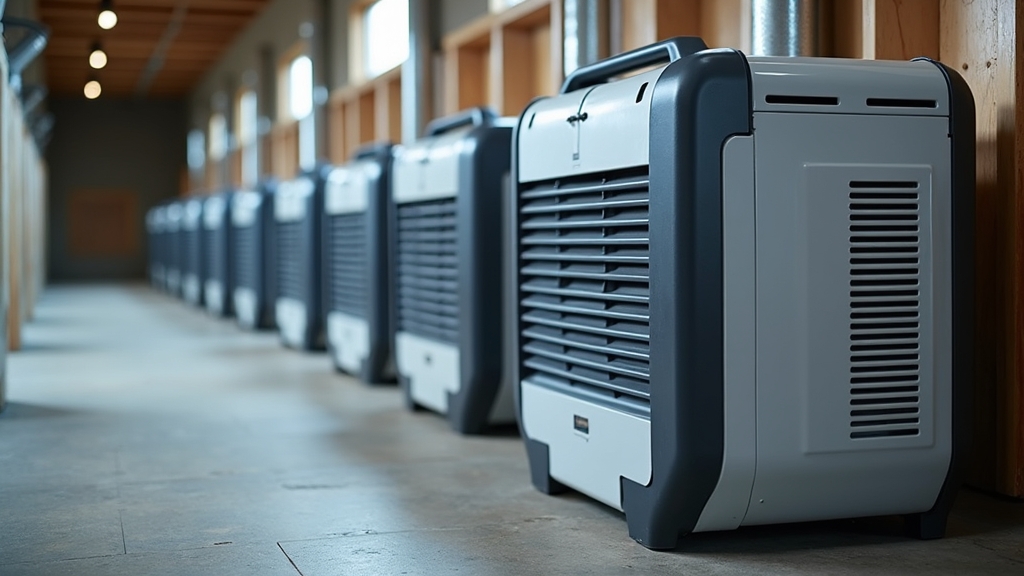
The most common mistake I see homeowners make is buying a unit based on the physical size of the room rather than the moisture level. Dehumidifiers are rated by 'pints,' which refers to how many pints of water the unit can extract from the air in a 24-hour period. It is important to note that the Department of Energy (DOE) updated their testing standards recently, so a modern 50-pint unit is roughly equivalent to an older 70-pint model.
Determining Your Needs
- Damp (50-60% RH): If the space feels clammy and has a slight odor only in humid weather, a lower capacity unit (approx. 20-30 pints) for every 1,500 square feet is often sufficient.
- Very Damp (60-70% RH): If you see moisture beads on the walls or smell a persistent musty odor, you need a medium-to-high capacity unit (30-50 pints).
- Wet (70-85% RH): If there are visible wet spots on the floor or water seeping through walls, you need a high-capacity industrial-grade unit (50+ pints).
Always err on the side of a larger capacity. A larger unit will reach the target humidity faster and cycle off, whereas a smaller unit will run 24/7, wearing out the compressor prematurely and wasting energy.
Long-Term Prevention Strategies
A dehumidifier should be a partner to a dry basement, not the sole solution. To reduce the load on your machine, look outside. Ensure your gutters are clean and that downspouts discharge at least six to ten feet away from the foundation. Check the grading of your soil; it should slope away from the house at a rate of one inch per foot for the first six feet.
Inside, consider sealing your rim joists with spray foam or rigid foam insulation. This stops the infiltration of humid outdoor air. If you have an open crawl space attached to your basement, encapsulating it with a heavy vapor barrier is one of the most effective ways to lower the overall humidity of your entire home.
Features to Look For
When selecting your unit, take your time to evaluate the drainage options. Most portable units have a bucket that you must manually empty. In a basement, this is a chore that most people eventually grow tired of. Look for a unit with a gravity drain hose or, better yet, a built-in condensate pump. A pump allows you to run a small plastic tube up and out a window or into a utility sink, providing truly 'set it and forget it' operation.
Auto-restart is another essential feature. If the power flickers during a summer storm, you want the unit to turn back on automatically using its previous settings. Without this, your basement could stay damp for days before you realize the machine is off.
When to Call a Professional
While a DIY approach works for most humidity issues, some problems are structural. If you see 'efflorescence'—a white, powdery salt deposit on the walls—it means water is moving through the masonry in significant volumes. If you notice horizontal cracks in your foundation walls or if the floor is consistently wet regardless of the weather, you likely have a drainage issue that a dehumidifier cannot fix. In these cases, consult a foundation specialist or a waterproofing contractor to discuss interior perimeter drains or exterior excavation.