Reclaiming Your Basement Floor: Why Overhead Storage is the Ultimate Space Saving Hack
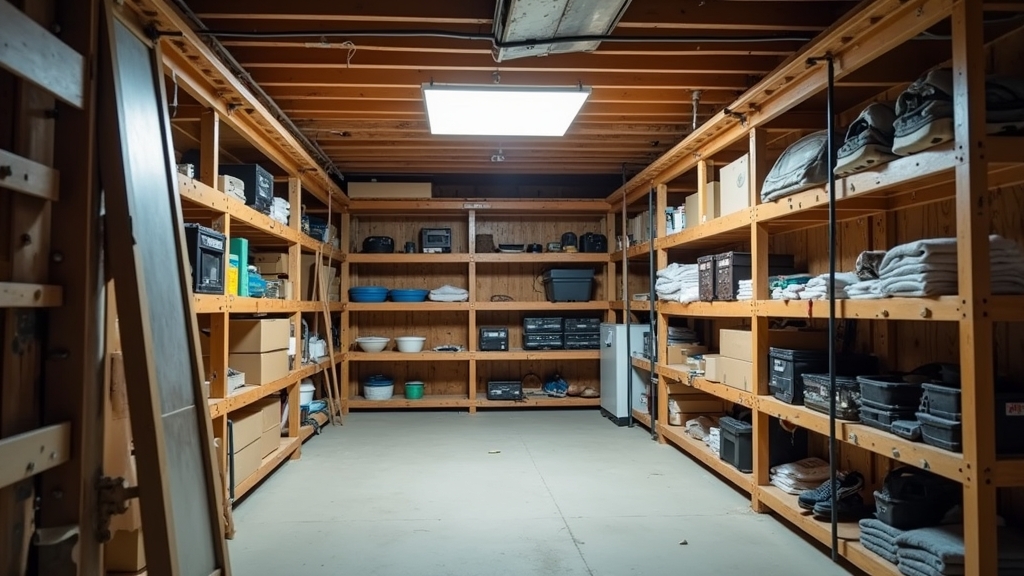
If you have lived in your home for more than five years, I am willing to bet your basement floor is starting to look like a game of Tetris gone wrong. I’ve been there. After 15 years of DIY projects, I realized that the most valuable real estate in my basement wasn't on the floor—it was right above my head. Installing hanging racks is a game-changer for basement organization, but it is also a project where a small mistake can lead to a very loud crash in the middle of the night.
Here is the thing: most people treat ceiling storage like a simple 'bolt and go' project. But when you are suspending 200 pounds of holiday decor and camping gear over your head, you need to respect physics. In this guide, I’m going to show you how to install these racks properly, the lessons I learned the hard way, and what most people miss during the planning phase.
Essential Tools and Materials
Before you head to the home center, make sure you have the right gear. Don't try to wing it with a cheap stud finder or a weak drill.
The Tool List
- High-quality Stud Finder: This is non-negotiable for finding the center of your joists.
- Impact Driver and Drill: An impact driver makes driving those long lag bolts much easier.
- Socket Wrench Set: For final tightening of the hardware.
- Chalk Line or Laser Level: To ensure your racks are perfectly square.
- Measuring Tape and Pencil: Measure twice, drill once—seriously.
- Safety Gear: Eye protection and a dust mask (drilling into old basement ceilings gets messy).
Materials Needed
- Overhead Storage Rack Kit: These usually come in 4'x8' or 4'x4' sizes.
- Heavy-duty Lag Bolts: If your kit doesn't include 3-inch bolts, buy them separately.
- Washers: To prevent the bolt heads from pulling through the mounting brackets.
- Plywood or OSB (Optional): If you are building custom wooden racks instead of using a metal kit.
Preparation: The Step Most People Skip
Now, the important part: you cannot just pick a spot and start drilling. You need to understand your basement's anatomy. What most people miss is checking for utilities. Before you commit to a location, look up. Are there HVAC ducts in the way? Is there a main plumbing drain or electrical conduit running across the joists?
Worth mentioning, you also need to determine the direction of your floor joists. Your mounting brackets must be installed perpendicular to the joists for maximum stability. If your basement ceiling is finished with drywall, this is where it gets interesting—you’ll be relying heavily on that stud finder to map out the joist centers. I always suggest drilling a tiny pilot hole to confirm you’ve hit wood before committing to the 1/2-inch lag bolt hole.
Step-by-Step Installation Guide
Step 1: Mark Your Joists
Find the joists where you want the corners of your rack to sit. Use your stud finder to mark the edges of each joist, then mark the center. This is where your strength comes from. The good news is that most joists are spaced 16 or 24 inches apart, which aligns perfectly with standard rack designs.
Step 2: Map Out the Perimeter
Using your chalk line or a laser level, mark the four corners of the rack on the ceiling. This ensures the unit will be square. If the rack is crooked, the wire decking won't sit flat, and it will drive you crazy every time you look at it.
Step 3: Install the Ceiling Brackets
Drill pilot holes into the center of the joists. Do not skip the pilot holes! Without them, you risk splitting the joist, which compromises the structural integrity of your floor. Once the holes are drilled, use your impact driver or socket wrench to secure the ceiling brackets with lag bolts and washers.
Step 4: Attach the Vertical Support Down-rods
Most hanging racks have adjustable heights. Something to keep in mind is the 'headroom' factor. You want the rack high enough that you won't hit your head, but low enough that you can actually fit your storage bins. Bolt the vertical supports to the ceiling brackets at your desired height.
Step 5: Assemble the Frame and Decking
Attach the horizontal beams to the vertical supports. Once the frame is tight and level, lay in the wire decking. On the other hand, if you are building a custom wood rack, this is where you would slide in your plywood base and secure it with wood screws.
Common Mistakes and Lessons Learned
Over the last 15 years, I’ve seen some spectacular failures. Here is what to avoid:
- Overloading the Weight Limit: Most racks are rated for 300-600 lbs. That sounds like a lot until you realize how heavy three bins of old books are. Always weigh your heaviest bins first.
- Ignoring the Obstructions: I once installed a rack only to realize I could no longer open my water heater's access panel. Check your clearance for doors, lights, and appliances.
- Off-Center Bolting: If your lag bolt is only hitting the edge of a joist, it will eventually pull out. Use a thin nail to 'feel' the edges of the joist through the drywall if you aren't 100% sure where the center is.
- Blocking Light: Basement lighting is usually dim anyway. Installing a massive 4x8 rack directly under your only light bulb will turn your basement into a cave.
Troubleshooting Common Issues
Problem: My joists are running the 'wrong' direction.
If your joists run parallel to the long side of the rack and don't align with the brackets, you'll need to install 'blocking.' This involves screwing 2x4s between your joists to create a solid mounting point. It’s extra work, but it’s the only safe way to do it.
Problem: The rack wobbles when I load it.
This usually means the bolts aren't fully tightened or the vertical supports aren't perfectly plumb. Check every connection with a wrench. Some sway is normal, but it shouldn't feel like it’s going to collapse.
Problem: My ceiling is sloped.
Many basements have slightly uneven ceilings. Use the adjustable holes in the vertical down-rods to level the rack even if the ceiling isn't. Use a spirit level on the horizontal frame to confirm.
Tips for Best Results
- Use Clear Bins: Don't use opaque tubs. You want to see what is in the rack from the floor without climbing a ladder.
- Label the Bottoms: Since you'll be looking up at the bins, put labels on the bottom of the containers, not just the sides.
- Maintain a 'Light' Zone: Store heavy items near the vertical supports and lighter items in the center of the wire decking to prevent sagging.
- Group by Season: Put your Christmas lights at the back and your summer camping gear at the front.