After thirty years of swinging a hammer and managing job sites, I’ve learned that the most common complaint in any home isn't the color of the paint or the style of the faucet—it’s the lack of space. In a bathroom, where every square inch is at a premium, people often look at the floor and feel defeated. They forget to look up. Vertical space is the most underutilized asset in a home, and reclaiming it is the difference between a cluttered mess and a functional retreat.
The Reality of Vertical Storage
When you're dealing with a small bathroom space, you can't push the walls out without a massive budget and a structural engineer. Instead, you have to work with the 'air' you already own. Over the decades, I've installed hundreds of storage solutions, from high-end custom millwork to basic units from big-box stores. The key isn't just about adding more shelves; it's about matching the right hardware to your wall type, your plumbing layout, and your budget.
Over the Toilet Shelf Options
The over the toilet shelf is the classic "entry-level" solution. It occupies the dead space above the tank and requires zero floor footprint. In my experience, these are often misunderstood. People buy the cheapest wire rack they can find and then wonder why it wobbles every time they reach for a towel.
Pros and Cons of Toilet Shelves
The biggest advantage is ease of installation. Most freestanding units can be assembled in twenty minutes. They are non-permanent, making them perfect for renters or those who aren't ready to commit to drilling into tile. However, the downside is stability. Unless you anchor these units to a wall stud, they tend to be flimsy. They also make it difficult to access the toilet tank for repairs—something I always warn homeowners about. If your fill valve breaks, you don't want to be dismantling a shelf just to fix a leak.
Cost Analysis: Over the Toilet Shelves
- Budget ($40 - $80): Typically lightweight metal or engineered wood. Functional, but lacks longevity.
- Mid-Range ($90 - $200): Solid wood or heavy-duty steel with better finishes that won't rust in high humidity.
- Installation: $0 (DIY) to $75 (Pro assembly).
Floating Bathroom Shelves
If you want a modern, airy look, floating bathroom shelves are the way to go. From a contractor's perspective, these are the most aesthetically pleasing but require the most precision during installation. You aren't just putting up a board; you're managing weight distribution and moisture resistance.
The Technical Details
The secret to a floating shelf that doesn't sag is the internal bracket. If you're mounting to drywall, you must hit at least one stud. If you're mounting to tile, you need diamond-tipped bits and a steady hand to avoid cracking the glaze. I always recommend using a moisture-sealed wood like teak or a high-quality MDF with a heavy lacquer finish. Bathrooms are humid environments; raw wood will warp within a year.
Cost Analysis: Floating Shelves
- Materials: $30 to $150 per shelf depending on the wood species and bracket quality.
- Hardware: $15 - $40 for heavy-duty toggle bolts or specialized masonry anchors.
- Professional Installation: $150 - $300 (often a minimum service fee for a handyman or carpenter).
The Power of the Tall Bathroom Cabinet
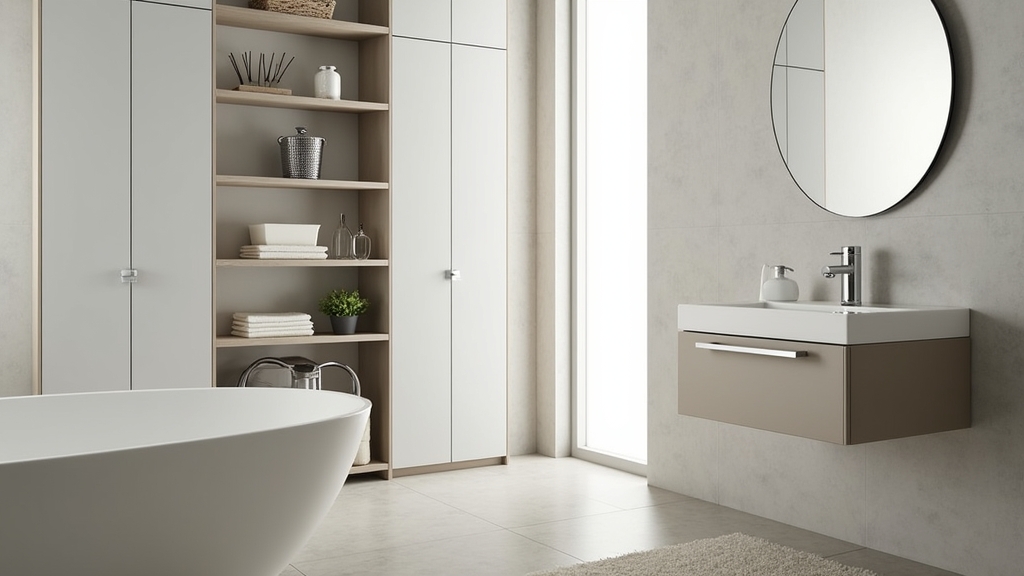
When you need serious storage for linens, toiletries, and cleaning supplies, a tall bathroom cabinet (often called a linen tower) is the gold standard. These units typically stand 60 to 72 inches high and utilize verticality better than anything else.
Why Cabinets Win on Utility
Cabinets offer something shelves don't: the ability to hide the mess. Not everything in a bathroom is "display-worthy." You want your spare toilet paper and medicine bottles behind a door. From a structural standpoint, these units are heavy. I’ve seen too many people buy a tall, narrow cabinet and skip the wall anchor. That’s a massive safety hazard. Always secure it to the wall framing.
Cost Analysis: Tall Cabinets
- Stock Units ($150 - $400): Mass-produced units made of particle board or thin plywood. Good for guest baths with low use.
- Semi-Custom ($450 - $900): Better hinges (soft-close), solid face frames, and water-resistant finishes.
- Custom Built ($1,200+): Hand-built by a cabinet maker to fit your exact dimensions. This is the only way to perfectly match existing vanities.
- Installation: $100 - $250 for professional leveling and anchoring.
Comparison and Best Use Cases
Choosing between these options depends on your specific small bathroom space layout and your long-term goals. Here is a breakdown of which solution fits which scenario:
- For Renters: Stick with an over the toilet shelf. It’s cheap, mobile, and leaves no holes.
- For Small Powder Rooms: Floating shelves. They keep the floor visible, which actually makes the room feel larger than it is.
- For Master Bathrooms: A tall bathroom cabinet. You need the volume for towels and bulk supplies.
- For Aesthetic Upgrades: A mix of floating shelves for decor and a recessed wall cabinet for utility.
Contractor Tips for Longevity
Regardless of which option you choose, there are three "contractor secrets" I tell every client. First, check your walls for plumbing. Before you drill, remember that the vent stack for your toilet often runs vertically behind it. A single misplaced screw can lead to a very expensive leak. Second, use stainless steel hardware. The humidity in a bathroom will corrode standard zinc screws in no time. Third, always over-engineer your anchors. If a shelf says it holds 20 pounds, mount it as if it needs to hold 50. Steam weakens drywall over time, and anchors can pull through if they aren't robust.
Final Recommendation
If you're on a tight budget but need immediate relief, go with a high-quality metal over the toilet shelf—just make sure you anchor it. If you own the home and want to increase its value, investing in a semi-custom tall bathroom cabinet or professional floating shelves is the smarter move. It provides a "built-in" look that buyers love. Take your time with the measurements. In my thirty years, I've never regretted spending an extra hour measuring, but I've often regretted rushing a cut.