The Hidden Cost of Improper Watering
In my years managing properties, I’ve seen more money wasted on dead boxwoods and wilted perennials than on leaky faucets and broken shingles combined. Most people view watering plants as a chore to be rushed through with a garden hose, but here is the thing: your watering technique determines the structural integrity of your entire landscape. A plant that is ‘babied’ with shallow, daily sprinkles develops a weak, surface-level root system that collapses the moment a heatwave hits. If you want a garden that thrives with minimal intervention, you have to stop thinking about hydration and start thinking about deep-root architecture.
Root Causes of Plant Dehydration and Rot
Before we fix your watering schedule, we need to look at why your current method is failing. What most people miss is that the soil structure is just as important as the water itself. If your soil is compacted, water runs off the surface like a paved driveway, leaving the roots parched despite a soaking. On the other hand, if your soil lacks drainage, you’re essentially drowning the plant in a stagnant pool. Now, the important part: ‘watering’ isn’t just about adding moisture; it’s about managing gas exchange. Overwatering fills every pore in the soil, preventing roots from breathing, which leads to anaerobic root rot—the silent killer of suburban gardens.
The Perils of Shallow Watering
Frequent, light watering is a temporary band-aid that creates a long-term liability. When the top inch of soil is the only part that stays moist, the plant focuses all its energy on growing roots near the surface. This makes the plant hypersensitive to temperature fluctuations and drought. It’s a vicious cycle that requires you to water more often just to keep the plant alive.
Immediate Steps to Save Your Landscape
If you suspect your plants are struggling, don’t just reach for the hose. Your first step is a diagnostic check. Use a simple moisture meter or, better yet, the ‘finger test.’ Stick your finger three inches into the soil. If it’s cool and damp, leave it alone. If it’s bone dry, it’s time for a deep soak. Worth mentioning: the best time to water is between 4:00 AM and 8:00 AM. This allows the water to penetrate deeply before the sun evaporates it, while ensuring the foliage dries out during the day to prevent fungal growth.
The Slow Drip Method
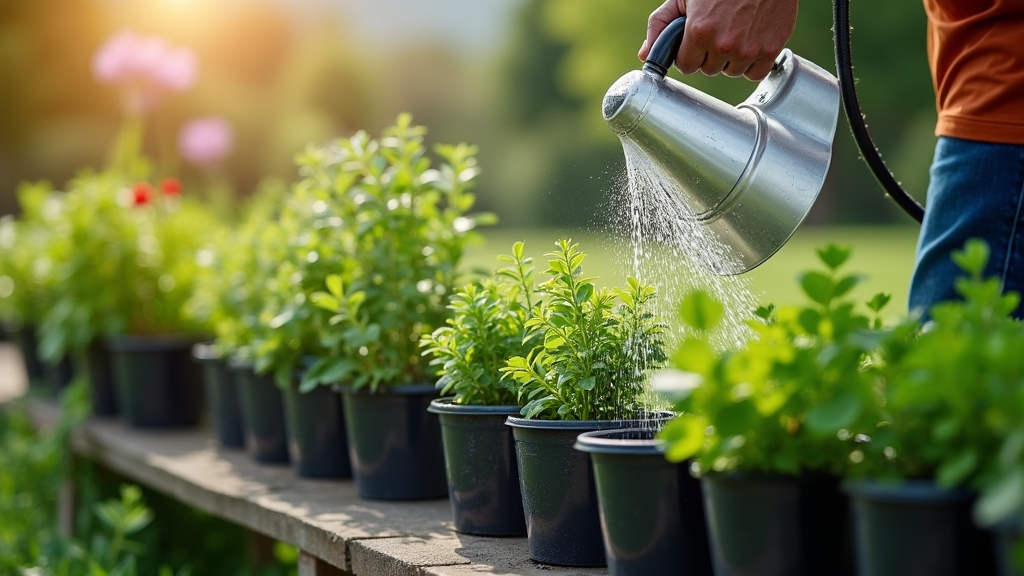
This is where it gets interesting. Instead of high-pressure spraying, use a slow-trickle approach. If you’re hand-watering, set the hose to a ‘bleeding’ pace at the base of the plant. This allows the water to seep down twelve to eighteen inches, encouraging roots to follow the moisture deep into the earth. For large trees, a ‘Gator Bag’ or a five-gallon bucket with a small hole drilled in the bottom can provide the slow, consistent delivery needed to revive a stressed root system.
Long-Term Prevention Strategies
To move away from constant maintenance, you need to build a self-sustaining ecosystem. The good news is that these fixes are one-time investments that pay off for years. Something to keep in mind: a truly healthy garden should eventually be able to survive a week of dry weather without a drop of supplemental water.
Mulching: The Protective Seal
Nothing stabilizes soil moisture like a thick layer of organic mulch. I recommend three inches of double-ground hardwood or cedar mulch. Mulch acts as an insulator, keeping soil temperatures down and preventing evaporation. Over time, as it breaks down, it adds organic matter back into the soil, improving water retention in sandy soils and aeration in clay soils. Just remember to keep the mulch away from the trunk of the plant—the ‘mulch volcano’ is a surefire way to rot the bark.
Soil Amendments and Biochar
If you’re dealing with poor soil, mixing in high-quality compost or biochar is a permanent fix. Biochar, in particular, acts like a microscopic sponge that never biodegrades. It creates permanent reservoirs for water and nutrients within the root zone. This is a pro-level move that significantly reduces the frequency of irrigation required during the peak of summer.
Smart Irrigation Conversions
Now, the important part: if you have a traditional sprinkler system, you’re likely wasting 30-50% of your water to wind and evaporation. Converting your flower beds to a drip irrigation system is the ultimate long-term solution. Drip emitters deliver water directly to the root zone at a rate the soil can actually absorb. Pair this with a smart controller that adjusts for local weather data, and you’ve effectively automated your plant health.
When to Call a Professional
While most watering issues are behavioral, some are structural. If you notice standing water that doesn’t drain after 24 hours, you may have a grading issue or a ‘hardpan’ layer of clay that requires mechanical aeration or the installation of a French drain. Similarly, if you see a sudden, unexplained spike in your water bill, call a professional to perform a pressure test on your irrigation lines. A subsurface leak can erode your foundation and drown your plants simultaneously before it ever shows up as a puddle on the surface.