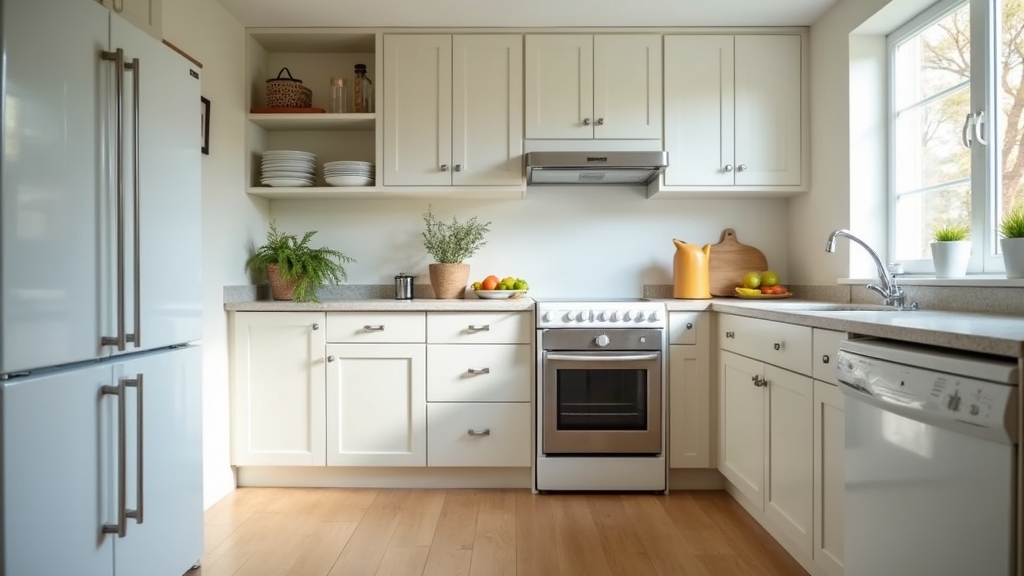
As someone who has spent years maximizing every square inch of small city apartments, I’ve learned that the kitchen is the heart of the home—but it’s often the most expensive to fix. Many of the city dwellers I help with balcony gardens eventually ask me: "How can I fix these ugly, orange-oak cabinets without spending $20,000 on a kitchen remodel?"
The Reality of Cabinet Refinishing
Here is the thing: your kitchen cabinets are likely structurally sound; they are just stuck in 1994. Replacing them is a massive waste of resources and money. Cabinet refinishing is the ultimate hack for the urban dweller. It’s the difference between a kitchen that feels like a cramped closet and one that feels like a bright, modern oasis. But before you grab a brush, you need to understand the two main paths: the traditional sanding wood method and the modern liquid deglosser approach.
Option 1: The Traditional Sanding and Priming Method
This is the gold standard of cabinet refinishing. It involves physically removing the old finish to create a "tooth" for the new paint to grab onto. Now, the important part to remember is that sanding isn't just about smoothing; it’s about stripping away years of cooking grease and wax buildup that would otherwise cause your paint to peel in six months.
On the other hand, sanding is incredibly messy. In a small apartment, wood dust gets everywhere—into your toaster, your spice rack, and even your bedroom. You’ll need a high-quality orbital sander, plenty of 120 and 220-grit sandpaper, and a very good vacuum attachment.
Option 2: The Liquid Deglosser Shortcut
This is where it gets interesting for those of us with limited space and time. A liquid deglosser, often called "liquid sandpaper," is a chemical solution that dulls the existing finish without the dust. You wipe it on, let it work its magic, and then wipe it off. What most people miss is that deglosser isn't a cleaning agent; it's a chemical bonder. You still have to clean the cabinets with TSP (Trisodium Phosphate) first.
Detailed Pros and Cons of Each Method
Sanding Wood Method
- Pros: Most durable finish, creates the smoothest surface, ensures any deep scratches are leveled out.
- Cons: Extremely labor-intensive, creates significant dust, requires power tools.
Liquid Deglosser Method
- Pros: No dust, much faster, great for cabinets with intricate molding where a sander can't reach.
- Cons: Chemical fumes require heavy ventilation (tricky in small apartments), less effective on very thick, high-gloss polyurethane finishes.
Cost Comparison: DIY vs. Professional
The good news is that even if you buy the most expensive paint on the market, you are still saving a fortune compared to a full kitchen remodel. Let’s break down the realistic costs for a standard 10x10 kitchen.
DIY Materials Breakdown
- Paint (High-quality Urethane Alkyd): $80 - $120 per gallon (you'll likely need two).
- Primer (Shellac-based is best for blocking stains): $50 - $70.
- Sandpaper or Deglosser: $20 - $40.
- Brushes and Mohair Rollers: $50.
- Cleaning Supplies (TSP): $15.
- New Hardware (Optional but recommended): $100 - $300.
Total DIY Cost: $315 - $595
Professional Refinishing Costs
Something to keep in mind is that professionals don't just paint; they usually take your doors to a shop and spray them for a factory-smooth finish. This level of service typically costs between $3,000 and $6,000 depending on the number of openings. While it's significantly more expensive than DIY, it’s still much cheaper than the $15,000+ you'd spend on new cabinetry.
Best Use Cases: Which Method Should You Choose?
Worth mentioning is the type of wood you are working with. If you have open-grain wood like Oak, you might need a grain filler if you want a perfectly smooth look, which adds cost and time to both methods.
Choose Sanding If:
- Your cabinets have previous paint that is peeling or chipping.
- You have deep scratches or water damage.
- You have a workspace (like a garage or balcony) where you can contain the dust.
Choose Deglosser If:
- The current finish is in good condition but just the wrong color.
- You live in a small apartment with poor ventilation for dust.
- Your cabinet doors have complex, raised panels that are a nightmare to sand by hand.
Final Recommendation: The "Hybrid" Approach
After helping dozens of neighbors through this, here is my recommendation for the best balance of cost and quality: Use a hybrid approach. Give the flat surfaces a quick once-over with 220-grit sandpaper to knock down the shine, then use a deglosser on the detailed trim and molding. Follow this up with a high-quality shellac-based primer like Zinsser BIN—it sticks to everything and prevents those old wood tannins from bleeding through your beautiful new white or forest green paint.
A kitchen remodel doesn't have to mean a sledgehammer and a second mortgage. With about $400 and a long weekend, you can completely change the vibe of your home. Just remember: the prep work is 80% of the job. Don't rush it!