Maintaining Efficiency: Why Flushing Matters
In most homes, the tankless water heater is a 'set it and forget it' appliance. However, as a property manager who has overseen the maintenance of dozens of these units, I have found that neglecting a regular flush is the most common reason for premature system failure. Over time, calcium and magnesium deposits—commonly known as scale—build up inside the heat exchanger. The real issue usually is that this scale acts as an insulator, forcing the unit to work harder to heat the water, which eventually leads to cracked heat exchangers or total system shutdown.
Flushing your unit, also known as descaling, is the process of circulating a cleaning solution through the system to dissolve these mineral deposits. From experience, doing this once a year can extend the life of your unit by a decade or more. What works best is a methodical approach that ensures all internal components are thoroughly cleaned without damaging the sensitive flow sensors.
Tools and Materials Needed
Before you begin, you need to gather specific supplies. One thing many people overlook is that you cannot simply pour a cleaning solution into the unit; you need a way to circulate it. A common situation is homeowners buying the solution but forgetting the pump.
- Submersible Pump: A small 1/6 HP pump is usually sufficient.
- Two Sturdy Hoses: Standard washing machine hoses or short garden hoses work well.
- Large Bucket: A 5-gallon bucket is the industry standard for this task.
- Descaling Solution: You can use 3 to 4 gallons of undiluted food-grade white vinegar or a non-toxic flow-aided descaling solution.
- Wrench/Pliers: For loosening and tightening hose connections.
Preparation Steps
Safety and sequence are paramount. In my experience, the biggest mistake people make is failing to isolate the unit correctly, which can lead to vinegar entering the home’s potable water lines or damaging the heater's internal electronics.
Power and Gas Safety
First, turn off the power supply to the water heater. If it is a gas unit, turn the gas valve to the 'off' position. While some modern units have a 'service mode,' the safest bet for a DIY flush is to ensure the unit cannot fire up while there is no water flow or while the cleaning solution is circulating.
Isolating the Unit
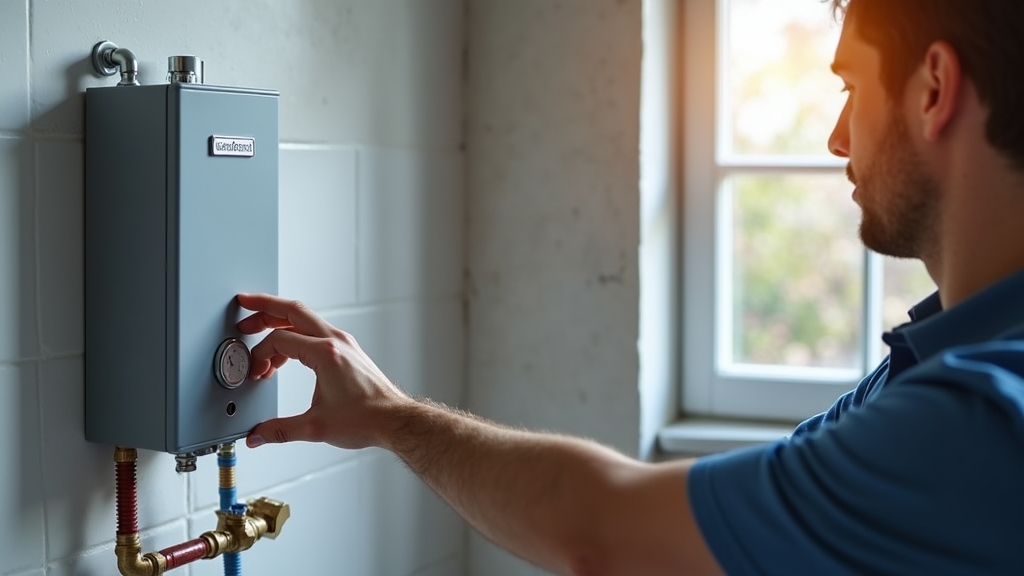
Locate the isolation valves. These are typically color-coded: red for hot and blue for cold. Close both valves by turning the handles perpendicular to the pipe. This prevents water from entering the house and keeps the descaling solution contained within the heater itself. The key thing to remember is that you are creating a closed loop between the bucket and the heater.
Detailed Step-by-Step Instructions: Descaling the Heat Exchanger
Now that the unit is isolated, you can begin the cleaning process. This is the core of tankless water heater maintenance.
Connecting the Hoses
- Remove the small screw-on caps from the service ports on both the cold and hot valves. Be prepared for a small amount of water to leak out; keep a towel handy.
- Connect one end of your first hose to the cold water service port. Connect the other end to the output of your submersible pump.
- Place the pump inside the 5-gallon bucket.
- Connect your second hose to the hot water service port. Place the open end of this hose into the bucket. This will be your return line.
The Circulating Process
Pour your white vinegar or descaling solution into the bucket until the pump is fully submerged. Open the service port valves (the small handles on the ports themselves). Plug in the pump and let it run. In my experience, a 45-minute to 60-minute flush is the 'sweet spot.' If the unit hasn't been cleaned in years, the liquid may turn a milky or yellowish color—this is a sign that the scale is dissolving.
Rinsing the System
Once the time is up, turn off the pump. Discard the used solution. To prevent your hot water from smelling like vinegar, you must rinse the unit. Close the cold water service port valve, but leave the hot water port open with the hose still leading to the bucket. Slowly open the main cold water inlet valve. This sends fresh water through the heat exchanger and out the hot service port. Run at least 20 gallons through or until the water no longer smells like vinegar.
Tips for Best Results
Over the years, I have learned a few tricks that make this job easier and more effective. First, always clean the 'inlet filter' or 'sediment screen.' This is a small mesh screen located near the cold water inlet. If this is clogged with sand or debris, your flow rate will suffer regardless of how clean the heat exchanger is. Simply unscrew it, rinse it under a tap, and put it back.
Another thing to consider is the temperature of the vinegar. While not strictly necessary, using slightly warm (not hot) vinegar can sometimes speed up the chemical reaction with the calcium. However, for most residential units, standard room-temperature white vinegar works perfectly fine if given enough time.
Troubleshooting Common Issues
If you finish the flush and the unit displays an error code, don't panic. A common situation is an 'E1' or 'Air Lock' code. This usually means there is air trapped in the lines. To fix this, turn off the unit, open a few hot water faucets in the house to bleed the air, and then restart the heater. If you notice a drop in water pressure after a flush, check the aerators on your faucets; sometimes bits of dislodged scale can travel into the house lines and clog the small screens at the sink.
If the pump won't start, ensure it isn't 'air bound.' Sometimes you need to tilt the pump in the bucket to let air bubbles escape the impeller housing so it can catch prime. Always ensure the discharge hose is secure; a pump can move quite a bit of liquid, and a loose hose can create a significant mess in a utility closet.