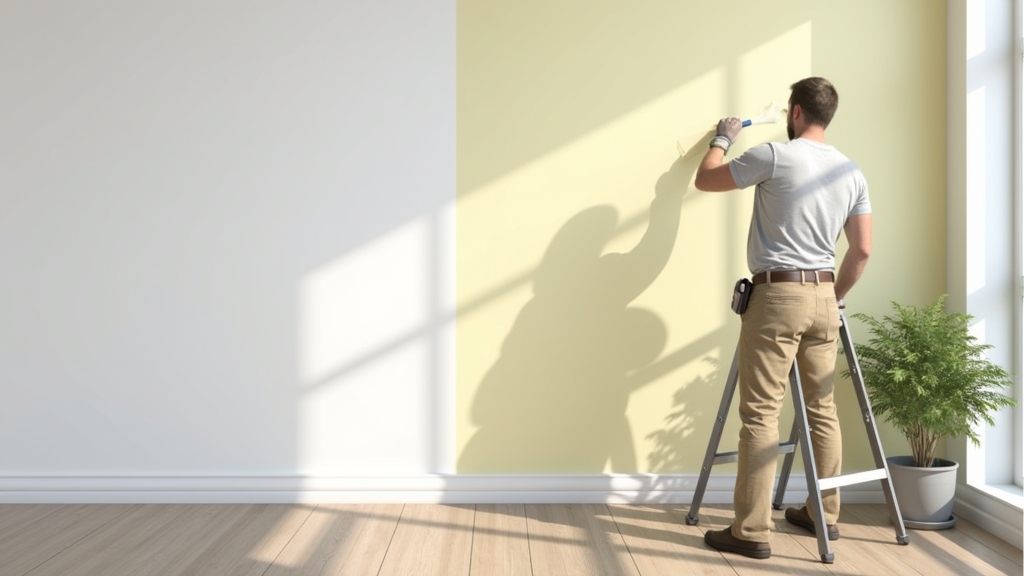
In most homes, the walls represent the largest surface area, meaning they have a disproportionate impact on both aesthetics and energy efficiency. From experience, homeowners often view painting as a purely decorative chore, but what I have found is that choosing the right interior paint and applying it correctly can actually improve light distribution, reducing your reliance on artificial lighting during the day. This guide focuses on the 'Quick Fix' approach—achieving professional results with minimal downtime and maximum efficiency.
Essential Tools and Materials
The real issue usually is that DIYers try to save money on tools, which leads to a poor finish and more work. High-quality tools are an investment that pays off in speed and coverage. For a standard interior wall painting project, you will need:
- Angled Sash Brush: A 2.5-inch synthetic bristle brush (nylon/polyester blend) for 'cutting in' around edges.
- Roller Frame and Naps: A sturdy 9-inch frame with 3/8-inch microfiber naps for smooth surfaces or 1/2-inch for textured walls.
- Extension Pole: Even for standard 8-foot ceilings, a pole provides better leverage and prevents back strain.
- Painter's Tape: Use a premium brand like FrogTape to prevent paint bleed.
- Canvas Drop Cloths: Avoid plastic; canvas stays in place and absorbs drips instead of letting them smear.
- Paint Tray and Liners: Metal trays are more stable; plastic liners make cleanup instant.
- TSP (Trisodium Phosphate) or Substitute: For cleaning grease and grime off walls.
- Light Reflectance Value (LRV) Paint: Aim for a high LRV (above 60) to bounce more light around the room.
Preparation Steps: The Foundation of Success
One thing many people overlook is that 80% of a professional-looking paint job happens before the lid is even off the can. If you skip prep, the paint won't bond, and you'll see every imperfection. What works best is a systematic approach to the room.
Clearing and Cleaning
Remove all furniture or move it to the center of the room and cover it with plastic. Remove outlet covers and switch plates. In my experience, cleaning the walls is the step most people skip, yet it is the most critical. Use a sponge and a mild TSP solution to remove oils from handprints and dust. Paint will not adhere to dust; it will simply sit on top and eventually peel.
Patching and Sanding
Inspect the walls with a flashlight held parallel to the surface—this 'raking light' reveals every bump and hole. Fill small holes with a high-quality lightweight spackle. Once dry, sand the patches and any previous drips with 120-grit sandpaper. The key thing to remember is to 'feather' the edges of your sanding so the transition to the wall is invisible. Wipe away all dust with a damp microfiber cloth before proceeding.
Taping and Priming
Apply painter's tape to the trim and ceiling edges. Press the edge of the tape down firmly with a putty knife to create a seal. Regarding primer: if you are painting over a similar color or using a 'paint and primer in one' on a clean wall, you may skip it. However, if you are painting over a dark color with a light one, or painting over raw drywall/patching, a dedicated primer is non-negotiable to prevent 'flashing' (uneven sheen).
Detailed Step-by-Step Instructions
Over the years, I have learned that the order of operations determines the quality of the finish. Follow this sequence to minimize rework.
1. Cutting In
Start by painting the perimeter of the room where the roller can't reach—corners, baseboards, and the ceiling line. Dip your brush about two inches into the paint and tap it against the side of the can (don't wipe it, as you want the brush loaded). Work in 3-foot sections. A common situation is that people cut in the whole room and let it dry before rolling; avoid this. You want to 'roll into' the wet cut-in paint to avoid 'picture framing' (visible lines where the two areas meet).
2. Loading the Roller
Dampen your roller nap slightly with water (for latex paint) before starting; this primes the fibers to hold more paint. Dip the roller into the tray and roll it back and forth on the ramp until it is evenly saturated but not dripping. If the roller is 'skidding' on the wall, it doesn't have enough paint.
3. The 'W' Pattern Technique
For the main wall surface, work in 3x3 foot sections. Apply the paint in a large 'W' or 'M' pattern, then fill in the gaps without lifting the roller. This ensures even distribution. Finish the section with 'lay-on' strokes—light, vertical passes from top to bottom to level the texture. Always keep a 'wet edge,' meaning you overlap the previous section before it begins to dry.
4. Second Coat Timing
What works best is waiting at least 2 to 4 hours between coats, depending on humidity. Even if the paint feels dry to the touch, the chemical bond is still forming. Applying a second coat too early can pull the first coat off the wall, creating a sticky mess.
Tips for Best Results
- Check the Batch: If you have multiple gallons, mix them together in a 5-gallon bucket (called 'boxing') to ensure color consistency.
- Maintain Humidity: If the air is too dry, paint dries too fast, causing lap marks. A humidifier can actually help you get a smoother finish in winter.
- Remove Tape While Damp: Don't wait for the paint to fully dry before pulling the tape. Pulling it at a 45-degree angle while the paint is slightly tacky prevents the paint film from tearing.
- Energy Efficiency: Choose a 'Satin' or 'Eggshell' finish for living areas. These finishes have a slight sheen that reflects more light than 'Flat' paint, potentially lowering your lighting needs.
Troubleshooting Common Issues
Lap Marks: These are the dark streaks caused by painting over partially dried paint. To fix this, you must wait for the wall to dry completely, sand the ridges smooth, and apply another coat while maintaining a wet edge.
Bubbling/Blistering: This usually happens when painting in high heat or on a damp surface. Scrape the bubbles, sand, prime, and repaint when the temperature is between 60-80°F.
Poor Coverage: If the old color is peeking through, it’s often because the roller was squeezed too hard. Let the roller do the work; if you’re pressing hard to get paint out, you need more paint on the nap.