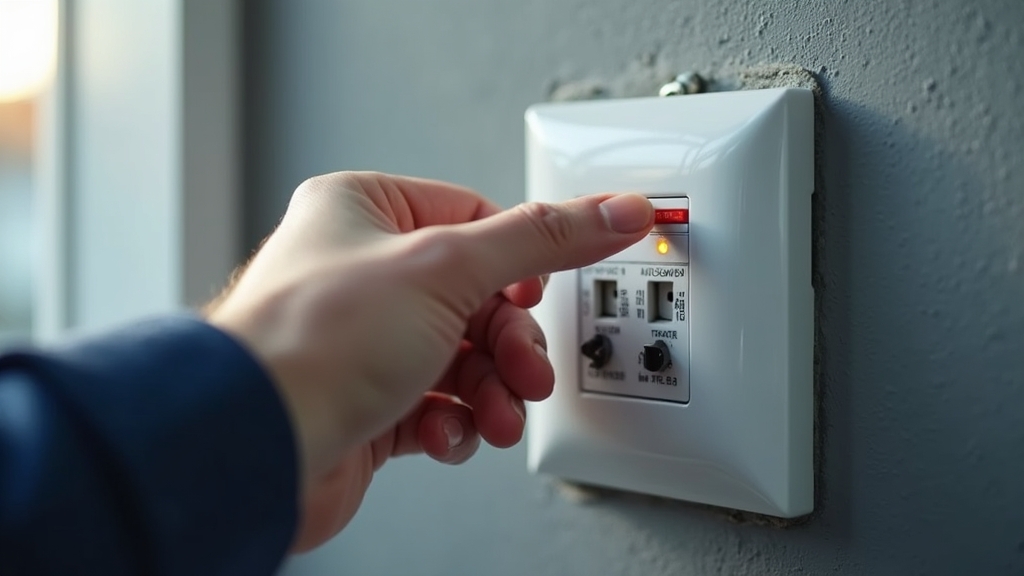
We have all been there: you are in the middle of blow-drying your hair or making morning coffee, and suddenly, the power cuts out. Your first instinct is to check the breaker panel, but the culprit is often much closer. The Ground Fault Circuit Interrupter (GFCI) is a specialized safety switch designed to protect you from electrical shock in high-moisture areas like kitchens and bathrooms. Understanding how to handle a tripped GFCI isn't just about restoring power; it’s about maintaining the electrical integrity of your home.
Understanding the GFCI Safety Switch
A GFCI outlet is essentially a miniature, ultra-sensitive circuit breaker built directly into your bathroom outlet or kitchen power source. It works by constantly monitoring the electricity flowing through a circuit. Here is the thing: it compares the amount of current going out to the amount coming back. If there is a discrepancy as small as 4 to 5 milliamps, the device assumes the electricity is leaking somewhere it shouldn't be—like through water or a person—and it snaps the circuit shut in as little as 1/30th of a second.
Comparison of Troubleshooting Methods
When your power fails, there are three primary approaches to restoring it. Choosing the right method depends on whether the trip was a one-time fluke or a symptom of a deeper electrical troubleshooting issue.
Method 1: The Standard Reset
The standard reset is the most common approach and involves using the physical buttons on the face of the outlet. The good news is that most GFCI trips are caused by temporary surges or minor moisture interference that resolves itself quickly.
- Procedure: Unplug all devices on the circuit. Firmly press the "Reset" button until you hear a distinct click. If the button doesn't stay in, the fault is still present.
- Pros: Immediate, zero cost, requires no tools.
- Cons: Doesn't diagnose the underlying cause; can mask recurring issues.
Method 2: Systematic Isolation Testing
If the reset button pops back out immediately, you need to isolate the problem. This is where it gets interesting: a single GFCI outlet often protects multiple "downstream" outlets. A fault in a standard outlet in your guest bathroom could be causing the GFCI in your primary bathroom to trip.
- Procedure: Unplug every single device connected to the circuit, including those in nearby rooms that may be linked. Reset the GFCI. If it holds, plug devices back in one by one until it trips again.
- Pros: Identifies faulty appliances or overloaded circuits accurately.
- Cons: Time-consuming; requires moving between rooms.
Method 3: Upstream Breaker Coordination
Sometimes the issue isn't at the outlet, but at the main service panel. What most people miss is that a GFCI outlet can trip simultaneously with a standard circuit breaker if a significant ground fault occurs.
- Procedure: Check the main electrical panel for a tripped breaker. Flip it to the full "Off" position before clicking it back to "On." Then, return to the GFCI outlet and perform a reset.
- Pros: Resolves power loss when the outlet reset alone fails.
- Cons: Requires access to the main panel; involves higher voltage risks.
Detailed Pros and Cons Analysis
When comparing these methods, the primary trade-off is between speed and diagnostic depth. Now, the important part: if you simply keep resetting a GFCI without finding the cause, you are wearing out the internal mechanism. GFCIs have a lifespan of about 10 to 15 years. Frequent tripping and resetting can shorten this significantly.
Method 1 is excellent for nuisance trips—those caused by a lightbulb burning out or a sudden humidity spike. However, its major con is the lack of safety data. Method 2 is the gold standard for homeowners because it differentiates between a broken outlet and a broken toaster. On the other hand, Method 3 is necessary for older homes where the wiring might be daisy-chained in complex, non-intuitive ways.
Cost Comparison of Resolutions
Understanding the potential costs involved in electrical troubleshooting helps you budget for repairs versus simple DIY fixes.
- DIY Reset/Isolation: $0. This is purely a time investment.
- GFCI Outlet Replacement: $15 - $30. If the outlet is defective (won't reset even with nothing plugged in), a high-quality replacement from a brand like Leviton or Eaton is relatively inexpensive.
- Professional Electrician: $150 - $350. Worth mentioning: Most electricians have a minimum service call fee. If they find that you just needed to press a button, you still pay that fee. However, if the issue is a "bootleg ground" or a neutral-to-ground fault inside the walls, this is money well spent.
Best Use Cases for Each Approach
Selecting your strategy depends on the environment and the symptoms.
- Use Method 1 (Standard Reset) when the power goes out during a storm or after a brief flicker. This is usually a response to a voltage spike.
- Use Method 2 (Isolation) when the kitchen power fails while you are using multiple appliances like a toaster oven and a blender simultaneously.
- Use Method 3 (Breaker Check) when the GFCI reset button feels "mushy" or has no tension. This often indicates there is no power reaching the outlet from the panel.
Final Recommendation
For most homeowners, the Systematic Isolation Method (Method 2) is the best balance of safety and efficiency. It ensures you aren't just treating the symptom but actually identifying the appliance or branch of the circuit that is failing. Something to keep in mind: if you live in a coastal area with high salt air or an older home with damp crawlspaces, your GFCIs will trip more often due to atmospheric moisture. In these cases, upgrading to a "Weather Resistant" (WR) rated GFCI can reduce nuisance trips while maintaining safety.
If you have followed all three methods and your bathroom outlet still won't provide power, the outlet itself has likely reached its end of life. Modern GFCIs are "self-testing" and will show a red LED light when they have failed internally. When you see that red light, skip the troubleshooting and replace the unit.