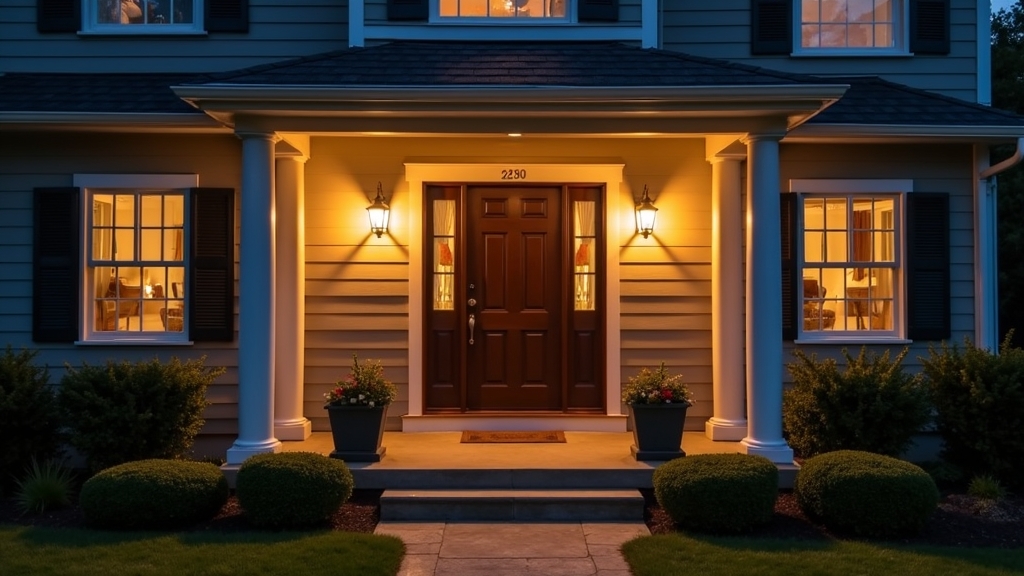
After thirty years in the dirt and the sawdust, I’ve learned that the smallest changes often make the biggest impact. When folks ask me how to instantly boost their curb appeal without breaking the bank, I always point to the front porch. Specifically, the lighting. An outdated, yellowing lantern from 1985 doesn't just look bad; it’s usually a sign of aging weatherproof wiring that could be a headache waiting to happen.
Here is the thing: lighting is the jewelry of your home. It’s the first thing people see at night, and it sets the tone for your entire property. But before you run out to the big-box store and grab the first exterior light fixture that catches your eye, you need to decide if this is a Saturday afternoon project for you, or a job for a licensed sparky. In my experience, the line between a successful DIY and a call to the fire department is thinner than you think.
The DIY Approach: Swapping Fixtures
If you have an existing light and you just want to update the look, you are firmly in DIY territory. Most modern fixtures are designed for easy installation, provided the underlying box is in good shape. This is where you can save a significant chunk of change on labor costs.
Pros of the DIY Method
- Cost Savings: You aren't paying a $150 service call fee plus $90 an hour.
- Flexibility: You can work on your own schedule without waiting for a contractor to show up in a four-hour window.
- Immediate Satisfaction: There is a certain pride in stepping back and seeing your home glowing under a new light you installed yourself.
Cons of the DIY Method
- Safety Risks: Electricity doesn't give you second chances. If you don't know how to properly shut off a breaker or test for live wires, stay away.
- Weatherproofing Mistakes: What most people miss is the importance of a proper seal. If you don't caulk the top and sides of the mounting plate, water will get behind the fixture and rot your siding or short out the wires.
- Code Compliance: You might inadvertently install something that doesn't meet local codes, which can be an issue when you eventually try to sell the house.
The Professional Approach: Rewiring and New Installs
Now, the important part: if you are moving a light, adding a motion sensor where there wasn't one before, or running entirely new lines, you need a pro. I’ve seen too many "handyman specials" where someone ran indoor-rated Romex through a garden hose. It’s dangerous and, frankly, stupid.
Pros of Hiring a Professional
- Expertise in Weatherproof Wiring: A pro knows exactly which conduits and connectors to use to ensure the system survives rain, snow, and humidity.
- Warranty and Peace of Mind: If the light fails or a circuit trips, the contractor is responsible for fixing it.
- Complex Solutions: They can integrate smart home systems or high-end motion sensor arrays that sync with your security cameras.
Cons of Hiring a Professional
- Higher Initial Cost: The labor will often cost more than the exterior light fixture itself.
- Scheduling: Good electricians are busy. You might have to wait weeks for a small porch job.
Detailed Cost Comparison
This is where it gets interesting. Let’s break down the numbers based on what I’ve seen in the field over the last decade.
DIY Cost Estimates
- Fixture: $50 – $300 (depending on style and quality).
- Supplies: $20 (silicone caulk, wire nuts, electrical tape).
- Tools: $30 (if you need a basic tester and screwdriver).
- Total: $100 – $350.
Professional Cost Estimates
- Fixture: $50 – $300.
- Labor (Standard Swap): $150 – $250.
- Labor (New Wiring/Circuit): $400 – $800.
- Total: $200 – $1,100.
The good news is that for a simple swap, the pro cost is manageable. But if you’re looking to add three new recessed lights into a porch soffit, that labor cost is going to climb quickly because of the time spent fishing wires through finished walls.
Best Use Cases for Each Option
Worth mentioning is that the "right" choice depends entirely on your specific house. Here is my rule of thumb after 30 years in the trade.
When to DIY
- You are replacing an existing light with a similar model.
- The mounting box is sturdy and not rusted out.
- You have easy access to the breaker panel.
- You want to upgrade to a "smart" bulb rather than a "smart" fixture.
When to Call a Pro
- You are installing a motion sensor floodlight in a location that currently has no power.
- Your home has older wiring (like knob-and-tube or ungrounded systems).
- You want to install a heavy, oversized chandelier-style fixture that requires extra structural support.
- You see any signs of scorching or melted wire insulation when you pull the old light off.
Final Recommendation
On the other hand, if you’re just looking to sharpen up your curb appeal before a Sunday open house, go buy a high-quality exterior light fixture and swap it yourself. Just remember the Golden Rule of electrical work: Test twice, touch once.
Something to keep in mind is that lighting isn't just about brightness; it's about placement. If you’re investing in high-end fixtures, it pays to have a pro consult on the layout. A poorly placed light creates harsh shadows that can actually make your home look less inviting. If you can afford it, hire an electrician for the "rough-in" (the wiring) and do the "trim-out" (hanging the lights) yourself to save a few bucks.
Pro Tips for Longevity
Before I let you go, here are a few contractor secrets. First, always buy fixtures with a "wet location" rating, not just "damp location," especially if they aren't fully under a deep roof. Second, use LED bulbs with a color temperature between 2700K and 3000K. Anything higher looks like a hospital parking lot; anything lower looks like a campfire. You want that warm, inviting glow that makes people feel at home the moment they pull into the driveway.