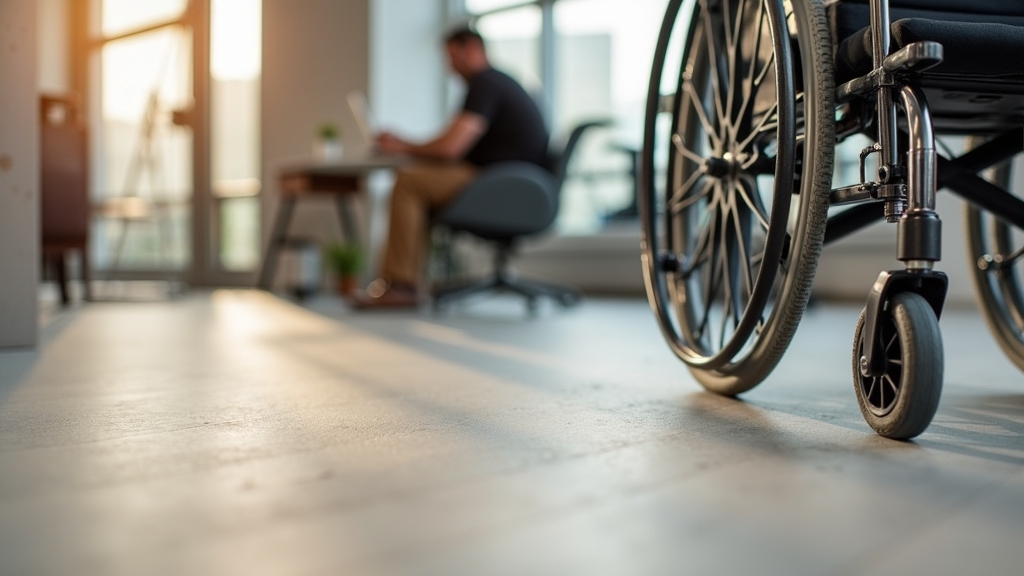
Designing a home office requires a careful balance between aesthetic appeal and functional durability. As a specialist who has spent years assessing how materials interact with their environment, I have observed that the most overlooked element is often the interaction between a rolling chair and the floor beneath it. The repeated friction and weight distribution of office chair casters can cause significant wear over time, leading to irreversible damage if the wrong materials are selected.
Understanding the Impact of Rolling Chairs
Rolling chairs exert concentrated pressure on very small points. Standard casters, often made of hard plastic, act as abrasive agents against floor finishes. Over months of use, this results in "tracking," where the finish is stripped away or the structural integrity of the flooring material is compromised. To prevent this, one must consider the Hardness Rating (Janka scale for wood) or the Wear Layer thickness (for synthetics).
Overview of Flooring Options
When selecting a surface for a home office, several key materials stand out for their ability to handle the unique stresses of mobile furniture.
Luxury Vinyl Plank (LVP)
Luxury vinyl plank has become a standard in modern workspaces due to its layered construction. It typically consists of a rigid core, a high-definition photographic layer, and a clear wear layer. For rolling chairs, the thickness of this wear layer—measured in mils—is the most critical factor for longevity.
Carpet Tiles
Unlike traditional wall-to-wall carpeting, carpet tiles offer a low-pile, dense surface. These are specifically engineered for commercial environments where rolling traffic is high. They provide acoustic benefits and thermal comfort while maintaining a flat enough profile for wheels to move freely.
Hardwood Protection
Natural hardwood is a premium choice but is also the most susceptible to caster damage. Protecting hardwood requires either a specific type of polyurethane finish or the use of secondary barriers to ensure the wood fibers are not crushed or scratched by the chair's movement.
Detailed Pros and Cons
Luxury Vinyl Plank: Pros and Cons
- Pros: High resistance to moisture, wide variety of designs, and relatively easy to clean. Many versions are DIY-friendly with click-lock mechanisms.
- Cons: Lower-quality LVP can delaminate under heavy rolling pressure. It does not provide much sound insulation compared to soft surfaces.
Carpet Tiles: Pros and Cons
- Pros: Exceptional modularity; if one tile is damaged by a chair, it can be replaced individually. Excellent sound dampening for video calls.
- Cons: Can trap dust and allergens more than hard surfaces. Require periodic vacuuming and deep cleaning to maintain appearance.
Hardwood with Office Chair Mat: Pros and Cons
- Pros: High resale value for the home and a timeless aesthetic.
- Cons: Extremely prone to scratching. Even with an office chair mat, grit can get trapped beneath the mat and act like sandpaper against the wood.
Cost Comparison
Cost efficiency is often determined by the longevity of the installation rather than just the initial price per square foot.
- Luxury Vinyl Plank: Mid-range pricing ($2–$7 per square foot). Installation is often affordable or can be a DIY project.
- Carpet Tiles: Economic to Mid-range ($1.50–$5 per square foot). Low waste during installation since they are pre-cut.
- Hardwood: Premium pricing ($8–$15+ per square foot). Requires specialized labor and regular maintenance (refinishing every 7–10 years).
Best Use Cases for Each
Choosing the right material depends heavily on the specific environment and the intensity of use.
- The High-Traffic Executive Office: If the office is used 40+ hours a week, commercial-grade carpet tiles or a high-wear-layer (20 mil+) LVP is recommended. These materials withstand constant motion without showing "traffic paths."
- The Multi-Purpose Room: If the office serves as a guest room, luxury vinyl plank offers a residential feel with the durability needed for occasional office work.
- The Historic Home: If maintaining original hardwood is a priority, avoid rolling chairs altogether or use soft-surface "rubberized" casters specifically designed for wood, coupled with a high-quality glass or polycarbonate chair mat.
DIY vs. Professional Installation
One must decide if the project warrants professional expertise or if it can be handled as a weekend task. This decision usually hinges on the subfloor condition and the material chosen.
When to DIY
If your subfloor is perfectly level and you are installing floating LVP or peel-and-stick carpet tiles, this is a manageable DIY project. The tools required are minimal—usually a utility knife, a tapping block, and a measuring tape. Success in DIY flooring depends on the "small details," such as leaving expansion gaps at the walls and ensuring the subfloor is free of debris before laying the first piece.
When to Hire a Professional
Professional installation is necessary when the subfloor requires leveling or if you are installing solid hardwood that needs to be nailed or glued down. Professionals have the heavy-duty machinery required for sanding and sealing. Additionally, if the office layout involves complex angles or integrated transitions to other rooms, an experienced installer will ensure the finished product looks seamless and functions correctly over time.
Final Recommendation
For most modern home offices, Luxury Vinyl Plank (LVP) offers the best balance of durability, cost-effectiveness, and ease of maintenance. It provides a hard surface that allows chair wheels to glide effortlessly while offering enough protection to last for decades. However, if sound control is a priority, Carpet Tiles are the superior choice. If you choose to keep existing hardwood, investing in high-quality polyurethane casters (soft wheels) is more effective for protection than relying solely on a mat.