The Reality of the Underground Workspace
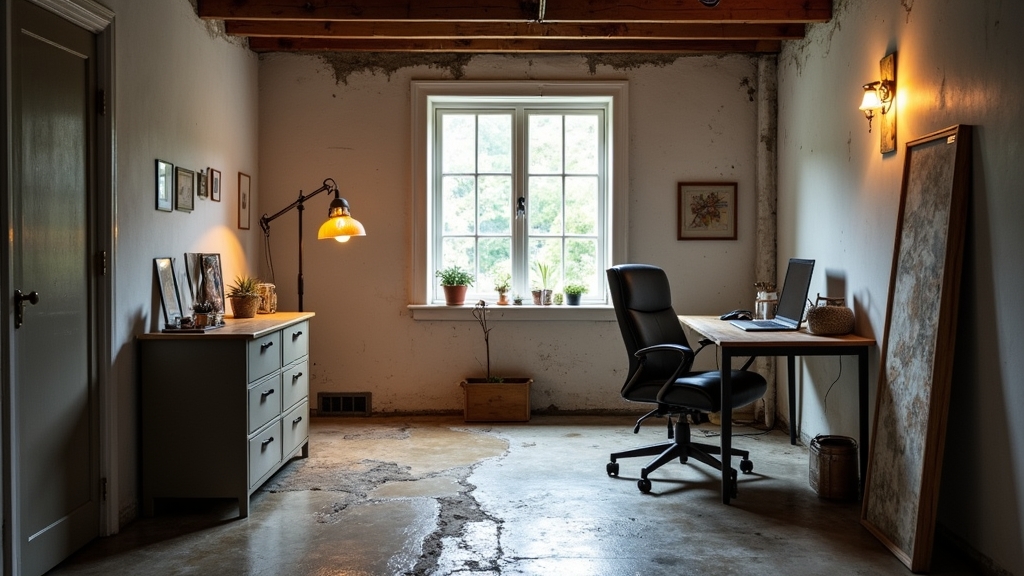
I’ve managed over fifty properties in my career, and if there is one thing I’ve learned, it’s that water always wins unless you have a plan. Converting a basement into a professional workspace is a brilliant move for focus and separation from home life, but it comes with a subterranean reality: moisture. Here is the thing: a basement is essentially a concrete box sitting in a wet hole. Without the right approach, that expensive tech and ergonomic chair will eventually smell like a wet dog, or worse, succumb to basement mold.
When you're setting up a waterproof office, you are faced with a fork in the road. Do you grab a bucket of sealant and a dehumidifier for the office, or do you call in the heavy machinery? This guide breaks down the battle between DIY maintenance and professional remediation based on years of seeing what actually holds up over a decade of use.
The DIY Approach: Managing the Environment
For many homeowners, the dampness isn't a flood; it’s a vibe. It’s that slight chill in the air or the feeling that your papers are coming out of the printer a bit limp. If your issues are seasonal or minor, DIY solutions are your first line of defense. The good news is that many basement moisture issues don't actually start in the basement—they start on your roof.
Surface Fixes and Humidity Control
The most common tool in the DIY arsenal is the portable dehumidifier for the office. These are excellent for managing ambient humidity, especially during humid summer months. However, what most people miss is that a dehumidifier is a management tool, not a cure. If you find yourself emptying the reservoir twice a day, you aren’t fixing the dampness; you’re just bailing out a sinking ship.
Another common DIY tactic is applying waterproof masonry paint. While this can brighten a room and stop minor seepage, this is where it gets interesting: if water pressure is building up behind your walls (hydrostatic pressure), that paint will eventually bubble and peel. It’s a temporary band-aid at best for serious issues.
The Maintenance Checklist
- Clean and extend gutters at least 6 feet from the foundation.
- Regrade the soil around the house so it slopes away from the walls.
- Seal small cracks in the floor or walls with epoxy injection kits.
- Install a hygrometer to monitor humidity levels (keep it below 50%).
Professional Remediation: Structural Solutions
Now, the important part: when does a damp basement fix require a contractor? If you see standing water, smell persistent rot, or see white powdery substances (efflorescence) on your walls, you’ve moved past the DIY stage. Professionals look at the house as a system, addressing why the water is there in the first place.
Internal Drainage and Sump Pumps
A professional crew will often suggest an internal perimeter drain. This involves jackhammering the edge of your concrete floor, installing a perforated pipe, and leading it to a sump pump. It’s messy, it’s loud, but it is the gold standard for a dry floor. Something to keep in mind is that a sump pump needs a battery backup. If the power goes out during a storm, your office becomes a swimming pool.
Exterior Waterproofing
This is the nuclear option. It involves excavating the earth around your foundation, applying a waterproof membrane, and installing new weeping tiles. It is expensive and disruptive to your landscaping, but on the other hand, it is the only way to truly stop water from ever touching your foundation walls. If you are planning a high-end waterproof office with custom cabinetry, this is the only fix I’d trust long-term.
Pros and Cons: Breaking it Down
DIY Maintenance
- Pros: Low cost, immediate results for humidity, can be done on a weekend.
- Cons: Doesn't solve structural issues, requires constant monitoring, high electricity cost for dehumidifiers.
Professional Waterproofing
- Pros: Increases home value, permanent solution, permits finishing the basement with confidence, peace of mind.
- Cons: High upfront cost, invasive construction, may require moving out of the office for weeks.
Cost Comparison: The Short Game vs. The Long Game
Let’s talk numbers, because that’s usually where the decision is made. A high-quality dehumidifier for the office will run you $250 to $500. Add in some gutter extensions and a few tubes of high-grade sealant, and you’re looking at a $700 investment. This is great for minor humidity.
Worth mentioning is that a professional interior drainage system usually starts around $3,000 and can go up to $10,000 depending on the square footage. Full exterior waterproofing? You’re looking at $15,000 to $30,000. While that sounds staggering, compare it to the cost of replacing your computers, flooring, and drywall after a mold outbreak. In my experience, spending $5,000 now saves $20,000 later.
Best Use Cases: Which One is Right for You?
How do you choose? It depends on your symptoms. If your basement only feels "heavy" during a rainstorm, start with the DIY route. Improve your drainage and get a good dehumidifier. The good news is that for 60% of homes, better gutters solve the problem.
However, if you see basement mold growing on the back of your desk or coming up through the baseboards, stop. Do not DIY this. Mold indicates a systemic failure. Likewise, if your basement floor has visible cracks that seep water when it rains, you need a professional damp basement fix. You cannot paint your way out of a crack in the slab.
Final Recommendation: The Property Manager’s Strategy
If you were my tenant or I was advising a client, here is what I’d say: Build your office in stages. First, perform the "tape test." Tape a square of clear plastic to your basement floor and wall. Leave it for 48 hours. If condensation forms under the plastic, water is seeping through the concrete (Pro fix needed). If it forms on top, you have high humidity (DIY fix needed).
Never finish a basement office with drywall and carpet until you have survived at least one massive rainstorm without a drop of moisture entering the space. A waterproof office isn't just about the aesthetics; it's about the air quality. Your lungs will thank you for choosing the permanent fix over the temporary band-aid.