The Reality of Shared Workspaces
Working from home offers flexibility, but it often comes with a noise problem. When two people share a single room or occupy adjacent spaces, every keyboard click and video call becomes a distraction. As someone who spent years optimizing tiny city apartments for gardening, I know that space management is about more than just physical layout; it is about managing the environment. Here is the thing: most people confuse 'soundproofing' with 'acoustic treatment.' Soundproofing stops sound from entering or leaving a room. Acoustic treatment stops sound from bouncing around inside it.
To create a functional shared office, you usually need a mix of both. In this guide, we will break down the realistic costs of creating office privacy solutions that actually work without breaking your budget.
The Low-Cost Method: Soft Surfaces and Layout
The first step in any soundproof home office project is addressing the 'echo chamber' effect. Hard surfaces like hardwood floors and bare walls reflect sound waves. This makes video calls sound hollow and amplifies every small noise. Now, the important part: you do not always need industrial materials to see an improvement.
Heavy Textiles and Rugs
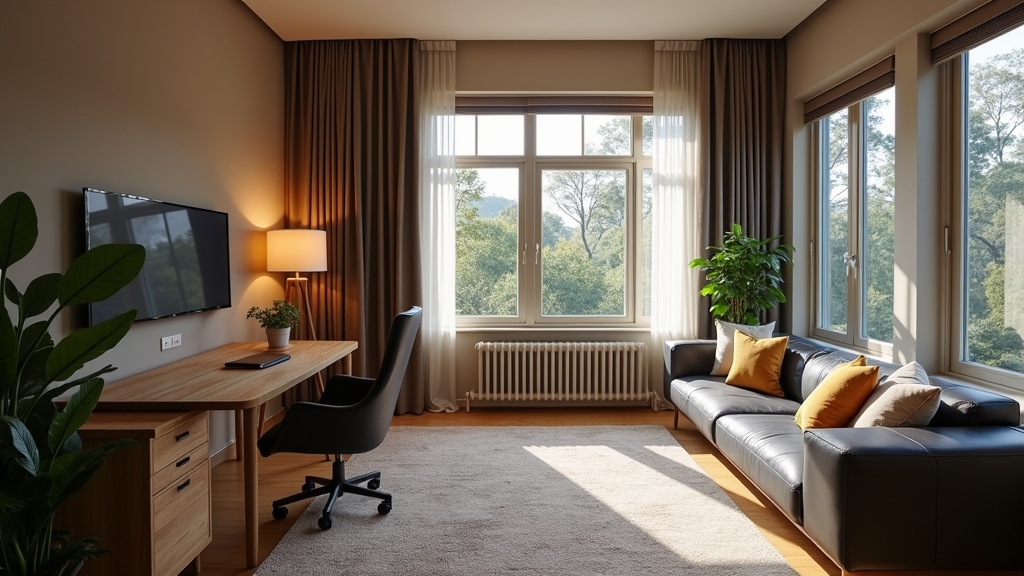
Adding a thick area rug with a dense felt pad underneath can reduce floor vibrations and sound reflections. Similarly, floor-to-ceiling blackout curtains don't just block light; they act as a buffer against street noise and internal echoes. This is where it gets interesting—the weight of the fabric matters more than the brand name. Look for 'sound-dampening' or 'triple-weave' curtains.
Strategic Furniture Placement
What most people miss is the power of a full bookshelf. A wall of books acts as a natural sound diffuser and absorber. If you and your partner work back-to-back, placing a tall, fabric-covered room divider or a bookshelf between your desks can significantly reduce the direct path of sound. On the other hand, placing your desks in corners often amplifies sound as it bounces off the meeting walls.
- Estimated Cost: $100 - $300
- Effectiveness: Low to Moderate
- Best for: Reducing echo and minor distractions.
The Mid-Range Method: Acoustic Panels DIY
If textiles aren't enough, you need to look at absorption. Professional acoustic panels are expensive, but building your own is one of the most effective office privacy solutions. Worth mentioning is that acoustic foam (those egg-carton style pieces) is often too thin to block anything other than high-frequency noise. For real results, you need density.
Building Your Own Panels
Acoustic panels DIY projects typically involve a wooden frame, mineral wool insulation (like Rockwool), and a breathable fabric cover. Mineral wool is much denser than foam and absorbs a wider range of frequencies. The good news is that these materials are readily available at most hardware stores. You can customize the fabric to match your office decor, making them look like professional wall art.
Weatherstripping and Door Seals
Sound is like water; it finds every leak. Most office noise 'leaks' through the gap under the door. Installing a solid rubber door sweep and adhesive weatherstripping around the door frame can make a massive difference. This is a small change that yields a high return on investment.
- Estimated Cost: $200 - $500
- Effectiveness: Moderate to High
- Best for: Improving audio quality for video calls and blocking hallway noise.
The High-End Method: Structural Upgrades
Sometimes, the distraction is too high for DIY fixes. If one person is in constant sales meetings while the other needs deep focus, you might need to invest in structural changes. This moves from 'acoustic treatment' into true 'soundproofing.'
Solid Core Doors
Most modern homes use hollow-core doors. These act like drums, vibrating and passing sound through easily. Replacing your office door with a solid-core wood door is a significant upgrade. Something to keep in mind is that you may need a carpenter for installation, as solid doors are heavy and require sturdy hinges.
Acoustic Glass Partitions
For shared rooms where you still want a sense of openness, a glass partition with acoustic glazing is an option. These are expensive but allow light to flow through while creating a physical sound barrier between two desks.
- Estimated Cost: $800 - $2,500+
- Effectiveness: Professional Grade
- Best for: Permanent home offices where privacy is a top priority.
Cost Comparison Summary
To help you decide, here is a breakdown of what you can expect to spend based on your goals.
| Solution Level | Primary Tools | Typical Cost | Noise Reduction |
|---|---|---|---|
| Budget | Rugs, Curtains, Books | $100 - $300 | 15-20% |
| DIY Mid-Range | Mineral Wool Panels, Door Seals | $200 - $500 | 40-50% |
| Professional | Solid Door, Specialized Partition | $800 - $2,500 | 70-90% |
Final Recommendation Based on Your Situation
If you are renting an apartment, stick to the Low-Cost and DIY Mid-Range options. You can take your rugs, curtains, and DIY panels with you when you move. These methods are highly effective at making a shared space livable. However, if you own your home and plan to work there long-term, upgrading to a solid core door is the single most effective move you can make. It changes the entire 'sound profile' of the room.
Remember, you don't need to reach total silence. Your goal is to reduce the 'signal-to-noise ratio' so that your partner's voice becomes background hum rather than a sharp distraction. Start with the door and the floor—usually, the biggest culprits of noise transfer.