After thirty years in the trades, I’ve seen more homeowners fight with wobbly plastic Lazy Susans than I care to count. They were the industry standard for decades, but frankly, they’re the 'junk drawer' of cabinet hardware. Things fall off the back, the center pole eats up space, and if a heavy jar of pickles gets stuck underneath, you’re basically looking at a demolition job just to retrieve it.
If you’re planning a kitchen renovation or looking to upgrade your current storage, there are far better ways to handle that awkward 45-degree void. Modern blind corner cabinet solutions have evolved from simple rotating trays into heavy-duty mechanical marvels that actually bring the contents to you. In this guide, I’ll break down the best alternatives, what they’ll cost you, and which ones actually stand up to daily use.
The Trouble with the Traditional Lazy Susan
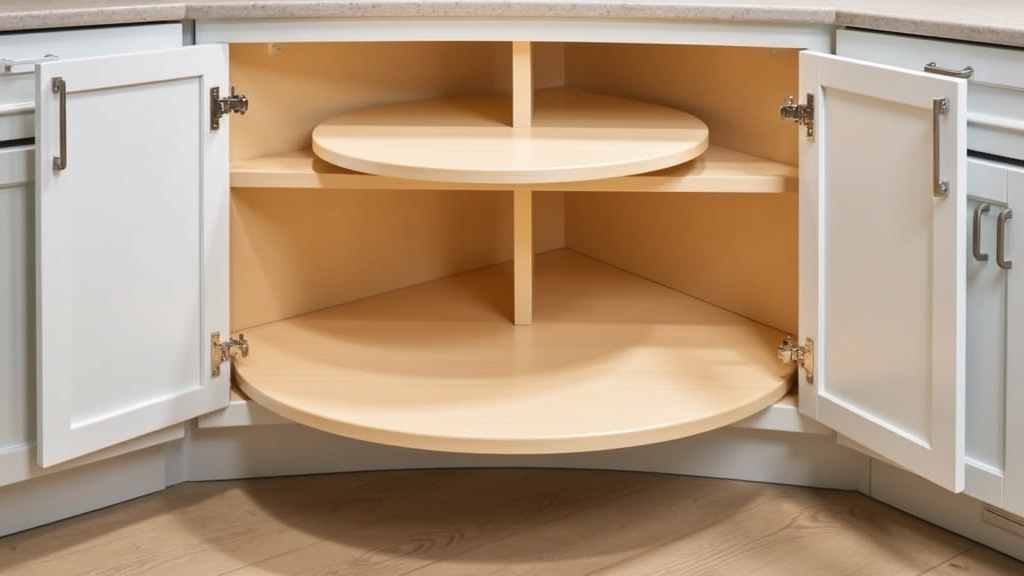
Before we look at the upgrades, we need to understand why the Lazy Susan is losing its crown. Traditional 360-degree spinners leave 'dead zones' in the square corners of the cabinet. Furthermore, the pivot point is often a structural weakness. If you’re building a kitchen that’s meant to last 20 years, you need hardware that won't sag under the weight of a Dutch oven.
1. Blind Corner Pull-Out Shelves (The 'Cloud' or 'Pivot')
Often referred to by brand names like the 'Lemans' or 'Cloud,' these are my top recommendation for 80% of homeowners. Instead of a circle, these shelves are shaped like a peanut or a kidney. They pivot out of the cabinet and then slide forward, putting the entire shelf surface directly in front of you.
- Pros: Incredible weight capacity (usually 55+ lbs per shelf), easy to clean, and very little reaching required.
- Cons: High price point; requires precise installation to avoid hitting the cabinet door.
2. Magic Corner Storage Systems
The magic corner storage unit is a feat of engineering. When you open the cabinet door, a set of baskets pulls out, and a second set of baskets slides over from the 'blind' area to the opening. It’s like a puzzle box for your pots and pans.
- Pros: Utilizes nearly 90% of the available cabinet volume. Nothing gets lost in the back.
- Cons: Complex mechanical parts mean more things can go wrong over time. It can feel 'heavy' to pull open when fully loaded.
3. Corner Drawers
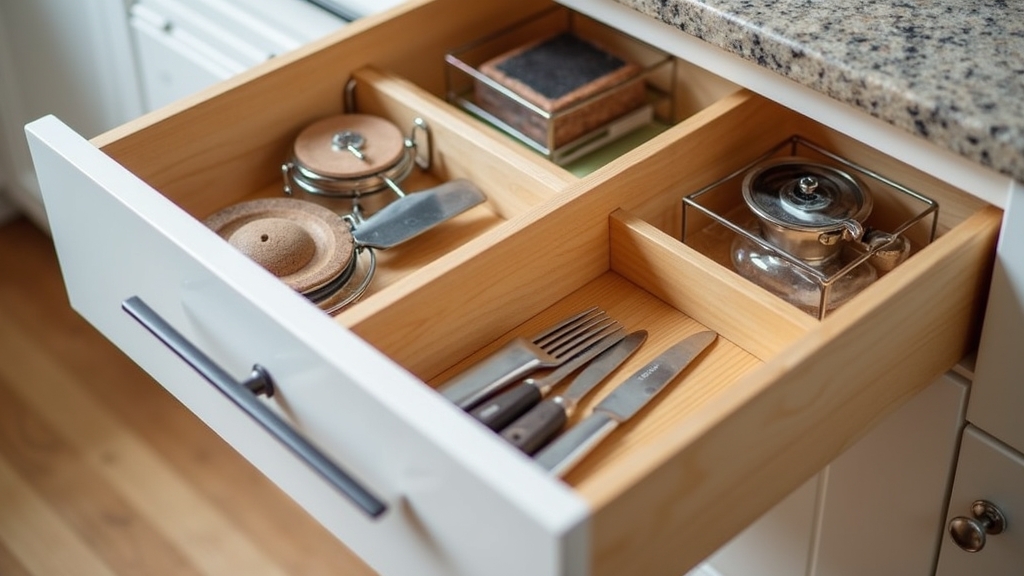
Instead of a standard door, you install 'V-shaped' drawers that pull directly out into the kitchen. This is a custom cabinetry approach that looks stunning and offers the most ergonomic access.
- Pros: No swinging doors to manage; keeps the lines of your kitchen cabinetry clean and modern.
- Cons: You lose the most actual storage volume because of the drawer box construction and the 'V' shape.
4. Full-Extension Pull-Out Baskets
These are simpler, two-stage units. You pull the first unit out, then slide the second unit over. It’s a manual version of the magic corner, often made of chrome wire. It’s a great middle-ground for budget-conscious remodels.
- Pros: Significantly cheaper than hydraulic systems; very durable.
- Cons: Requires two motions to get to the back items; wire baskets can be noisy.
The Cost Breakdown: What Really Works for Your Budget?
In my experience, homeowners often underestimate the cost of high-quality cabinet hardware. You can find cheap knock-offs online for $150, but in a kitchen, you get what you pay for. Here is a realistic look at the costs for the hardware and the professional installation labor.
| Solution | Hardware Cost | Installation Labor | Total Estimated Cost |
|---|---|---|---|
| The 'Cloud' Pivot | $400 - $700 | $150 - $250 | $550 - $950 |
| Magic Corner | $600 - $1,200 | $250 - $400 | $850 - $1,600 |
| Corner Drawers | $200 (Hardware) | $600 - $1,000 (Custom) | $800 - $1,200 |
| Manual Pull-Out Baskets | $200 - $400 | $150 - $200 | $350 - $600 |
Note: Prices vary based on finish (chrome vs. anti-slip anthracite) and weight rating.
Detailed Pros and Cons: A Contractor’s Perspective
Durability and Maintenance
If you have kids who might lean on an open shelf, avoid the Magic Corner. The articulated arms are sensitive. For high-traffic family kitchens, the 'Cloud' style shelves are the winners. They are mounted on a heavy-duty side-post or floor-mount that can handle the occasional 'unintentional' weight test.
Storage Efficiency vs. Accessibility
Corner drawers look the best, but as a contractor, I have to tell you: they waste space. You lose the 'triangles' on either side of the drawer. If you have a tiny kitchen, go with pull out corner shelves. If you have a massive kitchen and just want ease of use, go with the drawers.
Best Use Cases for Each Option
- Small Kitchens: Magic Corner (maximize every cubic inch).
- Aging in Place / Universal Design: The 'Cloud' Pivot (minimal effort, brings everything to waist height).
- Ultra-Modern Aesthetic: Corner Drawers (eliminates the 'blind' door look).
- Rental Properties / Budget Renos: Manual wire pull-outs (hard to break, easy to replace).
Final Recommendation: What Should You Choose?
If you’re asking for my professional opinion after 30 years in the dirt, I’d tell you to buy a high-quality Cloud/Lemans unit. It strikes the perfect balance between mechanical simplicity and total accessibility. It’s the least likely to jam, the easiest to clean when a bottle of oil inevitably leaks, and it adds the most resale value to your home. It feels 'premium' every time you use it.
Trust your instincts—if a piece of hardware feels flimsy in the showroom, it will fail in your kitchen. Spend the extra $200 now to avoid the headache of a broken corner unit five years down the road. It’s worth doing right the first time.