Why Laundry Rooms Suffer from Poor Lighting
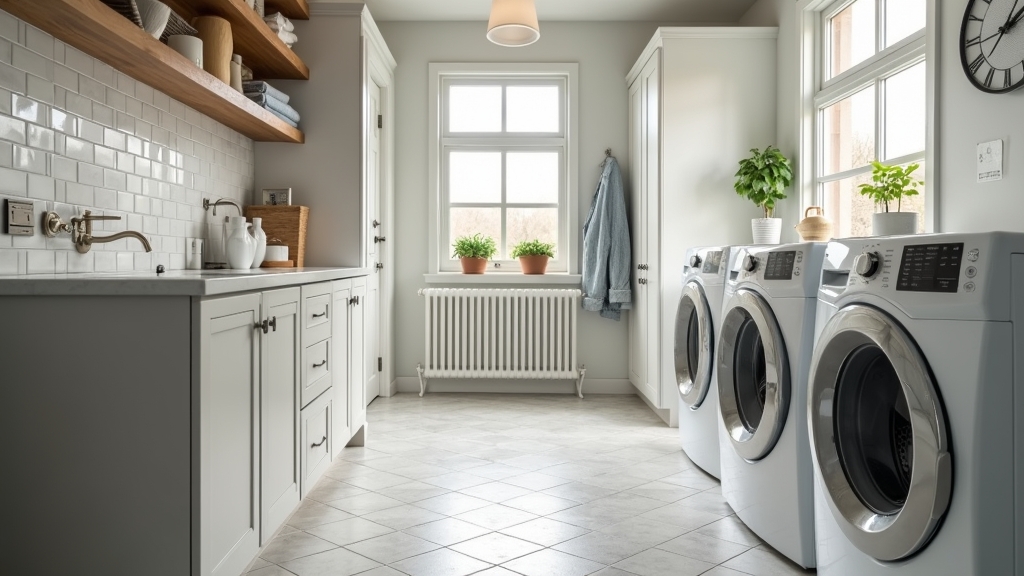
Most homeowners treat the laundry room as a secondary utility space. This often leads to a single, centered flush-mount fixture that casts harsh shadows and leaves corners in the dark. When you work in a space with inadequate light, you miss stains, struggle to read care labels, and find folding tasks more fatiguing than they need to be. Taking your time with a lighting plan is essential because this room requires precision.
The core issue is usually a lack of 'layered lighting.' In design, we look at ambient, task, and accent lighting as three distinct pillars. Most laundry rooms only have ambient light, which is the general illumination from the ceiling. Without task lighting, your body often blocks the light source while you work at the counter or sink, creating a shadow exactly where you need visibility. It is worth doing right the first time to avoid eye strain and laundry mishaps.
Root Causes of Dim and Inefficient Spaces
Several factors contribute to a gloomy laundry environment. First, many older homes use low-lumen incandescent bulbs that yellow over time. These bulbs do not provide the crisp, white light necessary to distinguish between navy blue and black garments. Second, the placement of cabinetry often creates 'dead zones' on countertops. If your primary laundry room lights are behind you while you stand at the folding station, you are working in your own shadow.
Another common factor is the 'cave effect' caused by dark paint colors or matte surfaces that absorb light rather than reflecting it. In a small, windowless room, light needs surfaces to bounce off of. When you ignore the interplay between light fixtures and wall finishes, even expensive LED laundry lights can feel underwhelming. Trust your instincts on this one; if the room feels oppressive, the lighting is likely the culprit.
Immediate Steps to Brighten Your Laundry Room
You do not always need a full renovation to see a difference. Start by cleaning your existing fixtures. Dust and grime can reduce light output by up to 30%. Simply wiping down a glass globe or acrylic lens can provide an instant boost. Small details matter here, and cleanliness is the easiest win.
Swap Your Bulbs for High-CRI LEDs
The fastest way to brighten a laundry room is to replace old bulbs with high-quality LED laundry lights. Look specifically for the Color Rendering Index (CRI) on the packaging. A CRI of 90 or higher ensures that colors appear accurate under the light. For color temperature, aim for 'Cool White' or 'Daylight' (between 3500K and 5000K). This range mimics natural light, making it easier to spot stains and read detergent measurements. Avoid 'Warm White' bulbs in this specific room, as they can make the space feel dingy and dated.
Install Battery-Operated Task Lights
If you aren't ready for electrical work, stick-on LED bars are an excellent temporary solution. Place these under your upper cabinets to illuminate the workspace directly. This provides immediate task lighting without the need for a contractor. While these are not a permanent fix, they allow you to test light placement before committing to a hardwired installation.
Long-Term Strategies for Better Illumination
A permanent lighting upgrade involves a holistic approach. You want to create a system that prevents shadows and provides enough brightness for every specific task, from pre-treating stains to ironing delicate fabrics. Do not rush the process of choosing your layout; draw it out on paper first.
Under Cabinet Laundry Lighting
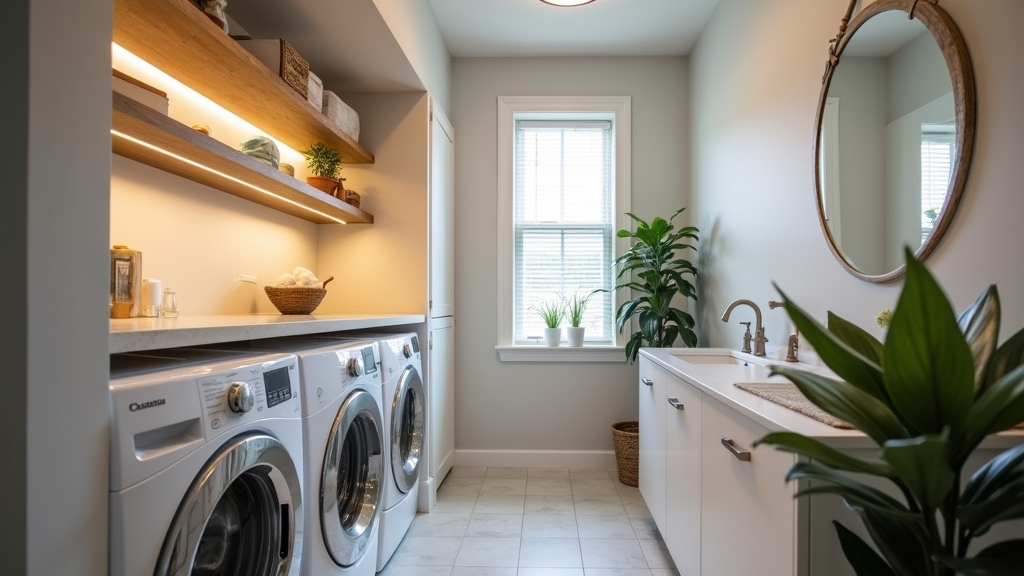
Installing permanent under cabinet laundry lighting is perhaps the most significant improvement you can make. Hardwired LED strips or puck lights provide a continuous stream of light across your folding surface. This eliminates the shadows cast by overhead fixtures. When installing these, place the light strip toward the front of the cabinet rather than the back. This positioning ensures the light covers the center of the countertop where you actually work.
Recessed Lighting and Track Systems
If you have a low ceiling, recessed 'can' lights are ideal because they stay out of the way of tall drying racks or ironing boards. Space them evenly to ensure 'wall washing,' which makes the room feel larger. For rooms with higher ceilings, a track lighting system allows you to angle individual heads toward specific areas—one toward the washer door, one toward the sink, and another toward the hanging rack. This flexibility prevents dark spots as your needs change.
Reflective Surfaces and Paint
To prevent future lighting issues, consider the 'Light Reflectance Value' (LRV) of your paint. Choose a high-LRV paint in a semi-gloss or satin finish for the walls and ceiling. These finishes bounce light around the room more effectively than flat or matte paints. Similarly, choosing light-colored countertops—such as white quartz or light wood—helps amplify the effect of your under cabinet laundry lighting.
When to Call a Professional
While bulb swaps and stick-on lights are DIY-friendly, some upgrades require an expert. If you need to add a new circuit to your breaker box or move existing wiring, hire a licensed electrician. Laundry rooms are 'wet environments' because of the proximity to sinks and washing machines. Any new outlets or switches must be GFCI-protected to meet safety codes and prevent electrical fires.
You should also consult a professional if you plan to install a ceiling fan with integrated lighting. These units require a reinforced junction box to handle the weight and vibration. A specialist can ensure that the fan blades won't interfere with the light distribution or create a flickering 'strobe' effect in the room.
Conclusion
Upgrading your laundry room lights is about more than just aesthetics; it is about creating a functional, safe, and efficient workspace. By addressing the root causes of shadows—such as poor fixture placement and low-CRI bulbs—and implementing long-term solutions like under cabinet lighting, you transform a chore-heavy room into a pleasant environment. Remember that small details matter here. Taking the time to plan your layers will pay off every time you step into the room to start a load of wash.