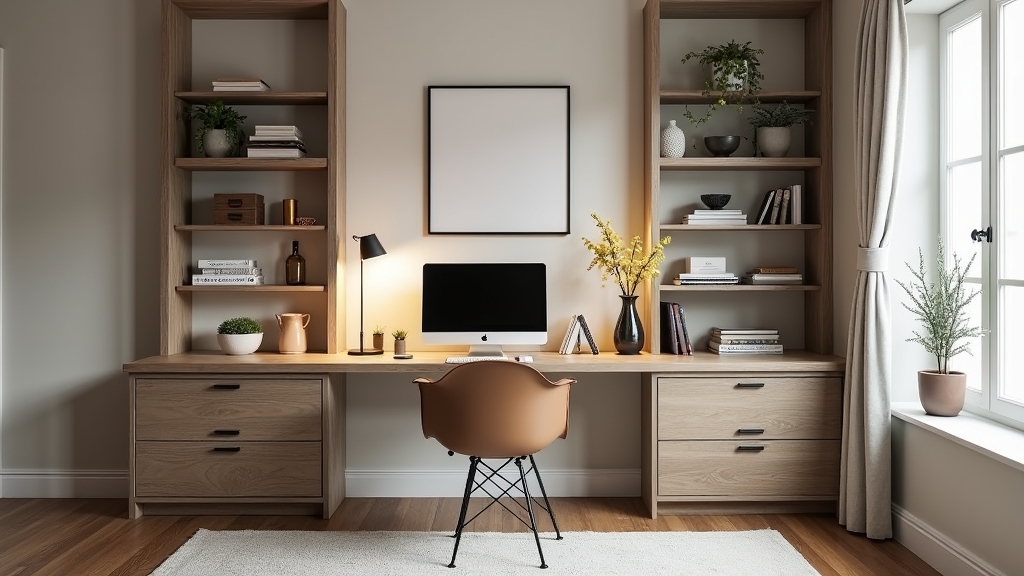
I’ve spent the better part of two decades managing properties, from cramped city studios to sprawling suburban estates. If there is one thing I have learned, it is that humans are terrible at working where they eat. For years, I watched tenants try to make the dining table serve as a corporate headquarters, only to see their productivity (and the table's finish) crumble within months.
Here is the thing: a work from home nook isn’t just about having a place to put your laptop. It’s about psychological boundaries and physical durability. When you are carving out a living room office, you need a solution that doesn’t look like a cluttered afterthought. You want something that adds value to the home rather than making it feel like a cubicle farm. In this guide, we are going to compare the most effective ways to create a dedicated workspace nook that actually lasts.
The Contenders: Four Ways to Build a Living Room Office
When we look at creating a workspace in a common area, we generally have four paths. Each has a different impact on your floor plan and your wallet. Now, the important part is choosing the one that matches your home’s architectural DNA. A floating shelf in a Victorian-style living room might look out of place, just as a heavy mahogany secretary desk would swallow a modern minimalist apartment.
1. The 'Cloffice' (The Ultimate Hidden Office)
The closet office, or 'cloffice,' is a property manager’s favorite. Why? Because when the 5:00 PM rolls around, you can literally shut the door on your work. It keeps the living room looking like a place for relaxation.
2. The Floating Wall-Mounted Nook
This is the go-to for small desk setups where floor space is at a premium. By removing the legs of the desk, you maintain the visual flow of the room, making the space feel larger than it actually is.
3. The Integrated Secretary Desk
A classic for a reason. Modern secretary desks act as a piece of high-end furniture when closed and a functional command center when flipped open. It’s the least invasive way to add an office to a high-traffic living area.
4. The Custom Architectural Built-In
This is the 'forever fix.' It involves permanent carpentry, usually extending from existing bookshelves or occupying an unused alcove. This is where it gets interesting—out of all the options, this is the only one that consistently increases the appraised value of the property.
Detailed Comparison: Pros, Cons, and Durability
I’ve seen plenty of 'temporary' fixes fail. I’ve seen cheap folding desks snap and adhesive-mounted shelves tear out chunks of drywall. Let’s look at how these four professional-grade options stack up.
The Cloffice (Closet Conversion)
Pros: Excellent sound dampening (if you keep the clothes on the side!), complete visual concealment, and utilizes existing square footage without encroaching on the room.
Cons: Requires electrical work (usually) to add outlets and lighting. Can feel cramped if the closet is shallow.
The PM Perspective: What most people miss is ventilation. If you put a high-powered PC in a small closet and shut the door, you’re creating an oven. Always ensure some airflow at the top or bottom of the doors.
The Floating Wall-Mounted Nook
Pros: Zero footprint, modern aesthetic, and easy to clean under (the 'Roomba' test).
Cons: Weight limits are a serious concern. If you aren't hitting studs, that desk is coming down.
The PM Perspective: The good news is that if you use heavy-duty steel brackets bolted directly into 2x4 studs, a floating desk is incredibly sturdy. Just don't rely on drywall anchors; they are the definition of a 'band-aid' fix.
The Integrated Secretary Desk
Pros: Portable (you can take it when you move), no structural changes required, and adds a vertical design element to the room.
Cons: Limited surface area. You usually can’t fit dual 27-inch monitors in a standard secretary desk.
The PM Perspective: Something to keep in mind is the hinge quality. In a rental or a high-use home, those hinges take a beating. Look for 'stay' hinges or piano hinges that can support the weight of your arms leaning on the desk flap.
The Custom Built-In
Pros: Perfect aesthetic integration, maximized ergonomics, and long-term durability.
Cons: High upfront cost and it's permanent. If you change your mind, it's a demolition job.
The PM Perspective: On the other hand, if you have a weird alcove next to a fireplace, a built-in desk is the best use of that 'dead space.' It looks intentional, not like you're trying to hide a workspace.
Cost Comparison and Best Use Cases
| Option | Typical Cost (Materials + Labor) | Best For... |
|---|---|---|
| Cloffice | $200 - $600 | Small apartments with excess storage. |
| Floating Nook | $150 - $400 | Minimalists and very tight floor plans. |
| Secretary Desk | $300 - $1,500 | Renters who want a piece of heirloom furniture. |
| Built-In | $1,200 - $3,500+ | Homeowners looking to increase property value. |
The Property Manager’s Final Recommendation
If you are a homeowner and you have a recessed wall or a closet you can spare, go with the Cloffice or the Built-in. These are the only two options that feel like part of the house. They reduce 'visual noise,' which is the number one complaint I hear from people who work in their living rooms. They feel like they can never truly leave the office because they are staring at their monitor while watching TV.
Worth mentioning: No matter which you choose, invest in cable management. Nothing ruins a 'hidden office' faster than a waterfall of black power cords cascading down the wall. Use J-channels or cord covers that match your wall color. It’s a $20 fix that makes a $2,000 difference in appearance.
For renters, the Secretary Desk is the clear winner. It’s a self-contained unit that hides your mess and requires no holes in the wall other than a standard furniture tip-restraint. It’s the professional's choice for a temporary-yet-sturdy workspace.