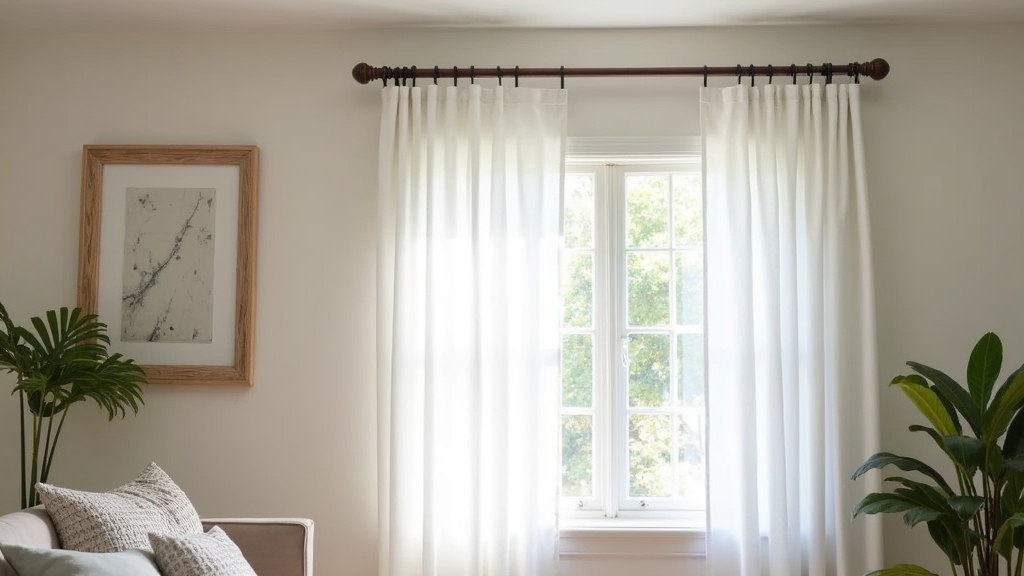
The Challenge of High Ceiling Window Treatments
After fifteen years of DIY projects, I have learned that vertical space is both a blessing and a curse. High ceilings make a living room feel grand, but they also turn a simple task like hanging curtains into a logistical puzzle. When you are dealing with twelve, fifteen, or even twenty-foot ceilings, the stakes are higher—literally. You aren't just measuring for fabric; you are managing weight, scale, and safety.
Here is the thing: most people underestimate the complexity of tall ceiling decor. They buy standard rods and 84-inch curtains, only to realize the proportions look completely wrong once they get home. To make these windows look right, you need to think about curtain rod height and finding extra long curtains that don't look like an afterthought. Today, we are going to break down whether you should tackle this climb yourself or hire a professional installer.
Overview of the DIY Approach
Hanging curtains yourself is the classic homeowner move. It gives you total control over the aesthetic and saves you a significant amount on labor costs. However, high ceilings change the DIY math. This is no longer a project you complete with a small step stool and a cordless screwdriver. You will need a heavy-duty extension ladder, a partner to help spot you, and likely more robust mounting hardware than you have used before.
Now, the important part: DIY is best for standard 'high' ceilings, like those around 10 to 12 feet. Once you go beyond that, you are entering specialized territory. For a DIYer, the process involves measuring from the floor to about 4-6 inches above the window frame—or even higher if you want to emphasize the height. You then have to source high-quality, extra long curtains, which are often 108, 120, or even 144 inches long.
Overview of Professional Installation
Hiring a professional might seem like overkill for 'just curtains,' but for tall windows, it is often the smartest move. Professional installers come with scaffolding, laser levels, and industrial-grade fasteners. They understand how to secure heavy rods into various wall types, including metal studs or plaster, which are common in newer or very old high-ceiling homes.
This is where it gets interesting: pros don't just hang the rod. They 'dress' the curtains. They know how to steam out the shipping wrinkles, train the pleats so they hang perfectly straight, and ensure the hem hits exactly where it should—whether that is a 'kiss' on the floor or a slight puddle. If you are investing in custom window treatments that cost thousands, professional installation protects that investment.
Detailed Pros and Cons
DIY Pros and Cons
Pros:
- Significant cost savings on labor.
- Complete creative control over the final look.
- Flexibility to work on your own schedule.
- Satisfaction of mastering a difficult home improvement task.
Cons:
- Safety risks associated with tall ladders.
- Difficulty in achieving a perfectly level rod over a wide span.
- Limited access to professional-grade hardware.
- Physical strain of holding heavy rods and fabric overhead.
Professional Pros and Cons
Pros:
- Safety is handled by insured experts.
- Guaranteed level and secure installation.
- Professional steaming and 'dressing' of the fabric.
- Access to custom hardware and motorized options.
Cons:
- Higher upfront costs (labor fees).
- Scheduling wait times.
- Less 'hands-on' involvement for the homeowner.
The Crucial Role of Curtain Rod Height
What most people miss when dealing with tall ceilings is the 'rule of thirds' or the 'high and wide' principle. If you hang the rod right at the top of the window frame, you cut the room in half visually. This wastes the architectural potential of your high ceilings.
For a DIYer, the goal is to hang the rod roughly halfway between the top of the window and the ceiling. On a 12-foot ceiling with an 8-foot window, this means mounting the rod about 2 feet above the window. Worth mentioning: you must ensure your rod is sturdy. Long spans require center support brackets. If you omit these, your rod will sag under the weight of extra long curtains, and the whole project will look amateur.
Cost Comparison: DIY vs Pro
Let's look at the numbers for a standard living room with two large windows and 12-foot ceilings.
- DIY Costs: Expect to spend $150–$400 on high-quality telescoping rods and $200–$600 on 120-inch off-the-shelf curtains. Total: $350–$1,000.
- Professional Costs: Labor typically ranges from $75 to $150 per window for installation alone. If you buy custom curtains through the pro, the price can jump to $2,000–$5,000 including materials. Total: $1,200–$5,000+.
The good news is that you can find a middle ground. You can buy the curtains yourself and hire a local handyman to do the actual hanging for a flat fee. This saves your back and ensures the rod is level without the full 'design house' price tag.
Best Use Cases for Each
When to DIY
You should choose DIY if your ceilings are under 12 feet and you have a sturdy extension ladder. It is also a great option if you are using lightweight fabrics like sheers or linen blends. If you are comfortable using a drill and a level, and you have a friend who can help you hold the other end of the rod, you can save a lot of money.
When to Hire a Pro
On the other hand, you should definitely hire a pro if you have vaulted ceilings, windows that are higher than 15 feet, or if you are installing heavy velvet blackout curtains. Heavy fabrics require specialized anchors. Also, if you want motorized rods—which are common in tall ceiling decor so you don't have to use a 10-foot wand to close them—a professional is necessary for the electrical or technical setup.
Final Recommendation
After years of doing this myself, here is my honest advice. If your windows are reachable with a standard 8-foot ladder, go the DIY route. Spend your savings on higher-quality extra long curtains with a nice lining. However, if the thought of being 10 feet up on a ladder makes your knees shake, or if your windows are architectural 'statements' (like arched tops), hire a professional. Something to keep in mind: a poorly hung curtain on a high ceiling is twice as noticeable as one on a standard ceiling. Don't let a crooked rod ruin your beautiful living room.