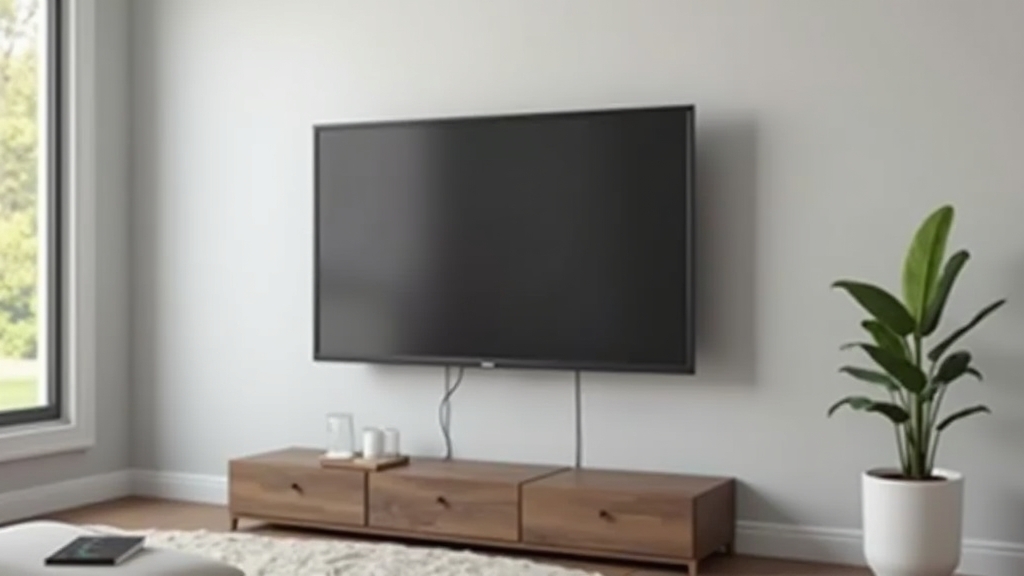
The Challenge of Visible Cables in Modern Design
In my decade of designing outdoor and indoor living spaces, I have learned that the smallest details often dictate the overall quality of a project. A beautifully mounted television can quickly lose its aesthetic appeal when a tangle of black and gray wires hangs beneath it. While cutting into drywall to run cables internally is a standard approach, it is not always feasible for renters or those with plaster, brick, or concrete walls. Fortunately, achieving a professional, clean look does not require structural demolition.
Wire management is as much about safety as it is about visual harmony. Loose cables are magnets for dust, a tripping hazard for children and pets, and a source of visual clutter that disrupts the tranquility of a living room. By taking your time to plan a cable management strategy, you can create a permanent, long-term solution that feels integrated into your architecture rather than like an afterthought.
Understanding the Root Causes of Cable Clutter
To solve the problem, we must first understand why it persists. Most homeowners struggle with cable management because of three main factors: hardware accumulation, inadequate furniture placement, and the lack of a centralized power source.
As we add soundbars, gaming consoles, and streaming devices, the volume of wiring grows exponentially. Often, these devices are spread out, forcing cables to stretch across visible wall space. Furthermore, standard wall outlets are rarely positioned exactly where a mounted TV sits, necessitating long extensions. Recognizing these factors allows us to transition from temporary fixes to a comprehensive, long-term strategy that addresses the specific layout of your living room.
Immediate Steps: Preparing for a Permanent Fix
Before you begin installing covers or concealment systems, you must prepare the environment. Do not rush this process; taking an hour to organize now will save you from headaches later. It is worth doing right the first time.
The Audit and Labeling Phase
Begin by unplugging everything. Untangle every cord and wipe them down with a microfiber cloth to remove accumulated dust. Once the wires are free, label both ends of each cable. This prevents confusion if you ever need to swap out hardware or troubleshoot a connection. Use small pieces of tape or dedicated cable tags to identify which cord belongs to which device.
Consolidating Hardware
Grouping your peripheral devices is the most effective way to minimize the length of visible wiring. If your TV is mounted, try to mount smaller devices, like streaming sticks or small hubs, directly to the back of the television using heat-resistant adhesive or specialized brackets. This keeps the bulk of the wiring contained behind the screen itself, leaving only the main power and perhaps one HDMI cord to be concealed.
Long-Term Strategies for Cable Concealment
Once your cables are organized, it is time to implement a concealment method that looks like a permanent part of your home’s trim. These methods focus on blending the hardware into the existing environment without compromising wall integrity.
Utilizing Surface-Mounted Raceways
A surface-mounted raceway is a rigid plastic channel that adheres to the wall, enclosing the cables within a sleek housing. To make this look like a professional installation, the small details matter here. Do not simply stick a white plastic track onto a colored wall. Instead, measure the distance from the bottom of the TV to the top of the baseboard or the nearest furniture piece. Cut the raceway to size using a fine-tooth saw to ensure clean edges.
The secret to making a raceway disappear is paint. Most high-quality raceways are designed to be paintable. Use a primer followed by the exact paint color of your wall. When the channel matches the wall's sheen and hue, it becomes a subtle architectural line rather than a distraction. Trust your instincts on the placement; centering the raceway directly under the TV is usually the most balanced approach.
Decorative Molding and Crown Integration
If you have a more traditional home, consider using decorative cord covers that mimic the appearance of crown molding or baseboard trim. These products function similarly to raceways but have a profile that matches existing woodwork. By running these along the top of a baseboard, you can transition wires horizontally across a room without any visible evidence. This is an excellent long-term solution for rooms where the power outlet is far from the television.
Fabric Cord Wraps and Sleeves
For areas where cables must remain flexible, such as near a swivel mount, a fabric sleeve is the best option. Unlike plastic spiral wraps, which can look industrial, a matte fabric sleeve in a color that matches your wall or the TV frame provides a soft, intentional look. These sleeves use zippers or hook-and-loop closures, making it easy to add or remove cables as your technology evolves.
Using Furniture and Decor to Mask Wires
Sometimes the best way to hide something is to place something else in front of it. This doesn’t mean cluttering the space, but rather using strategic placement to your advantage. A tall, thin shelving unit or a piece of framed art leaning against the wall can provide a natural shield for cables running down to an outlet.
If your TV is positioned above a console, ensure the console has a closed back or integrated cable management holes. You can also install a false back inside a cabinet using a piece of thin plywood or foam board painted to match the interior. This allows you to tuck all the power strips and excess cable lengths behind the false panel, leaving the storage space clean and organized.
When to Call a Professional
While most surface-level cord management can be handled by a dedicated DIYer, there are times when an expert is needed. If you find that your electrical load is tripping breakers, or if you need to install a new dedicated outlet behind the TV to avoid surface wires entirely, call a licensed electrician. Additionally, if you are working with complex integrated home theater systems that involve thermal management and signal interference issues, a professional AV installer can ensure that your concealment methods do not lead to equipment overheating or poor performance.