Mastering the Narrow Living Room Layout
Designing a long, narrow living room often feels like trying to furnish a hallway. As a landscaping specialist, I have spent years helping clients transition their indoor style to outdoor patios. The principles of spatial flow remain the same. In a rectangular living room, the primary challenge is avoiding the 'bowling alley' effect while maintaining a clear pathway for traffic. Most homeowners struggle with where to place the sofa and how to incorporate storage without making the space feel cramped.
Success in a narrow space requires a shift in perspective. Instead of viewing the length as a limitation, you can treat it as an opportunity to create distinct functional areas. This guide compares two primary approaches: the Zoned Approach and the Perimeter Approach. We will look at how each method influences movement, aesthetics, and comfort.
The Zoned Approach: Dividing and Conquering
The zoned approach treats a long living room as two or three smaller, distinct spaces. Instead of one large furniture group, you break the room into clusters based on activity. For example, one end might serve as a conversation area while the other becomes a home office or a reading nook.
How It Works
In this method, you use furniture, rugs, and lighting to create invisible boundaries. You might place a sofa perpendicular to the long wall to act as a room divider. A console table behind the sofa adds functional storage and further defines the break between zones. This technique is particularly effective for open-plan layouts where the living room must also function as a dining area.
Pros of Zoning
- Eliminates the Tunnel Effect: By placing furniture across the width of the room, you visually shorten the space.
- Multifunctional Use: You can accommodate multiple activities at once, such as kids playing in one area while adults talk in another.
- Better Traffic Flow: It forces a more natural, meandering path through the room rather than a straight, fast-paced corridor.
Cons of Zoning
- Furniture Size Constraints: You must select pieces that fit across the room's width, which often rules out large sectionals.
- Potential Clutter: More zones can lead to more furniture pieces, which may feel overwhelming if not curated carefully.
- Cost: Buying separate rugs and lighting for each zone can increase your total budget.
The Perimeter Approach: Maximizing Open Space
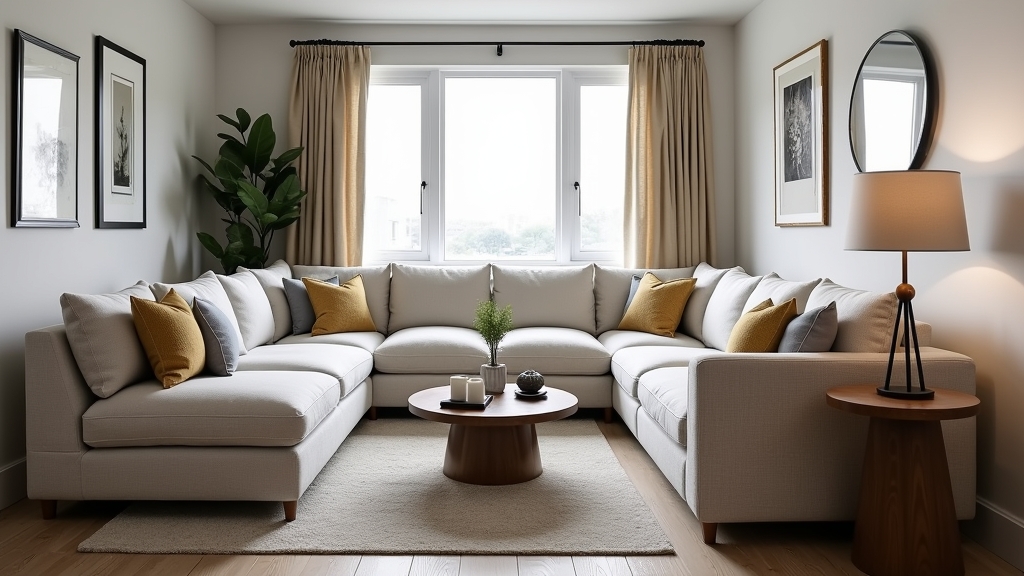
The perimeter approach focuses on keeping the center of the room as open as possible. This is the traditional method for very tight spaces where every inch of floor real estate matters. Most furniture is pushed against the walls to ensure the widest possible walkway.
How It Works
In a perimeter layout, you typically place a long sofa against the longest wall. Low-profile cabinets or floating shelves provide storage without protruding too far into the room. This method relies on vertical space to draw the eye upward, making the narrow floor plan feel less restrictive.
Pros of the Perimeter Approach
- Open Floor Feel: It creates a sense of airiness by leaving a large portion of the floor visible.
- Simplicity: This layout is easier to execute and requires fewer furniture pieces.
- Budget-Friendly: You can often furnish the space with a single high-quality seating group.
Cons of the Perimeter Approach
- The 'Waiting Room' Vibe: If not executed with care, furniture lined against the walls can feel stiff and impersonal.
- Long Sightlines: It emphasizes the length of the room, which can make it feel even narrower.
- Awkward Conversation Distances: If chairs are placed against opposite walls, they may be too far apart for comfortable talking.
Cost Comparison and Investment
When planning your rectangular living room ideas, budget plays a significant role. The Zoned Approach typically requires a higher investment because you are essentially decorating two rooms in one. You will likely need two rugs, extra lighting fixtures, and smaller accent chairs to define the spaces.
The Perimeter Approach is often more cost-effective. By focusing on one primary seating area, you can invest more in a high-quality sofa or a custom-built shelving unit. For homeowners on a budget, starting with a perimeter layout and slowly adding zoning elements as funds allow is a practical strategy.
Best Use Cases for Each Layout
When to Choose the Zoned Approach
- Your room is longer than 20 feet.
- You need the room to serve multiple purposes (e.g., guest space, office, playroom).
- You prefer a cozy, intimate atmosphere.
- You have a clear focal point, like a fireplace, at one end of the room.
When to Choose the Perimeter Approach
- Your room width is 10 feet or less.
- You prefer a minimalist or modern aesthetic.
- The room is primarily used for media viewing or relaxation.
- You have large windows or architectural features you don't want to block.
Actionable Tips for Long Living Room Furniture Placement
Regardless of the approach you choose, certain universal rules apply to narrow spaces. First, always leave at least 30 to 36 inches for major traffic paths. If you place a coffee table in a narrow room, ensure it is slender; an oval or rectangular shape works better than a square one.
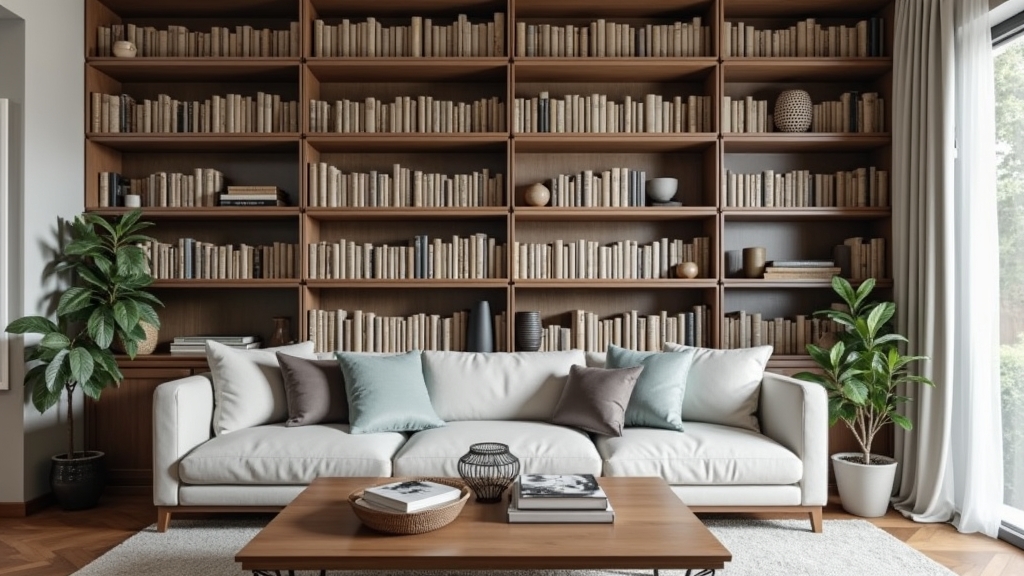
Second, use rugs to anchor your furniture. In a zoned room, two separate 5x8 or 8x10 rugs will define the areas. In a perimeter layout, one large rug that reaches nearly to the walls will make the room feel wider. Finally, don't forget the walls. Using tall bookshelves or hanging art at different heights can break up the long horizontal lines that make a room feel like a corridor.
Final Recommendation
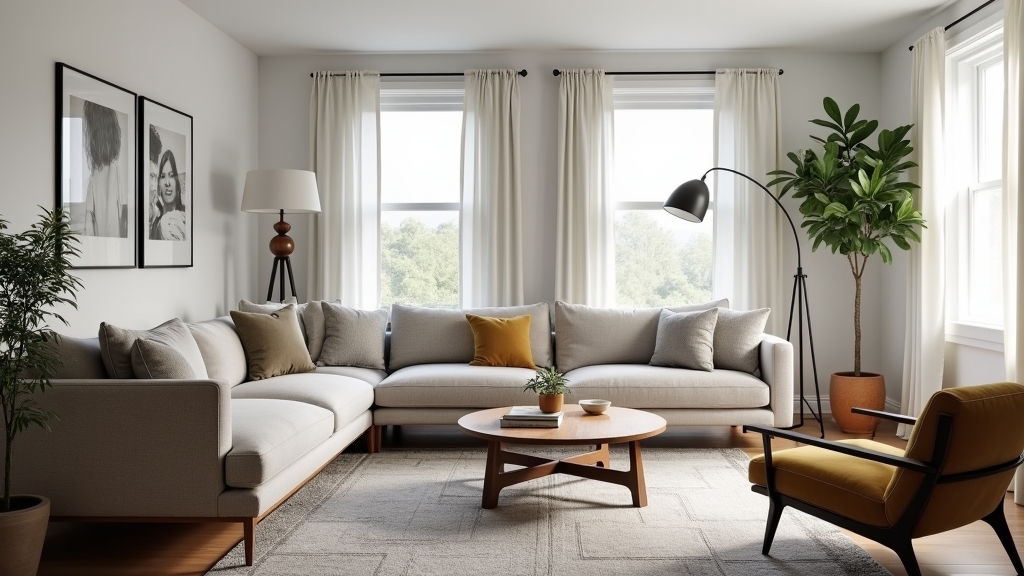
If your room allows for it, I recommend a Hybrid Approach. Use the perimeter for your main seating to maintain walking space, but use a small armchair or a slender console table to create a 'mini-zone' at the far end. This provides the functionality of zoning without the crowded feel of multiple large furniture clusters. Trust your instincts—if a layout feels cramped when you walk through it, it probably is. Don't be afraid to pull furniture a few inches away from the wall to create 'breathing room' and soft shadows, which add depth to the space.