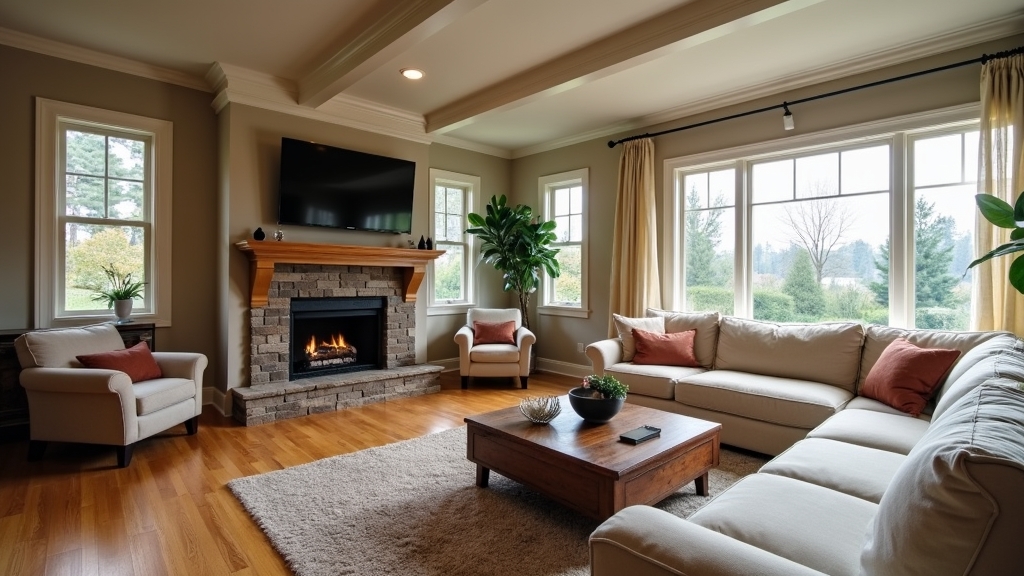
In my 30 years as a contractor, I’ve seen homeowners make the same mistake a hundred times: they treat the TV and the fireplace as competing rivals for the room’s attention. When you force them into the same space without a plan, you end up with 'TV neck' from looking too high or a furniture arrangement that feels cluttered and disjointed. Achieving a functional living room layout requires balancing aesthetics with structural reality.
The Over-the-Mantel Stack
This is the most requested fireplace and tv placement. It creates a single focal point, which simplifies furniture arrangement. However, it’s also the most technically demanding to do right. Heat is the enemy of electronics; if your mantel isn't deep enough or your fireplace isn't vented properly, you're shortening your TV's lifespan.
Pros
- Saves floor space in smaller rooms.
- Creates a singular, clean focal point.
- Perfect for symmetrical room designs.
Cons
- Viewing angle is often too high, leading to neck strain.
- Heat exposure can damage the TV panel.
- Hiding wires inside a masonry chimney is expensive and difficult.
The Side-by-Side Layout
This approach places the TV on a built-in cabinet or a floating shelf adjacent to the fireplace. From a builder’s perspective, this is the superior choice for longevity and ergonomics. It allows the TV to sit at eye level while keeping it away from the direct rising heat of the firebox.
Pros
- Better viewing height (eye level).
- Easier access to wiring and components.
- Allows for asymmetrical, modern design.
Cons
- Splits the focal point, which can feel busy.
- Requires more wall width.
- Requires careful balance of weight (e.g., a large TV can dwarf a small fireplace).
The Perpendicular Arrangement
In larger rooms, placing the TV on a wall adjacent (90 degrees) to the fireplace creates two distinct zones. This is ideal for open-concept homes where you might want to enjoy the fire from the kitchen but watch the game in the seating area. Trust me, if you have the square footage, this is the most 'livable' setup.
Pros
- Eliminates competition between the two elements.
- Allows for a dedicated media console.
- Best for multi-functional living spaces.
Cons
- Challenging furniture arrangement to accommodate both views.
- Can make a room feel smaller if not scaled correctly.
Cost Comparison and Structural Analysis
As a contractor, I look at what's behind the drywall. Your costs aren't just the TV mount; they include electrical, framing, and heat mitigation. Here is a realistic breakdown based on mid-range materials and professional labor.
Option 1: Over-Mantel with Recessed Niche
To do this right, you need to frame a recessed pocket and install a non-combustible mantel to deflect heat. Estimated Cost: $1,200 – $2,500. This includes electrical relocation, framing, and drywall repair, but excludes the fireplace itself.
Option 2: Custom Side-by-Side Built-ins
This involves cabinetry to house the TV and hide the AV gear. Estimated Cost: $3,000 – $7,000. The high end includes custom millwork and integrated lighting. This is a value-add for your home's resale value.
Option 3: Motorized Pull-Down Mounts
If you must go high but hate the angle, a MantelMount or similar system is the answer. Estimated Cost: $600 – $1,200. This covers the mount and basic professional installation with wire concealment.
Best Use Cases for Each
- Over-the-Mantel: Use in narrow rooms where the sofa is at least 12-15 feet back to minimize the vertical viewing angle.
- Side-by-Side: Use in modern homes with linear gas fireplaces or wide 'great rooms.'
- Perpendicular: Use in L-shaped seating areas where the fireplace is a secondary ambiance feature rather than the main entertainment source.
Final Contractor’s Recommendation
If you are building from scratch or doing a major gut-reno, I recommend the Side-by-Side layout with a dedicated built-in. It solves the heat issue, puts the screen at the correct height, and gives you a place to hide the clutter of cables and gaming consoles. If you're retrofitting a historic home with a high mantel, don't fight the architecture—invest in a high-quality motorized drop-down mount. It’s the only way to save your neck and the room's character at the same time.