I’ve spent the last 15 years in my backyard, spatula in one hand and a wrench in the other. If there is one thing I’ve learned, it’s that a grill is only as good as its burners. You know the feeling: you light up the BBQ, but one side is scorching while the other is barely lukewarm. Or worse, you see those flickering yellow flames instead of a crisp, steady blue.
Here is the thing: most people think their grill is dying when it’s actually just choking. Grease, spider webs, and carbon buildup love to settle in those tiny burner ports. Over the years, I’ve tried every trick in the book to fix clogged grill ports and restore grill performance. Today, I’m breaking down the three most effective methods to clean bbq burners so you can stop fighting your equipment and start enjoying your cookout.
Method 1: The Dry Brush Maintenance
This is the standard approach most manuals suggest. It’s perfect for regular gas grill maintenance and involves staying on top of the soot before it turns into a rock-hard crust.
The Process
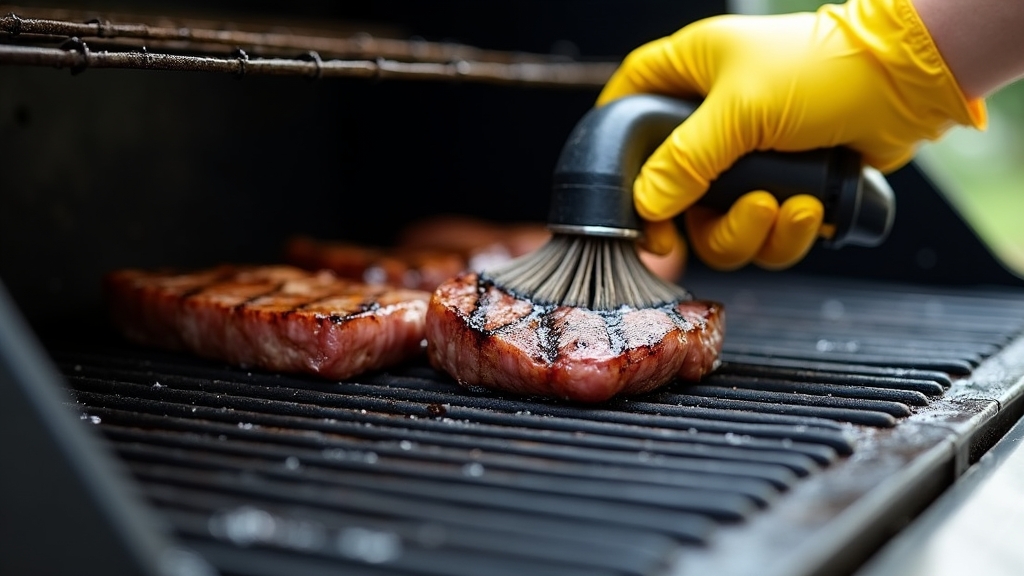
You’ll need a stainless steel wire brush (not brass, as it’s too soft for stubborn carbon). After removing your heat tents, you scrub the burner tubes vigorously. Now, the important part: always brush across the ports, never lengthwise. Brushing lengthwise just pushes the debris from one hole into the next.
Pros and Cons
- Pros: Fast, requires no disassembly of the gas lines, and zero drying time.
- Cons: Doesn’t reach the inside of the tubes where spiders love to nest; ineffective for heavy grease clogs.
Method 2: The Full Tear-Down and Drill
This is my go-to when a grill has been sitting all winter. This is where it gets interesting because we are actually taking the burners out of the firebox to get a 360-degree clean.
The Process
You remove the hitch pins or screws holding the burners in place and slide them off the valve orifices. Once they are out, you use a small drill bit (held by hand, not in a power drill!) or a specialized venturi brush to clear every single port. What most people miss is the venturi tube—the part where the gas mixes with air. I always run a flexible venturi brush through there to clear out any "spider motels."
Pros and Cons
- Pros: Guaranteed to fix 99% of clogged grill ports; allows you to inspect the underside of the burner for rust.
- Cons: Risky for beginners as you might snap a rusted bolt; takes about 45-60 minutes.
Method 3: The Degreaser Soak and Vacuum
If your burners are coated in thick, polymerized grease that a brush won't touch, you need a liquid intervention. This is the "deepest" clean possible.
The Process
Once the burners are removed, you submerge them in a bucket of warm water mixed with a heavy-duty degreaser or Dawn Powerwash. After soaking for 30 minutes, you rinse them and—the good news is—you use a shop vac on the "blow" setting to force all the loosened gunk out of the holes.
Pros and Cons
- Pros: Dissolves grease that physical scrubbing can't reach; makes the burners look almost brand new.
- Cons: Burners must be 100% dry before reinstalling; can accelerate rust if your burners are low-grade steel.
Cost Comparison
On the other hand, let’s look at what these methods will cost you in materials:
- Dry Brush: $5 - $10 (just the cost of a good wire brush).
- Full Tear-Down: $15 (for a venturi brush and a set of tiny drill bits/paperclips).
- Deep Soak: $20 - $25 (Degreaser plus the cost of your time and potential replacement hitch pins).
Best Use Cases for Each
Something to keep in mind is that you don't always need the nuclear option. Choose your battle based on the symptoms:
- Dry Brush: Best for monthly maintenance during the heavy grilling season.
- Full Tear-Down: Essential for the "Spring Awakening" or if you have specific dead spots in your flame pattern.
- Deep Soak: Necessary if you’ve had a major grease fire or haven't cleaned the grill in over 2 years.
Final Recommendation
If you really want a grill performance fix that lasts, I recommend a hybrid approach. Start with Method 2 (The Full Tear-Down) once a year. Getting those burners out of the grill allows you to see the real condition of your barbecue. Worth mentioning: while the burners are out, take two minutes to vacuum the bottom of the grill cookbox. You’ll thank me later when you don't have a grease fire during your next steak night.
For most DIYers, the Full Tear-Down is the "Goldilocks" zone—it’s thorough enough to solve the problem without the mess and drying time of a chemical soak. Just be gentle with those mounting screws!