{ "title": "Driveway Repair Guide: Fix Concrete Cracks and Asphalt Fast", "slug": "driveway-repair-concrete-asphalt-guide", "excerpt": "Learn how to master driveway repair like a pro. From filling concrete cracks to asphalt repair, our quick-fix guide saves you money and boosts curb appeal.", "content": "
The Ultimate Quick-Fix Guide to Driveway Repair
Your driveway is more than just a place to park your car; it is the welcome mat to your home. But over time, the elements take their toll. Whether it is the freeze-thaw cycle or heavy traffic, cracks and potholes are inevitable. Here is the thing... most homeowners see a crack and immediately think they need a five-figure replacement. The good news is that with the right approach, you can handle most driveway repair projects yourself in a single weekend.
In this guide, we are going to dive deep into concrete cracks and asphalt repair. We will move past the jargon and get straight to the practical solutions that stop damage in its tracks before it becomes a structural nightmare. By the time you finish reading, you will have the confidence to restore your driveway's surface and protect your investment for years to come.
Essential Tools and Materials
Before you get your hands dirty, you need the right kit. Using the wrong filler is the most common reason DIY repairs fail within six months. Now, the important part... you must match your material to your driveway type. You cannot use asphalt cold patch on concrete, and vice versa.
For Concrete Repair:
- Wire brush or stiff-bristled brush
- Concrete crack sealer (liquid or caulk-style)
- Backer rod (for cracks wider than 1/4 inch)
- Hammer and masonry chisel
- Pressure washer or garden hose with a high-pressure nozzle
- Safety glasses and work gloves
For Asphalt Repair:
- Asphalt cold patch (for potholes)
- Rubberized asphalt crack filler
- Tamper or a heavy 4x4 wooden post
- Propane torch (optional, for drying/bonding)
- Old broom or leaf blower
Preparation Is Everything
What most people miss is the preparation stage. You could buy the most expensive sealant in the world, but if you apply it over dirt, loose gravel, or oil stains, it will peel right off. Think of it like painting a room; if the walls are dusty, the paint won't stick.
Step 1: Clean the Area
Start by removing any weeds growing in the cracks. Use a screwdriver or a weeding tool to get the roots out. Next, use a wire brush to scrub the edges of the crack. You want to remove any loose debris until you reach solid material. Worth mentioning... if you are dealing with oil stains, use a degreaser first. Oil and sealants are natural enemies.
Step 2: The Deep Clean
Blast the cracks with a pressure washer or a high-pressure hose. This removes the fine silt that a brush can't reach.
Step 3: Drying Time
This is where patience is required. Your driveway must be bone-dry before you apply any filler. If moisture is trapped inside the crack, it will turn to vapor when the sun hits it, pushing your repair material right back out. Something to keep in mind... wait at least 24 hours after washing before moving to the next step.
Step-by-Step Concrete Crack Repair
Concrete is rigid, which means it cracks when the ground shifts or when it shrinks. To fix it properly, we need to create a flexible seal.
1. Wide the Crack (If Necessary)
If the crack is very thin, you might need to \"chisel\" it out slightly to create a channel for the filler to sit in. Use your hammer and chisel to create an inverted 'V' shape. This helps the filler lock into place.
2. Insert the Backer Rod
This is where it gets interesting... If your crack is deeper than half an inch, do not fill the whole thing with sealant. It will take forever to dry and will likely sag. Instead, tuck a foam backer rod into the crack until it sits about 1/4 inch below the surface.
3. Apply the Sealant
Snip the tip of your concrete sealer tube. Slow and steady wins the race here. Fill the crack from one end to the other, slightly overfilling it. Use a putty knife or a gloved finger to smooth the surface so it sits flush with the rest of the driveway.
Step-by-Step Asphalt Repair
Asphalt is a petroleum-based product, which means it is flexible but susceptible to UV damage and water penetration. On the other hand... it is much easier to blend repairs on asphalt than on concrete.
1. Filling the Cracks
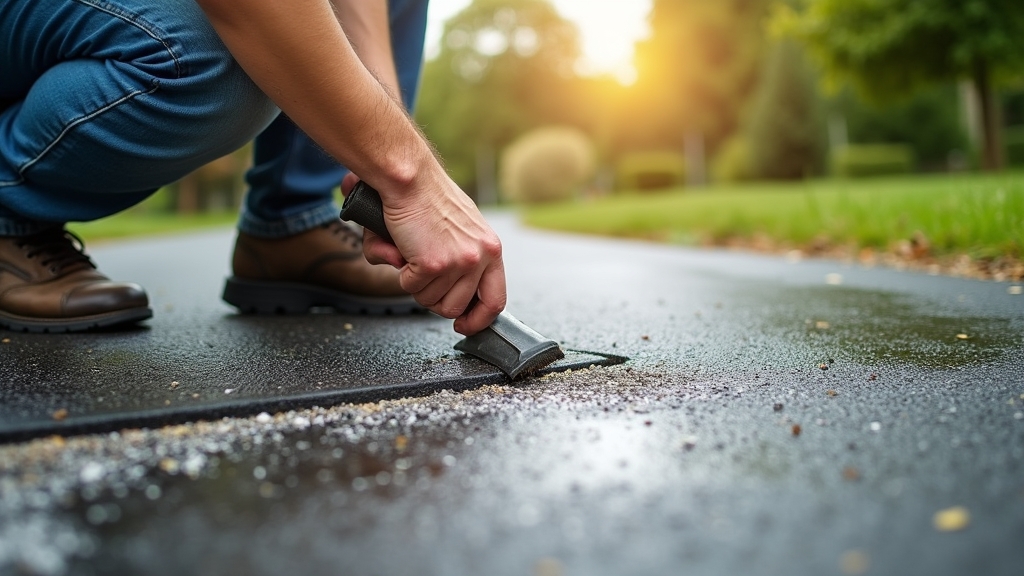
For small cracks (less than 1/2 inch), use a pourable rubberized crack filler. Shake the bottle well and pour it directly into the clean, dry crack. If it sinks, wait 20 minutes and apply a second layer.
2. Patching Potholes
For larger holes, you need \"cold patch.\" This is essentially pre-mixed asphalt in a bag. Pour the cold patch into the hole, overfilling it by about an inch. Now, the important part... you must compact it. Use a hand tamper or drive your car back and forth over the patch (place a piece of plywood down first to keep your tires clean). The more you compress it, the stronger it becomes.
Tips for Best Results
- Check the Weather: Never perform driveway repair if rain is forecast within 24 hours. You also want temperatures to be between 50°F and 90°F.
- Avoid Over-Smoothing: When smoothing concrete filler, don't overwork it. The more you touch it, the more you bring "fines" to the surface, which can cause scaling later.
- Safety First: Asphalt products can be skin irritants. Always wear long sleeves and gloves.
Troubleshooting Common Issues
What if the filler keeps sinking? This usually means the crack is deeper than you thought or you didn't use a backer rod. Let it cure for 24 hours, then apply another layer on top.
What if the color doesn't match? Fresh concrete repair is always lighter than aged concrete. To hide the repair, you might consider a full driveway resurfacing or staining the entire area once the patches have cured for 30 days. For asphalt, a fresh coat of sealcoat over the entire driveway will make your repairs invisible.
Conclusion
Driveway repair doesn't have to be a daunting task. By focusing on thorough preparation and using the right materials for your specific surface, you can extend the life of your driveway by a decade or more. Remember: catch the cracks while they are small, and you'll save yourself the headache of a full replacement later. Happy renovating!
", "tags": ["driveway repair", "concrete cracks", "asphalt repair", "DIY home improvement"], "readTime": 8, "metaTitle": "Driveway Repair: How to Fix Concrete and Asphalt Cracks", "metaDescription": "Save money with this expert guide to driveway repair. Learn the best ways to fix concrete cracks and asphalt potholes with pro tips and simple steps.", "focusKeyword": "driveway repair", "faqs": [ { "question": "How long should I wait to drive on a repaired driveway?", "answer": "For small crack repairs in concrete or asphalt, you can usually walk on it within 4-6 hours, but wait at least 24 hours before driving a vehicle over it. For large asphalt cold patches, it's best to wait 24 to 48 hours to ensure it has compacted and hardened sufficiently." }, { "question": "When is a driveway beyond repair?", "answer": "If more than 25% of your driveway is covered in deep cracks (alligator cracking) or if the foundation underneath has collapsed (causing large sunken areas), a repair is likely just a temporary band-aid. In these cases, a full replacement or a professional resurfacing is usually more cost-effective in the long run." }, { "question": "Can I use sand to fill deep driveway cracks?", "answer": "While some people use sand as a filler, it is not recommended as a base because it doesn't provide structural support and can wash away. It is better to use a foam backer rod for concrete or specialized crushed stone for asphalt base repairs before applying the final sealant." }, { "question": "Do I need to seal my driveway after repairing it?", "answer": "It is highly recommended. Sealing provides a uniform look and adds a layer of protection against UV rays, oil spills, and water. However, you must wait for the repair materials to fully cure—usually 30 days for concrete and 30-90 days for asphalt—before applying a sealer." } ], "tableOfContents": [ { "id": "essential-tools-and-materials", "title": "Essential Tools and Materials", "level": 2 }, { "id": "preparation-is-everything", "title": "Preparation Is Everything", "level": 2 }, { "id": "step-by-step-concrete-crack-repair", "title": "Step-by-Step Concrete Crack Repair", "level": 2 }, { "id": "step-by-step-asphalt-repair", "title": "Step-by-Step Asphalt Repair", "level": 2 }, { "id": "tips-for-best-results", "title": "Tips for Best Results", "level": 2 }, { "id": "troubleshooting-common-issues", "title": "Troubleshooting Common Issues", "level": 2 } ] }