Maintaining the Beauty and Longevity of Your Composite Deck
While composite decking is often marketed as 'maintenance-free,' the reality is that it requires consistent care to prevent staining, mold growth, and structural degradation. In this guide, you will learn how to identify the specific cleaning needs of your deck throughout the year and the exact steps to keep it looking new without using harsh chemicals or expensive equipment.
Why Composite Deck Maintenance Matters
Composite decking is a blend of wood fibers and recycled plastics. While it doesn't rot like traditional cedar or pressure-treated lumber, the wood components are still susceptible to organic growth like mold and mildew if they become trapped under layers of dirt or pollen. Here is the thing: leaving debris on your deck isn't just an aesthetic issue. Over time, organic matter breaks down and can etch the protective 'cap' or shell of the boards, leading to permanent discoloration.
From an energy efficiency perspective, a clean deck reflects heat more effectively than one covered in dark grime. A well-maintained outdoor space also encourages outdoor living, which can reduce your reliance on indoor climate control during the milder months. Keeping the surface clear ensures that drainage systems work properly, preventing water from pooling against your home's foundation or rim joists.
The Seasonal Cleaning Calendar
To keep your deck in top shape, you should approach maintenance based on the specific challenges each season presents. Now, the important part is understanding that your cleaning method should change depending on the weather.
Spring: The Deep Clean
Spring is the most critical time for composite deck cleaning. After a wet winter, mold spores and pollen often settle into the grain of the boards. This is when you should perform a thorough scrubbing to remove the 'winter film.' Focus on clearing out the gaps between boards to ensure proper airflow and drainage, which prevents the underside of the deck from rotting.
Summer: Spot Care and Sun Protection
During the summer, the main threats are human-made: grease from the grill, sunscreen spills, and bird droppings. This is where it gets interesting: most people assume summer is for relaxation, but high temperatures can actually 'bake' stains into the composite material. Act quickly to spot-clean any spills before the sun cures them onto the surface.
Fall: Tannin Management
As leaves fall, they accumulate in corners and between boards. If left to get wet, leaves release tannins—natural dyes that can leave dark, stubborn stains on your deck. Regular sweeping during the fall is the best preventative measure you can take.
Winter: Ice and Snow Safety
The goal in winter is safety without damage. Avoid using metal shovels, which can scratch the plastic capping of the boards. When using ice melt, ensure it is labeled safe for flagstone or concrete, as some rock salts can leave a white, abrasive residue that is difficult to remove in the spring.
The Step-by-Step Cleaning Process
You don't need specialized cleaners to get a professional result. In fact, simple solutions are often safer for your landscaping and the composite material itself.
Step 1: Clear the Surface
Remove all furniture, rugs, and planters. What most people miss is that mold often starts under large planters where moisture stays trapped. Sweeping the entire surface with a stiff-bristle broom is essential to remove loose dirt before you add water.
Step 2: Pre-Rinse
Use a standard garden hose to wet the deck. This loosens dried mud and makes the scrubbing process much easier. Avoid the temptation to use a high-pressure power washer at this stage, as the water pressure can actually drive dirt deeper into the grain if used incorrectly.
Step 3: Apply a Gentle Cleaning Solution
Mix warm water with a mild, pH-neutral dish soap in a large bucket. For more stubborn areas or mold, a solution of one part white vinegar to two parts water is highly effective. Apply the soapy water to the deck in sections, allowing it to sit for about five to ten minutes—but do not let it dry.
Step 4: Scrub with the Grain
Using a soft-to-medium bristle nylon brush, scrub the boards in the direction of the grain. This physical agitation is the only way to truly lift grime out of the embossed texture of the boards. The good news is that you don't need a lot of elbow grease if you've allowed the soap to do its work.
Step 5: Final Rinse and Dry
Rinse each section thoroughly with clean water. Ensure that no soapy residue remains, as this can create a film that actually attracts more dirt later. If possible, use a squeegee to remove excess water, which prevents water spots from forming as the deck air-dries.
Practical Tips from Experience
Over years of advising homeowners, I have found that a few small habits make a massive difference in the long-term appearance of a deck. Worth mentioning is the use of woven rugs. If you use an outdoor rug, ensure it is made of polypropylene and does not have a rubber or latex backing. Rubber backings can trap moisture and heat, leading to permanent 'shadowing' on the composite boards.
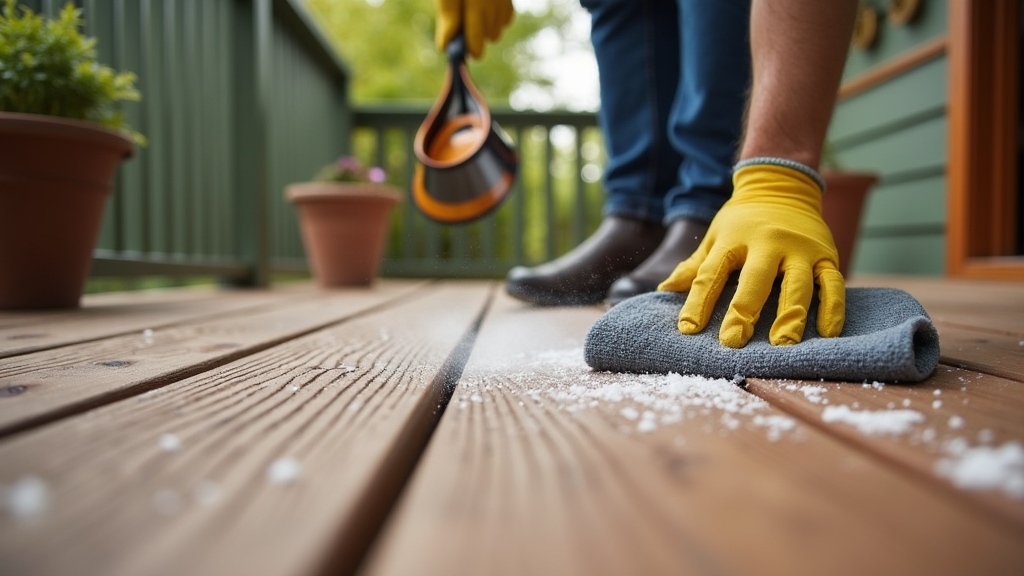
Another tip involves your gutters. If your home's gutter system overflows onto the deck, you will deal with chronic staining and mold in that specific spot. Keeping your gutters clear is actually part of your deck maintenance routine. Something to keep in mind is that grease stains from a grill are much easier to remove if you keep a small box of baking soda nearby. Sprinkling baking soda on a fresh grease spill will soak up the oils before they penetrate the plastic shell.
Common Mistakes to Avoid
- Using Chlorine Bleach: Bleach is too harsh for composite materials. It can wash out the color and damage the structural fibers of the boards.
- Pressure Washing Too Close: If you must use a pressure washer, keep the tip at least 12 inches away from the surface and stay below 1,500 PSI. Getting too close can 'fuzz' the wood fibers and ruin the finish.
- Metal Shovels or Scrapers: Never use metal to remove ice or stuck-on debris. Plastic tools are the only safe option for the soft surface of a composite deck.
- Ignoring the Gaps: The gaps between boards are there for a reason. When they get clogged with pine needles or dirt, the deck cannot breathe, leading to mold growth from underneath.