Understanding the Importance of Patio Furniture Care
As a landscaping specialist who has spent over a decade designing outdoor sanctuaries, I have seen beautiful spaces transform into weathered eyesores simply due to a lack of maintenance. Your outdoor furniture is an extension of your home, but unlike your indoor sofa, it faces a constant barrage of UV rays, moisture, and temperature fluctuations. Here is the thing: the longevity of your patio furniture depends less on the initial price tag and more on the consistency of your care routine.
Maintaining outdoor furniture is not a one-size-fits-all endeavor. Different materials require vastly different approaches. In this guide, we will compare the two primary philosophies of furniture maintenance: the Proactive Preventive approach and the Reactive Restoration approach. Understanding which path to take can save you significant time and money over the lifespan of your investment.
Method 1: Proactive Preventive Maintenance
The proactive method focuses on stopping damage before it starts. This approach involves regular, low-effort tasks performed throughout the season. The good news is that while it requires more frequency, it rarely requires heavy labor or specialized chemicals.
Key Characteristics of Proactive Care
- Regular Cleaning: Wiping down surfaces with mild soap and water every two to four weeks.
- Protective Covering: Using breathable, waterproof covers whenever the furniture is not in use.
- Seasonal Storage: Moving pieces into a garage, shed, or basement during harsh winter months.
- UV Protection: Applying UV-inhibiting sprays to fabrics and plastics.
Method 2: Reactive Restoration Maintenance
On the other hand, some homeowners prefer the reactive approach. This method involves allowing the furniture to weather naturally and then performing intensive restoration every few years. This is common with materials like teak or wrought iron, where a "patina" is sometimes desired until it reaches a point of structural concern.
Key Characteristics of Reactive Care
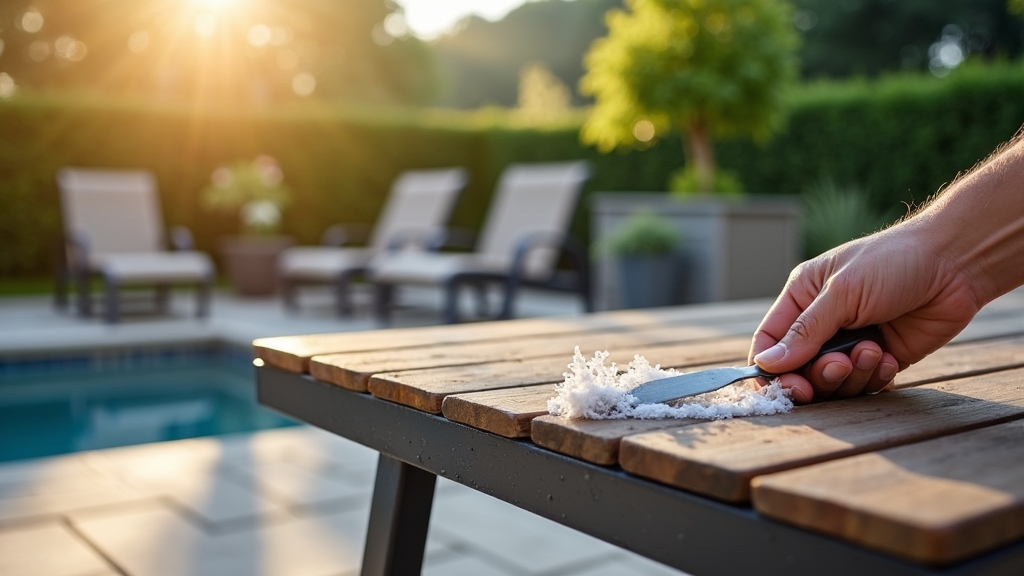
- Deep Sanding: Removing grayed or damaged top layers of wood.
- Rust Treatment: Scrubbing away oxidation on metal and applying new primer and paint.
- Power Washing: Using high-pressure water to blast away embedded dirt (though this must be done carefully).
- Re-staining or Sealing: Applying heavy-duty protective coats after the original finish has failed.
Detailed Pros and Cons
Proactive Maintenance
Pros:
Keep pieces looking "showroom new" for years. It prevents irreversible structural damage like wood rot or deep-pitted corrosion. Most tasks are simple enough for anyone to perform without professional tools.
Cons:
Requires a consistent schedule. Storing furniture takes up significant space in garages or sheds. The cost of high-quality covers can be an initial hurdle.
Reactive Maintenance
Pros:
Saves time on a weekly basis. Allows certain materials like teak to develop a classic, silvery-gray aesthetic. You only deal with the furniture once every few years rather than every weekend.
Cons:
Now, the important part: some damage is permanent. Once rust pits metal or rot enters a soft wood joint, the piece's structural integrity is compromised. Restoration is often physically demanding and involves harsher chemicals.
Material-Specific Care Strategies
This is where it gets interesting: the material determines which maintenance method is more effective. What works for a teak table will likely ruin a resin wicker chair.
Wood Furniture (Teak, Cedar, Acacia)
Wood is a living material that expands and contracts. What most people miss is that wood needs to breathe. If you use the proactive method, ensure your covers are breathable to prevent mold. If choosing reactive care, be prepared to sand with the grain to avoid scarring the wood fibers.
Metal Furniture (Aluminum, Wrought Iron, Steel)
For aluminum, the proactive approach is almost always better because it doesn't rust, but it can oxidize and lose its shine. For wrought iron, reactive maintenance is dangerous. Once rust takes hold, it spreads internally. Worth mentioning is that a simple coat of automotive wax twice a year can act as a proactive shield for most metal frames.
Synthetic Wicker and Resin
These materials are almost exclusively suited for proactive care. Because they are made of plastics or polymers, once they become brittle from UV exposure (reactive neglect), they cannot be "restored." They will simply crack and flake away.
Cost Comparison
In the long run, proactive maintenance is significantly cheaper. A high-quality furniture cover might cost $50-$100, and a bottle of mild soap is negligible. Something to keep in mind: professional restoration for a high-end teak set can cost upwards of $500 to $1,000 when you factor in labor, professional-grade sanders, and premium sealants. If you are doing it yourself, the cost of specialized rust-inhibiting paints or wood brighteners adds up quickly.
Best Use Cases for Each Method
When to Choose Proactive Maintenance:
- If you live in a high-humidity or coastal environment where salt air accelerates corrosion.
- If you have invested in high-end, contemporary furniture with delicate finishes.
- If you have limited physical ability to perform heavy sanding or scrubbing.
When to Choose Reactive Maintenance:
- If you have high-quality Grade A teak and prefer the weathered silver look.
- If you live in a mild, dry climate where the rate of decay is naturally slower.
- If you have durable, heavy wrought iron that can withstand aggressive cleaning.
Final Recommendation
Based on a decade of observation, I always recommend the **Proactive Preventive** method for 90% of homeowners. The effort required to wipe down a table or pull a cover over a sectional is a small price to pay compared to the heartbreak of seeing a beautiful investment crumble. If you truly love the weathered look of wood, you can still be proactive by cleaning the wood regularly without sealing it—this prevents rot while allowing the color to change naturally.