A pristine swimming pool is the centerpiece of a well-designed landscape, but what I have found is that many homeowners treat pool maintenance as a reactive chore rather than a preventative discipline. In most homes, the transition from a sparkling oasis to a cloudy, algae-ridden pond happens faster than expected because the underlying causes of water degradation are often invisible until the damage is done. Over the years, I have learned that true pool care isn't about dumping chemicals into the water; it is about managing a delicate ecosystem where circulation, filtration, and chemistry must work in perfect harmony.
The Root Causes of Pool Failure
To prevent problems, you must first understand why they occur. From experience, most pool issues stem from three primary failures: environmental overload, mechanical neglect, and chemical instability. What works best is identifying these triggers before they manifest as visible bloom.
Environmental Factors and Bather Load
One thing many people overlook is the impact of the surrounding landscape on pool health. Heavy rainfall can rapidly dilute chlorine levels and introduce nitrates and phosphates from lawn fertilizers, which act as high-octane fuel for algae. A common situation is a pool turning green 24 hours after a summer storm, not because of the rain itself, but because the pH shift rendered the existing chlorine ineffective. Additionally, 'bather load'—the number of people using the pool—introduces oils, sweat, and sunscreen, which consume sanitizer at an accelerated rate.
Poor Circulation and Filtration Dead Zones
The real issue usually isn't a lack of chemicals, but a lack of movement. Stagnant water is a breeding ground for bacteria. In my experience, many homeowners run their pumps for too short a duration to save on electricity. This creates 'dead zones'—areas like deep corners or behind ladders where water doesn't circulate. If the filter is clogged or the pump isn't running at least 8 to 12 hours a day during peak season, contaminants will settle and colonize faster than chemicals can kill them.
Immediate Steps to Restore Balance
When you notice cloudiness or the first sign of slickness on the walls, you must act immediately. Waiting even 48 hours can double the cost of the chemical treatment required to fix the issue.
Manual Cleaning and Mechanical Purging
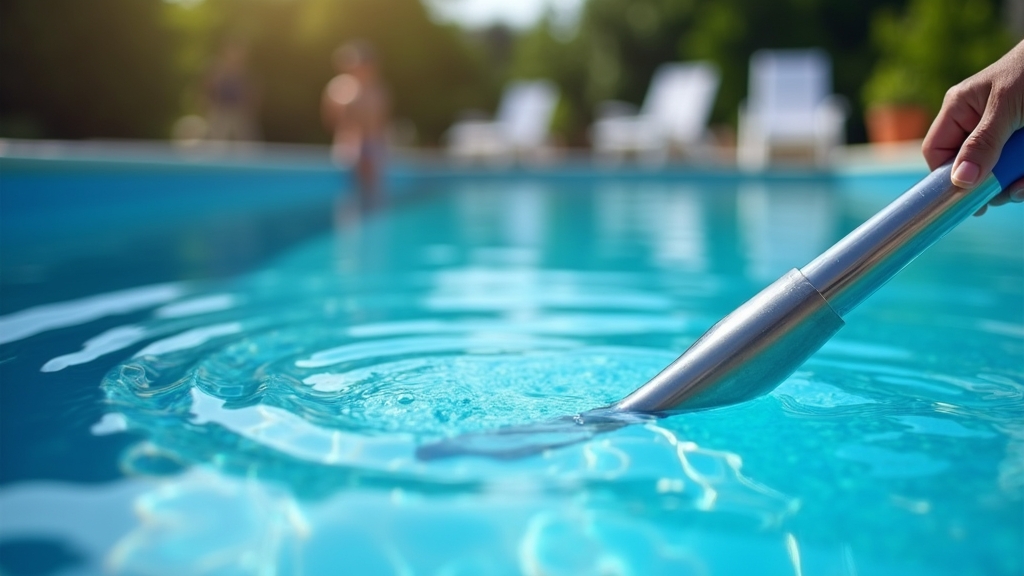
Before reaching for the shock, you must physically remove the organic load. Brush the walls and floor vigorously to break the protective biofilm that algae creates. What I have found is that vacuuming to 'waste' rather than through the filter is more effective when dealing with heavy debris, as it removes the contaminants from the system entirely rather than trapping them in the sand or DE where they can continue to decay.
Shocking and pH Adjustment
Chlorine's ability to kill pathogens is directly tied to the pH level of the water. If your pH is above 7.8, your chlorine is only about 30% effective. The key thing to remember is to balance your pH to 7.2–7.4 before adding a concentrated dose of calcium hypochlorite (shock). This ensures the chemical 'hit' has the maximum possible impact on organic contaminants.
Long-term Prevention Strategies
Sustainable pool care relies on the 'Circle of Care': Circulation, Cleaning, and Chemistry. If you maintain these three pillars, you will rarely need to perform emergency interventions.
Mastering the Chemical Trinity
Beyond basic chlorine, you must monitor Total Alkalinity (TA) and Cyanuric Acid (CYA). Total Alkalinity acts as a buffer for your pH; if it's too low, your pH will 'bounce' wildly. Cyanuric acid acts as sunblock for your chlorine. Over the years, I have learned that without proper CYA levels (30-50 ppm), the sun's UV rays can destroy up to 90% of your pool’s free chlorine in just two hours. However, too much CYA (over 100 ppm) leads to 'chlorine lock,' where the sanitizer is present but chemically unable to work. Testing for these monthly is non-negotiable.
Routine Mechanical Maintenance
In most homes, the pool filter is the most neglected piece of equipment. You should backwash sand filters when the pressure gauge rises 8-10 PSI above the clean starting pressure. For cartridge filters, a deep soak in a degreaser twice a year is essential to remove the oils and lotions that water alone cannot wash away. A well-maintained filter reduces the chemical demand on the pool significantly.
When to Call a Professional
While daily skimming and weekly testing are DIY-friendly, certain scenarios require a certified specialist. If you notice a consistent loss of more than a quarter-inch of water per day (beyond evaporation), you likely have a structural leak or a pressure-side plumbing failure. Furthermore, if your water remains cloudy despite perfect chemical readings, you may have a mechanical failure inside the filter or a high level of Total Dissolved Solids (TDS) that requires a partial drain and refill—a process that must be managed carefully to avoid 'pool popping' in areas with high water tables.