The Reality of Exterior Cleaning
After thirty years in the residential construction and renovation business, I’ve seen homeowners make the same mistakes over and over again. Usually, it involves a weekend rental and a misplaced sense of confidence. People look at a dirty driveway or a mossy roof and think that more pressure always equals a cleaner surface. Here is the thing: water under high pressure is a cutting tool, not just a cleaning tool. If you don't understand the nuances between the different methods of exterior cleaning, you can easily strip the cream coat off your concrete, etch your siding, or ruin the seals on your thermal pane windows.
In this guide, we are going to break down the three primary methods used in the industry: cold water pressure washing, hot water power washing, and soft washing. Understanding which one to use is the difference between a beautiful home and a five-figure repair bill.
Understanding the Options
Most folks use the terms 'pressure washing' and 'power washing' interchangeably, but in the trade, they mean very different things. Then you have soft washing, which is the method most people actually need but rarely know to ask for.
Cold Water Pressure Washing
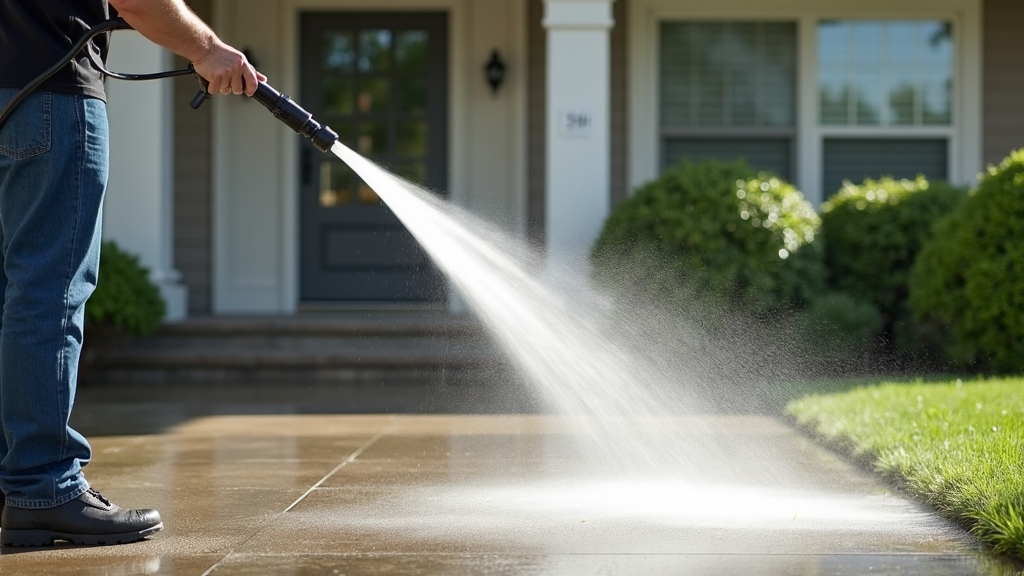
This is the standard setup you find at most home improvement stores. It relies entirely on mechanical force—measured in Pounds per Square Inch (PSI) and Gallons per Minute (GPM)—to blast dirt loose. It uses ambient temperature water and is the workhorse for most residential masonry projects. It is effective, but it is blunt force trauma for your house if used incorrectly.
Hot Water Power Washing
Now, the important part about power washing is the heat. A true power washer has a heating element (usually a burner fueled by diesel or kerosene) that kicks the water temperature up to 200 degrees Fahrenheit or more. Think of it like washing greasy dishes in the sink; cold water just moves the grease around, but hot water melts it away. This method is specialized and rarely necessary for standard residential siding.
Soft Washing
This is where it gets interesting. Soft washing doesn't rely on pressure at all. Instead, it uses a high volume of water at low pressure—think of a garden hose with a specialized nozzle—combined with biodegradable chemical cleaners. The chemicals do the heavy lifting of killing organic growth like algae, mold, and lichen at the root. In my experience, this is the safest and most effective method for 90% of a home's exterior surfaces.
Detailed Pros and Cons
Each method has its place in a contractor's arsenal. Choosing the wrong one for the specific material you're cleaning is where the trouble starts.
Cold Water Pressure Washing
- Pros: Excellent for hard, non-porous surfaces like cured concrete, brick, and stone. It is the most accessible and affordable method for DIYers.
- Cons: Extremely easy to damage wood, vinyl, and stucco. It often fails to kill the spores of mold and algae, meaning the green gunk will grow back faster.
Hot Water Power Washing
- Pros: Unbeatable for removing oil stains from driveways, chewing gum from sidewalks, and heavy grease in garage bays. The heat acts as a natural disinfectant.
- Cons: The equipment is expensive and bulky. The high heat can warp vinyl siding or crack glass if there is a significant temperature differential. It is generally overkill for residential use.
Soft Washing
- Pros: Zero risk of surface etching or water intrusion behind siding. It kills the organic matter completely, so the cleaning lasts 2-3 times longer than pressure washing. Safe for roofs and delicate trim.
- Cons: Requires specialized cleaning solutions that must be handled carefully to protect landscaping. It doesn't work well on deeply embedded red clay or oil stains.
Cost Comparison
What most people miss when looking at the budget is the "cost of repair." A cheap rental might seem like a win until you realize you've fuzzy-upped your cedar deck or blown out the window seals.
Standard cold water pressure washing is the most budget-friendly. You can rent a decent unit for $75 to $100 a day. If you hire a pro, you’re looking at $0.15 to $0.30 per square foot depending on your region. Power washing (hot water) typically commands a premium because of the fuel costs and equipment maintenance, often adding 20-30% to the price of a standard wash.
Soft washing is often priced similarly to pressure washing when done by a pro, but the equipment is harder to find for rent. The real value in soft washing is the longevity. If you pay $500 for a soft wash that lasts three years, it is significantly cheaper than a $300 pressure wash that you have to repeat every twelve months because the algae wasn't actually killed.
Best Use Cases for Each
The good news is that you don't have to choose just one for the whole property. A smart maintenance plan uses the right tool for each zone.
- Driveways and Sidewalks: Use cold water pressure washing. Concrete can handle the PSI, and the mechanical force is needed to get into the pores of the masonry.
- Vinyl, Stucco, or Painted Siding: Use soft washing exclusively. High pressure can blow through the weep holes in vinyl or strip the finish off stucco.
- Asphalt Shingle Roofs: Soft washing is the only acceptable method. Never, under any circumstances, use a pressure washer on a roof; it will strip the granules and void your warranty.
- Garage Floors and Shop Spaces: This is where power washing shines. If you have oil leaks or engine grime, the heat is your best friend.
- Decks and Fences: This is a gray area. I prefer a very light pressure (under 800 PSI) combined with a cleaning solution. Anything higher will tear the wood fibers.
Final Recommendation Based on Situation
If you are a homeowner looking to spruce up your curb appeal, my advice is to stop thinking about pressure and start thinking about chemistry. For the vast majority of your home—the siding, the eaves, and the roof—a soft wash approach is the professional choice. It protects your investment and yields a more uniform clean.
Something to keep in mind: if you are tackling the driveway yourself, start with the widest nozzle (usually 40 degrees) and keep the wand moving. Never start or stop the spray while pointing at the concrete, or you'll leave "zebra stripes" that are nearly impossible to remove. Worth mentioning, always wear eye protection and closed-toe shoes. I've seen a pressure washer slice through a sneaker like it was butter.
On the other hand, if you are dealing with a property that has been neglected for a decade and has thick layers of grease or industrial grime, that is the time to call in the hot-water power washing pros. It’s not a DIY job, but for those specific situations, nothing else works.
Frequently Asked Questions
Q: Will pressure washing damage my plants?
A: High pressure itself can physically shred leaves, but the cleaning solutions used in soft washing are the bigger concern. A pro will always pre-wet your plants and rinse them thoroughly afterward to dilute any runoff. If you're doing it yourself, don't skip the pre-rinse.
Q: How often should I clean my home's exterior?
A: In most climates, once every two years is the sweet spot. If you live in a high-humidity area with lots of tree cover, you might need an annual touch-up on the North-facing side of the house where moss grows fastest.
Q: Can I use bleach in my pressure washer?
A: Most off-the-shelf pressure washers aren't built to handle bleach; it will eat the seals in the pump. If you need to use a bleach solution, it should be applied using a "downstream injector" which introduces the chemical after the pump, or via a separate dedicated sprayer.
Q: Why is my concrete patchy after I washed it?
A: This usually happens because the wand was held at inconsistent heights or moved at different speeds. It can also happen if the concrete is relatively new (under two years old). New concrete is soft and easily etched, which permanently changes the texture and appearance.