Optimizing Your Irrigation: A Guide to Sprinkler System Maintenance
Maintaining a sprinkler system is often the most overlooked aspect of home energy and water efficiency. Here is the thing: a poorly maintained irrigation system can waste up to 25,000 gallons of water in a single season. As an energy efficiency advisor, I see homeowners focus heavily on insulation and HVAC while ignoring the massive utility drain happening right on their front lawn. By dedicating just a few hours to irrigation maintenance, you can reduce your water bill by 30% and ensure your landscape thrives without drowning in excess costs.
Why Efficiency Matters for Your Wallet
Irrigation maintenance isn't just about keeping the grass green; it’s about precision. When heads are clogged or misaligned, you get 'hot spots' and 'swamps.' This leads to overcompensating by running the system longer, which spikes your bill. Now, the important part: a well-tuned system uses the least amount of water necessary to maintain soil moisture, protecting your foundation from over-saturation and your lawn from fungal diseases.
Tools and Materials Needed
Before you head out, gather these essential items to avoid multiple trips to the hardware store:
- Small Flathead Screwdriver: For adjusting the arc and radius of the spray heads.
- Nozzle Cleaning Tool or Old Toothbrush: To clear debris from tiny orifices.
- Flag Markers: To denote heads that need repair while the system is off.
- Replacement Heads and Nozzles: Keep a few matching models (MP Rotators, Vans, or fixed sprays) on hand.
- Utility Knife: For trimming overgrown grass away from the heads.
- Bucket and White Vinegar: For soaking clogged nozzles with mineral buildup.
- Trenching Shovel: If you need to level a sunken head.
Preparation Steps
Success in irrigation maintenance starts with a systematic approach. Don't just turn the water on and hope for the best. What most people miss is checking the controller first. Ensure the battery backup is fresh (usually a 9V) so your settings don't reset during a power flicker. Next, walk your property and identify where your valve boxes are located. If they are buried under mulch or grass, clear them out now. This is where it gets interesting: many leaks occur at the valve, not the head, so having clear access to the manifold is crucial before you start testing zones.
Step-by-Step Maintenance Instructions
1. Inspect the Controller and Schedule
Verify that your 'Run Times' align with your local climate. Something to keep in mind: different plants have different needs. Your lawn needs frequent, shallow watering, while shrubs prefer deep, infrequent cycles. Implement a 'cycle and soak' method—break a 20-minute run time into two 10-minute cycles an hour apart—to prevent runoff on clay soils.
2. Perform a Zone-by-Zone Test
Turn on each zone manually. Stand back and observe. Look for 'geysers' (broken heads), 'bubblers' (leaking seals), or 'donuts' (dead grass around a head due to poor spray patterns). Worth mentioning: if a head isn't popping up fully, it’s likely a pressure issue or debris lodged in the riser seal.
3. Clean Clogged Nozzles
If a spray pattern is uneven or streaky, the nozzle is clogged. Unscrew the nozzle from the riser (be careful not to let the riser slip back into the ground). Remove the plastic filter screen underneath. Rinse both in clean water. For stubborn calcium deposits, soak them in vinegar for 30 minutes. This is a quick fix that restores factory-level performance for zero dollars.
4. Adjust Head Alignment and Arc
Spray should hit the target plants, not the driveway or siding. Use your screwdriver to adjust the top screw. The good news is that most modern heads allow you to adjust the 'arc' (the left and right limits) and the 'radius' (the distance). Aim for head-to-head coverage, meaning the spray from one head should reach the base of the next.
5. Level Sunken Heads
Over time, lawn mowers and soil compaction push heads downward. A sunken head creates a 'puddle zone' and fails to clear the grass height, leading to dry spots further out. Dig carefully around the head, lift it, and pack soil or gravel underneath until the top of the head is flush with the soil surface (not the grass blades).
Tips for Best Results
To maximize efficiency, consider upgrading to 'Smart' technology. A Wi-Fi-connected controller uses local weather data to skip watering on rainy or windy days automatically. On the other hand, if you prefer a manual approach, always water between 4:00 AM and 8:00 AM. This minimizes evaporation and prevents fungal growth that occurs when grass stays wet overnight.
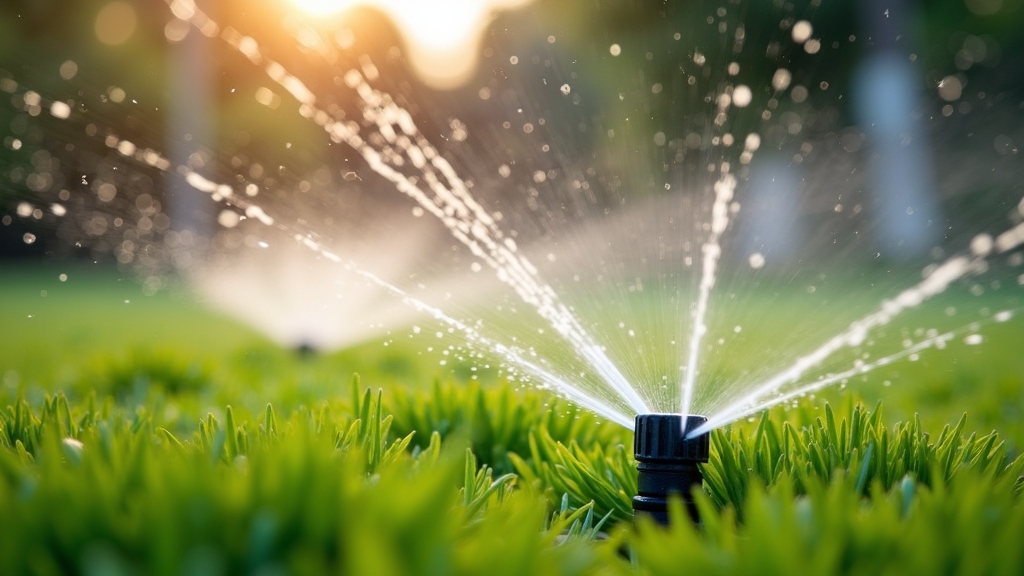
Another pro tip: check your water pressure. If your heads are 'misting' (creating a fine fog), your pressure is too high. This causes water to blow away in the wind. Installing a pressure regulator at the valve or using pressure-regulating heads (PRS) can save thousands of gallons annually.
Troubleshooting Common Issues
The System Won't Turn On
Check the rain sensor first. If it's tripped or faulty, it will bypass the controller. Next, check the common wire at the controller. If it’s loose, no zones will fire. If only one zone fails, the solenoid on that specific valve likely needs replacement.
Low Pressure Across One Zone
This usually indicates a lateral line leak. Look for an unusually green or soggy patch of grass between heads. If you find one, you'll need to dig and patch the PVC or poly pipe. If the whole system has low pressure, ensure the main shut-off valve is fully open.
Heads Leaking When System is Off
This is 'low head drainage.' Water is draining out of the lowest head in the zone due to gravity. You can solve this by installing 'check valves' in the heads, which prevent water from flowing out unless the system is actively pressurized.