Protecting Your Investment Before the First Freeze
I learned the hard way about fifteen years ago that a single night of freezing temperatures can ruin an entire outdoor kitchen setup. I woke up to a split copper pipe and a flooded patio because I thought 'draining the lines' just meant turning off the faucet. Over the years, I have refined a process that takes less than an hour but saves thousands in repair costs. This guide focuses on outdoor sink winterizing and freeze protection for your patio plumbing.
The goal is simple: remove every drop of water from your pipes, valves, and fixtures. Water expands when it freezes. If that water is trapped inside a rigid pipe or a brass valve, the pressure will find the weakest point and burst it. We are going to ensure your BBQ island survives the winter untouched by ice damage. Take your time with this. It is worth doing right the first time to avoid a headache in the spring.
Tools and Materials Needed
Before you start, gather these items. Having everything ready prevents you from rushing, which is when mistakes happen.
- Small Air Compressor: You do not need a massive shop model; a portable pancake compressor works fine.
- Blowout Plug Adapter: This connects your air compressor to your plumbing lines (usually a 3/4-inch garden hose thread to a quick-connect air fitting).
- Non-Toxic RV Antifreeze: Use the pink stuff, never automotive antifreeze. It is safe for potable water systems.
- Adjustable Wrench and Pliers: For loosening fittings and p-traps.
- Buckets and Rags: To catch residual water.
- Pipe Insulation Sleeves: For any exposed sections above ground.
Preparation Steps
Preparation is half the battle. Start by locating your indoor shut-off valve. This is typically located in your basement, crawlspace, or utility room on the line leading directly to the outdoor kitchen. If you cannot find a dedicated shut-off, you may need to install one. Trust your instincts on this one; if the valve looks corroded or feels stuck, do not force it. Apply a bit of penetrating oil and wait.
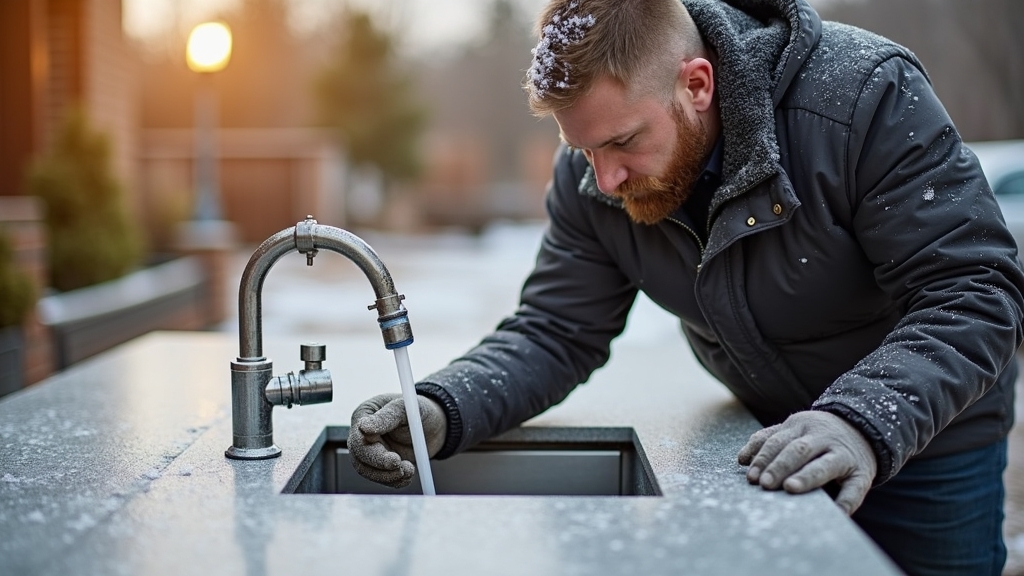
Once you locate the valve, turn it to the 'off' position. Go outside to your outdoor sink and open both the hot and cold taps completely. You will see a bit of water trickle out. This relieves the pressure but does not empty the lines. Small details matter here. Leave these faucets open throughout the entire process.
Step-by-Step Instructions for Winterizing
Step 1: Drain by Gravity
Open the lowest drain point in your system. Many outdoor kitchen setups have a 'bleeder valve' or a drain cap near the indoor shut-off valve. Place a bucket under this valve and open it. Let the water flow until it stops. This removes the bulk of the water, but surface tension often keeps pockets of water trapped in horizontal runs or 'low spots' in your piping.
Step 2: Blow Out the Lines with Compressed Air
This is the most critical step for true freeze protection. Attach your blowout plug to the outdoor faucet or the dedicated blowout port if your builder installed one. Set your air compressor to no more than 30-40 PSI. High pressure can damage plastic seals or joints. Do not rush the process.
Turn on the compressor and let the air push through the lines. You will hear a sputtering sound at the faucets. Continue blowing air until only a fine mist—and eventually only air—comes out of the taps. Repeat this for both the hot and cold lines. If you have an outdoor ice maker or a fridge with a water line, make sure to blow those out as well. If you skip this, the plastic solenoid valves in those appliances will almost certainly crack.
Step 3: Winterizing the Sink Trap
Many homeowners forget the P-trap under the sink. This U-shaped pipe always holds water to block sewer gases. In a freeze, that water expands and shatters the plastic or metal trap. Place a bucket under the trap and unscrew the slip nuts. Drain the water completely. I prefer to reinstall the trap dry and then pour about a cup of pink RV antifreeze into the drain. This prevents any remaining moisture from freezing and keeps the seals lubricated.
Step 4: Protect the BBQ Island and Fixtures
If your BBQ island has a pull-out sprayer, disconnect the hose. These hoses are notorious for holding water and splitting. Shake the water out of the sprayer head and store it indoors for the winter. For the main faucet, wrap the body in a heavy towel or a dedicated foam faucet cover. Even if the lines are empty, the cover protects the metal finish from salt and moisture.
Tips for Best Results
- Label Your Valves: While you are down there, use a permanent marker or a hang-tag to label the shut-off valve 'Outdoor Kitchen.' Future you will be grateful.
- Check the Fridge: If you have an outdoor refrigerator, unplug it. If it has a freezer, leave the door slightly ajar to prevent mold growth during the off-season.
- The Shop Vac Trick: If you do not have an air compressor, you can use a shop vac on the 'blow' setting. It provides high volume but low pressure, which is often enough to clear simple sink lines.
- Inspect for Cracks: Before the snow hits, inspect your countertop grout and stone veneer. Seal any cracks now so water doesn't get in, freeze, and pop your tiles off.
Troubleshooting Common Issues
Water keeps trickling even after shut-off: This means your indoor shut-off valve is failing. It is a common issue with older gate valves. You will need to replace it with a modern ball valve to get a true seal. Do not proceed with winterizing until the water flow stops completely.
Air won't pass through the lines: Check if there is a check valve or a pressure regulator in the line. Sometimes these one-way valves prevent air from being blown 'backward' through the system. You may need to blow air from the indoor side outward instead.
Residual 'gurgling' sounds: If you hear gurgling after blowing out the lines, there is still water trapped in a low spot. Increase the air duration, not the pressure. Let the air run for a solid 2-3 minutes per line. Small details matter here to ensure no pockets remain.